
Capability · supplied by construction
Custom Chain, Supplied by Construction
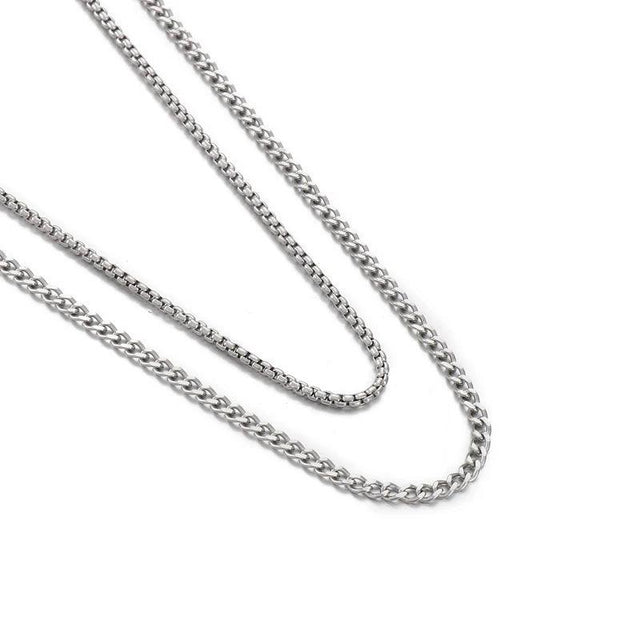
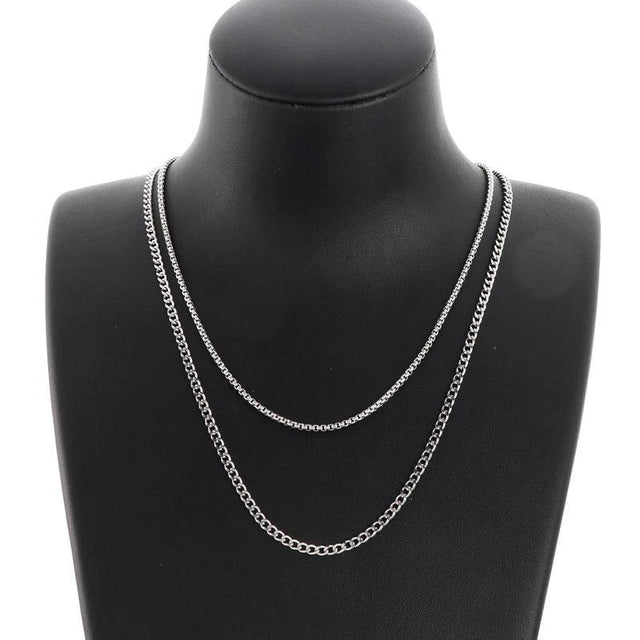
Chain in 316L stainless steel, as a component rather than a finished necklace: quoted by construction, wire gauge and finished width, cut to length or supplied on the reel. What a chain can carry is decided by how it is built, so that is the first thing this page settles.
The range
Chains Kalen has already made
246 designs from Kalen’s own published catalog, 48 to a page. They are listed so you can see the house’s vocabulary before you brief against it. Each is described in the words of the listing it came from, with two deliberate substitutions: where a listing named no steel grade none is stated here, and where it said a karat gold plating it is written gold-tone, because this site makes no karat claim about any piece. Custom work is specified separately, to 316L and to the finish you ask for.
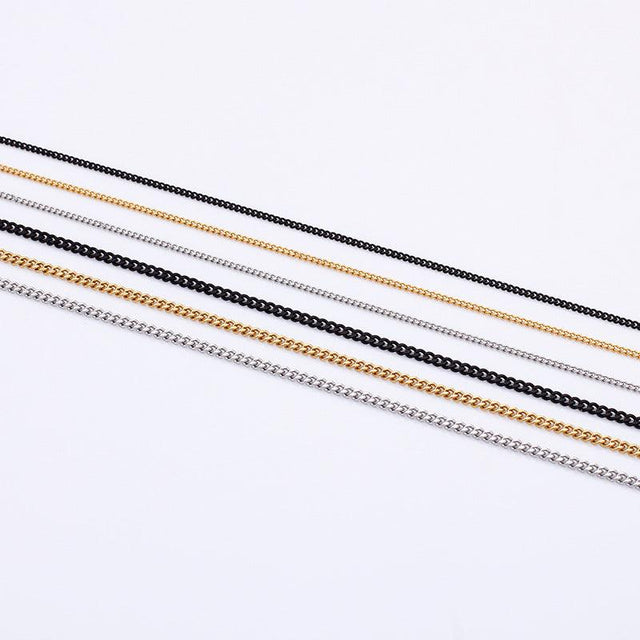
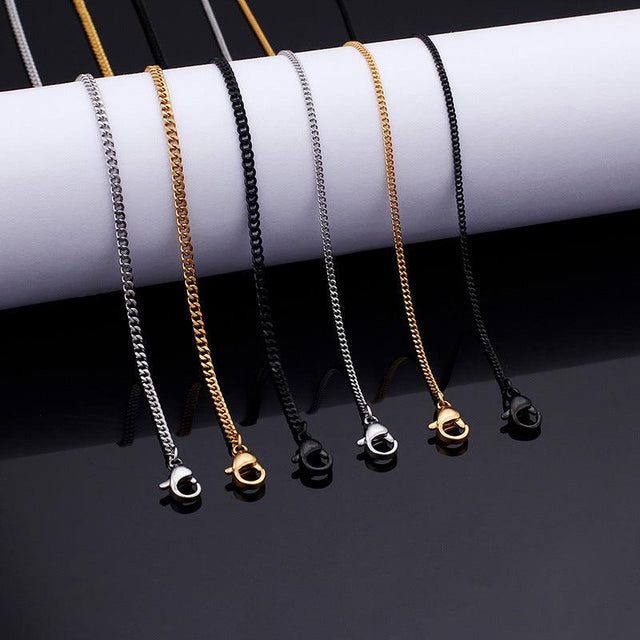
1.5/2.2mm Polished 2-Side Cut Curb Cuban Chain Necklace with Lobster Clasp
Black · Gold-tone · Steel
Stainless steel · Length: 45cm · 6 variants
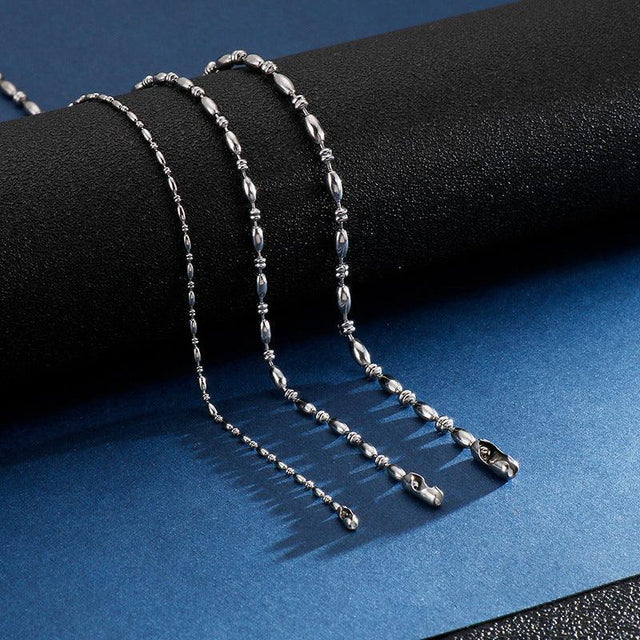
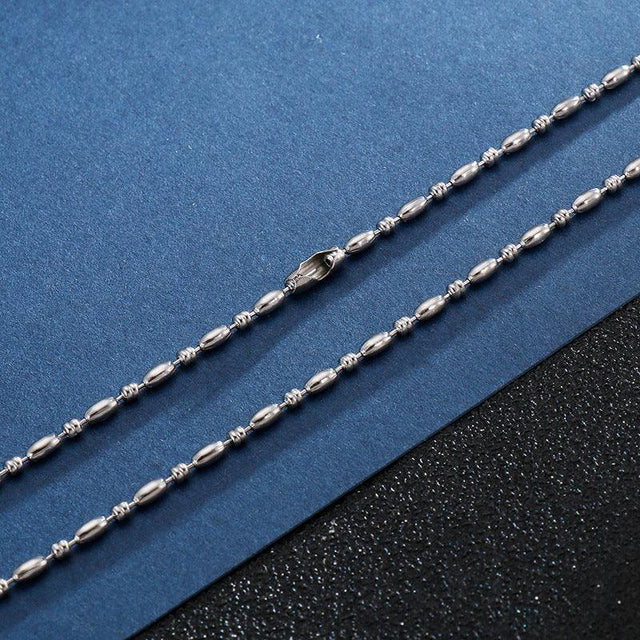
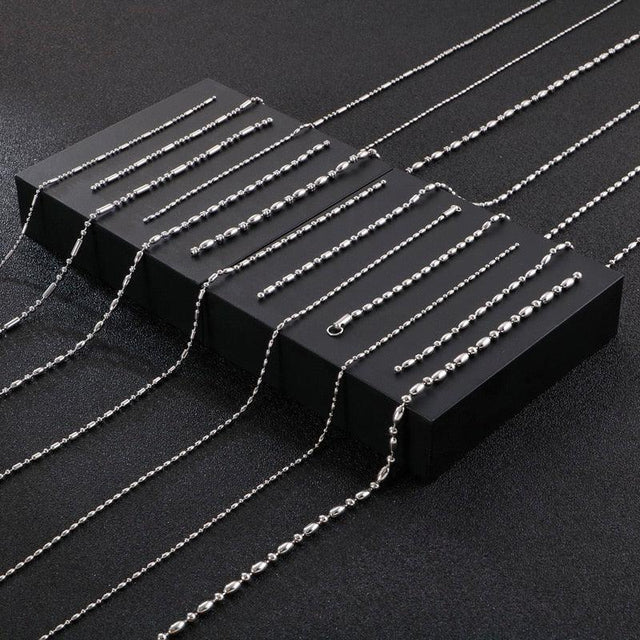
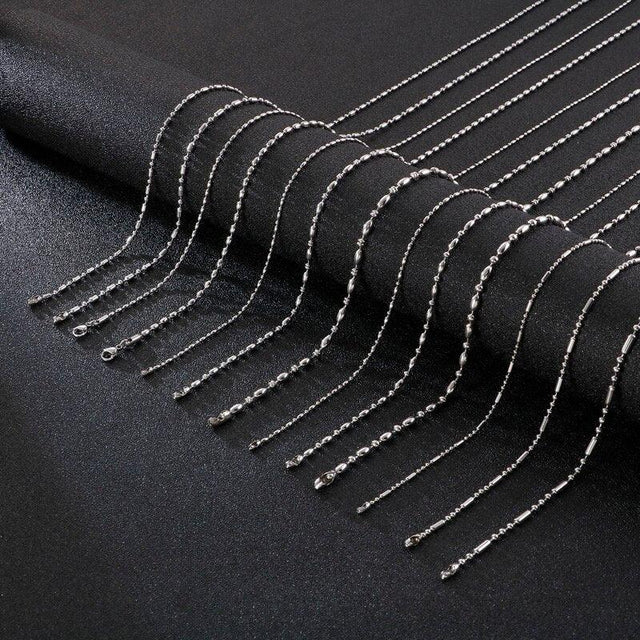
1.5/2.5/3mm Stainless Steel Bead Oval Bamboo Ball Chain Necklace
Steel
Stainless steel · Width(mm): 1.5–3 · 18 variants
1.5/2/2.5/3 3.5/4/4.5 5/6/7mm Stainless Steel Square Box Chain Necklace Gold-Tone PVD Color
Gold-tone PVD
Stainless steel · Width(mm): 1.5–6 · 27 variants
1.5/2/2.5/3 3.5/4/4.5 5/6/7mm Stainless Steel Square Box Chain Necklace Steel Color
Steel
Stainless steel · Width(mm): 1.5–7 · 30 variants
1.5/2/2.5/3/5mm Square Box Link Chain Necklace
Finish specified per order
Stainless steel · 48 variants
1.5/2/2.5/3mm Square Box Link Chain Necklace
Steel · Black
Stainless steel · Width(mm): 1.5–3 · 42 variants
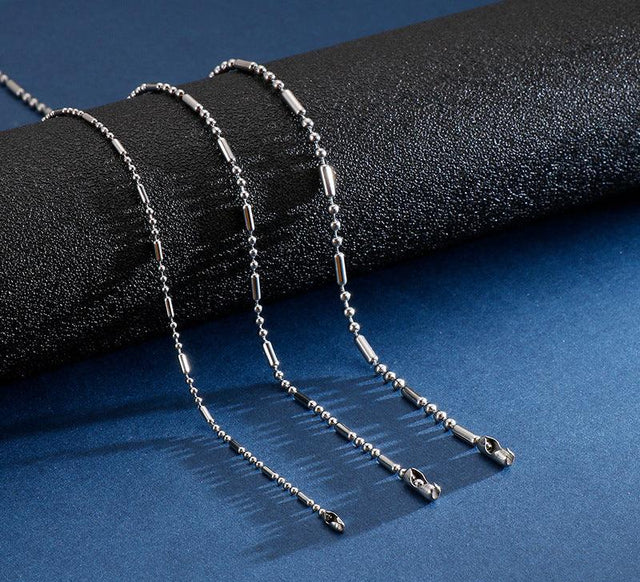
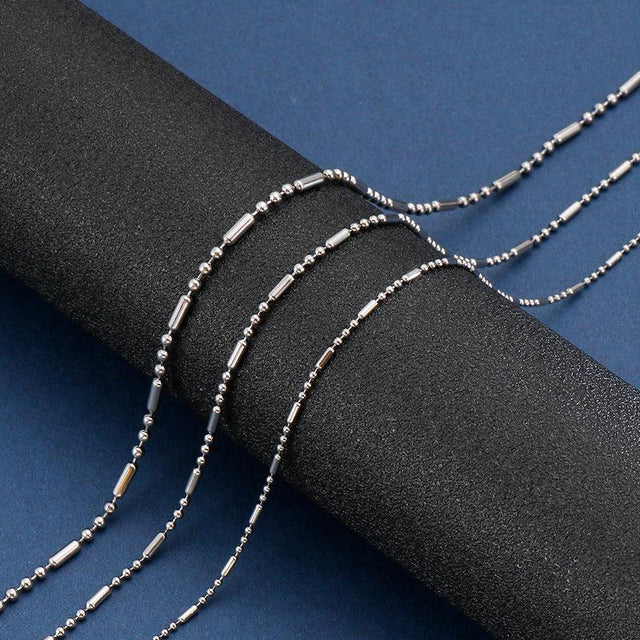
1.5/2/2.5/3mm Stainless Steel Bamboo Bead Chain Necklace
Finish specified per order
Stainless steel · Length: 70cm–65cm · 78 variants
1.5/2/2.5mm Stainless Steel Bead Oval Bamboo Chain Necklace
Steel
Stainless steel · Width(mm): 1.5–2.5 · 18 variants
1.5/2/3/4/4.5/6/8/9.5mm O-Chain Link Loop Chain Stainless Steel Necklace
Steel
Stainless steel · Length: 45cm–71cm · 48 variants
1.5/2/3mm Stainless Steel Bead Oval Chain Necklace
Steel
Stainless steel · Width(mm): 1.5–3 · 18 variants
1.5mm Herringbone Rounded Flated Snake Chain Necklace Stainless Steel
Finish specified per order
Stainless steel · 3 variants
1.8/2.7mm Cuban Link Chain Necklace with Lobster Clasp
Black · Gold-tone · Steel
Stainless steel · Length: 50cm–71cm · 11 variants
1/1.2/1.5 Twist Square Snake Chain Necklace
Steel · Rose gold-tone · Black · Gold-tone
Stainless steel · Width(mm): 1–1.5 · 36 variants
1/1.2/1.5/2mm Rounded Snake Chains Necklace with Lobster Clasp
Steel · Black · Rose gold-tone · Gold-tone
Stainless steel · Width(mm): 1–2 · 48 variants
1/1.2/1.5mm Square Snake Chain Necklace
Steel · Black · Rose gold-tone · Gold-tone
Stainless steel · Width(mm): 1–1.5 · 36 variants
1/1.5/2/3.5mm O-Chain Cable Link Loop Chain Necklace
Steel
Stainless steel · Width(mm): 1–3.5 · 4 variants
10mm Heavy Chunky Chain Necklace
Finish specified per order
316 stainless steel · Length: 41cm–19cm · 4 variants
11mm Curb Cuban Chains Necklace Stainless Steel
Steel · Gold-tone · Black
Stainless steel · Length: 45cm–65cm · 15 variants
11mm Polished 2-Side Cut Curb Cuban Chain Necklace with Push Button Lock Clasp
Steel · Gold-tone
Stainless steel · Width(mm): 11 · 12 variants
11mm Polished 2-Side Cut Curb Cuban Chain Necklace with Zircon Push Button Lock Clasp
Gold-tone · Black · Steel
Stainless steel · Width(mm): 11 · 36 variants
12mm Polished Miami Cuban Chain Necklace with Lobster Clasp
Finish specified per order
Stainless steel · Length: 60cm · 2 variants
12mm Polished Miami Cuban Chain Necklace with Zircon Push Button Lock Clasp
Black · Steel · Gold-tone
Stainless steel · Length: 45cm–76cm · 21 variants
15mm Polished Miami Cuban Link Chain Necklace with Lobster Clasp
Finish specified per order
Stainless steel · Length: 55cm–70cm · 8 variants
15mm Three Paperclip Loop Chain Necklace Stainless Steel
Finish specified per order
Stainless steel
17mm Polished 4-Side Cut Curb Cuban Chain Necklace with Push Button Buckle
Gold-tone
Stainless steel · Width(mm): 17
Gold-Tone Adjustable Box Chain Necklace
Finish specified per order
Stainless steel · 4 variants
Gold-Tone Stainless Steel Cuban O Link Chain Necklace
Finish specified per order
Stainless steel · 2 variants
1mm Paperclip Loop Chain Necklace
Finish specified per order
Stainless steel · 8 variants
1mm Stainless Steel Rope Twist Chain Necklace
Steel · Black · Gold-tone
Stainless steel · 3 variants
2.3/2.5mm Double Layer Frango Wheat Rope Chain Necklace
Finish specified per order
Stainless steel
2.4/3mm Stainless Steel Bead Chain Necklace
Gold-tone · Black
Stainless steel · Length: 45cm–76cm · 8 variants
2.5/2.6mm Stainless Steel Bead Oval Bamboo Chain Necklace
Gold-tone · Steel
Stainless steel · Width(mm): 3 · 16 variants
2.5/2.6mm Stainless Steel Bead Oval Bamboo O-Chain Necklace
Finish specified per order
Stainless steel · Width(mm): 2.5 · 8 variants
2.5/2.6mm Stainless Steel Flated Bead Chain Necklace
Gold-tone
Stainless steel · Length: 45cm–71cm · 12 variants
2.5/3/4mm Rounded Snake Chain Multi Necklace Stainless Steel
Black · Gold-tone · Steel · Rose gold-tone
Stainless steel · Width(mm): 2.5–4 · 36 variants
2.5/3mm Square Box Link Chain Necklace
Black
Stainless steel · Width(mm): 2.5–3 · 4 variants
2.7/3.5mm Double Layer Paperclip Cutting O-Chain Necklace
Finish specified per order
Stainless steel
2/2.4/3/4/5/6/10/12mm Stainless Steel Faceted Cutting Round Box Link Chain Necklace
Steel · Gold-tone
Stainless steel · Length: 50cm · 15 variants
2/2.5/3/4/5/6/10/12 Stainless Steel Round Box Link Chain Necklace
Steel · Gold-tone
Stainless steel · Length: 20cm–71cm · 98 variants
2/2.5/3mm Square Snake Chain Necklace
Steel · Gold-tone · Black · Rose gold-tone
Stainless steel · Width(mm): 2–3 · 36 variants
2/2.5/3mm Stainless Steel Bead Oval Bamboo Chain Necklace
Finish specified per order
Stainless steel · Width(mm): 2–1.5 · 13 variants
2/3 Square Box Link Chain Necklace
Finish specified per order
Stainless steel · 4 variants
2/3/3.5/4.5/6mm Stainless Steel Cuban 2-Side Cut Link Chain Necklace with Lobster Clasp
Steel
Stainless steel · Width(mm): 2–6 · 36 variants
2/3/4/4.5/5.5/9/11mm O-Chain Diamond Cutting Link Loop Chain Stainless Steel Necklace
Finish specified per order
Stainless steel · Width(mm): 2–11 · 42 variants
2/3/4/4.5/6/8/9.5mm Gold-Tone PVD O-Chain Link Loop Chain Stainless Steel Necklace
Steel
Stainless steel · Length: 45cm–71cm · 42 variants
2/3/4/5mm Stainless Steel Diamond Cut Franco Chain Necklace
Gold-tone · Steel
Stainless steel · Length: 65cm · 8 variants
2/3/5 Gold-Tone Cuban 2-Side Cut Link Chain Necklace with Lobster Clasp
Gold-tone
Stainless steel · Width(mm): 2–5 · 18 variants
2/3mm Double Layer Box Curb Chain Necklace
Finish specified per order
Stainless steel
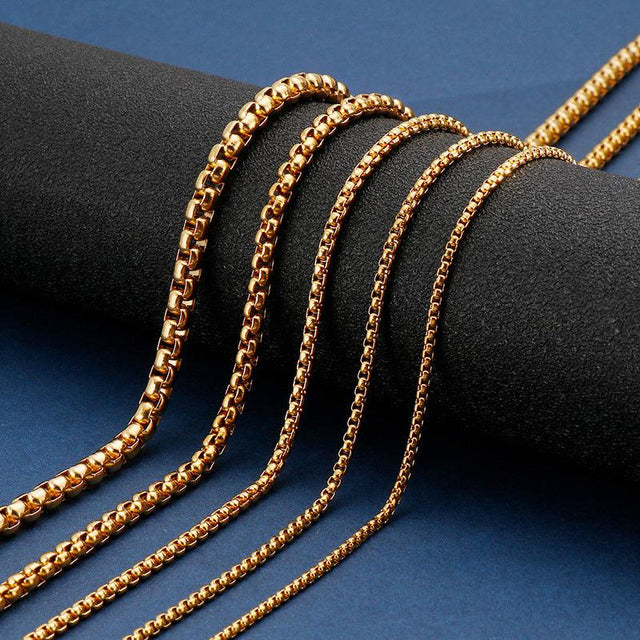
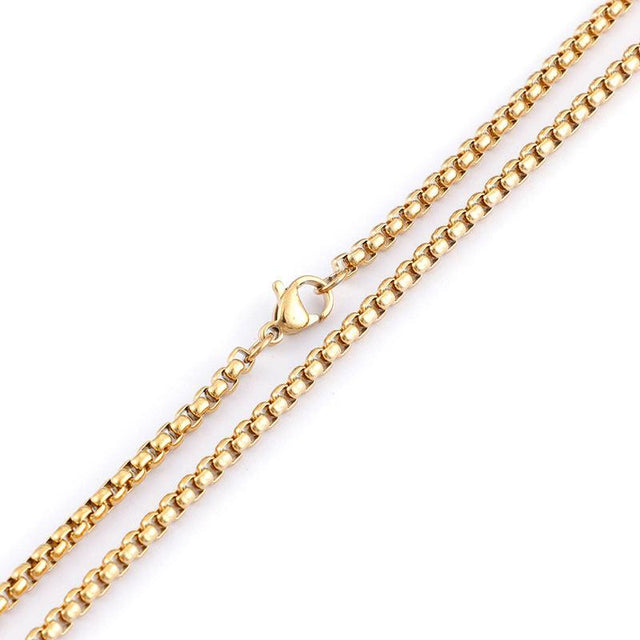
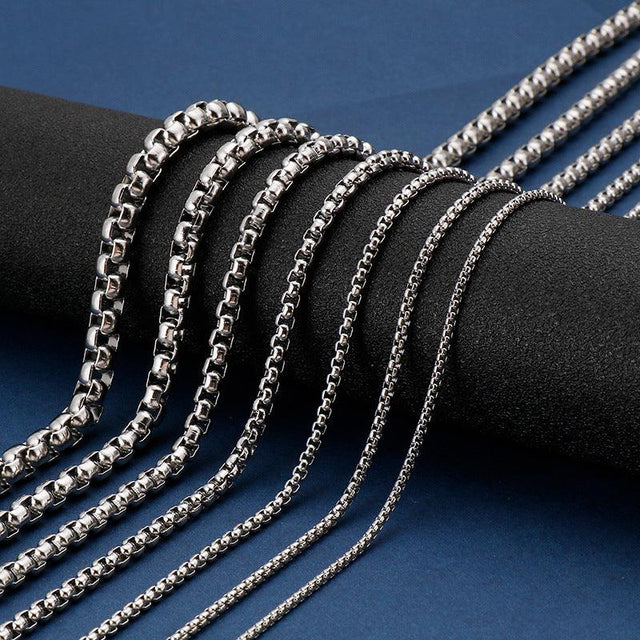
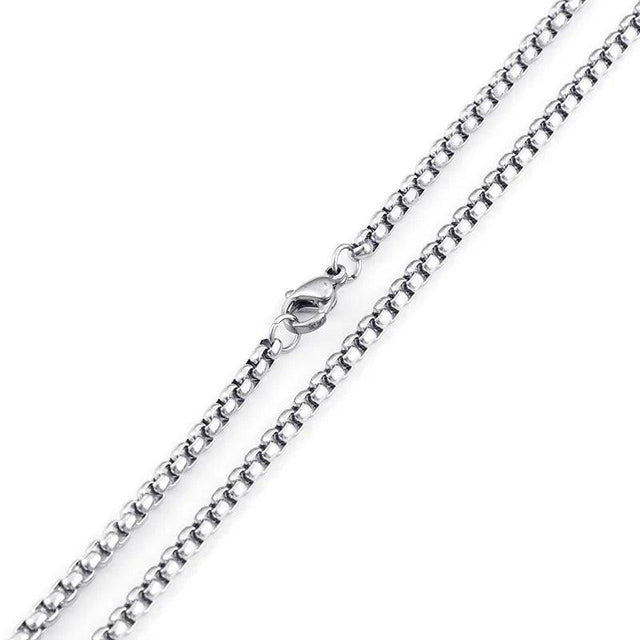
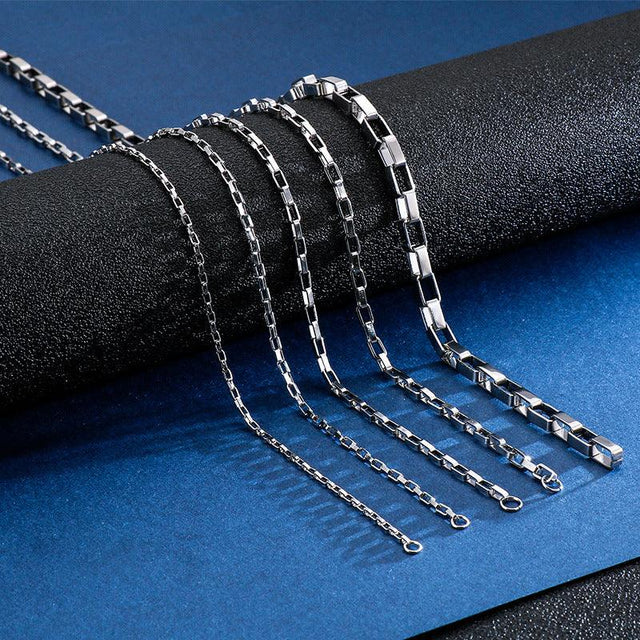
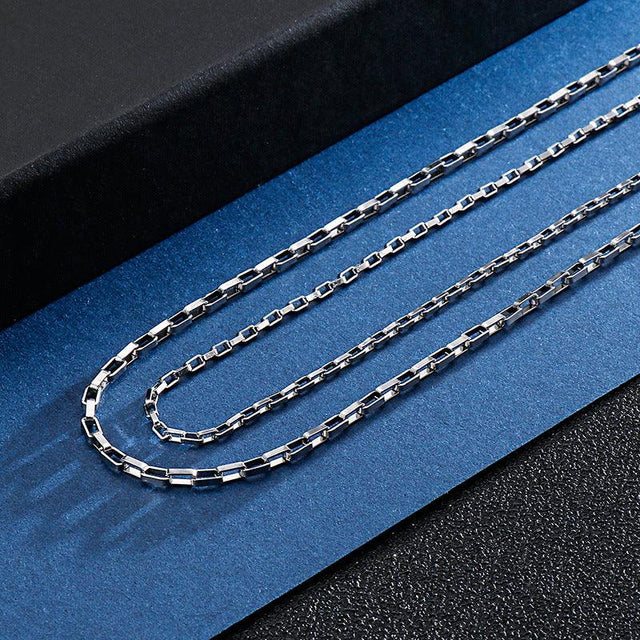
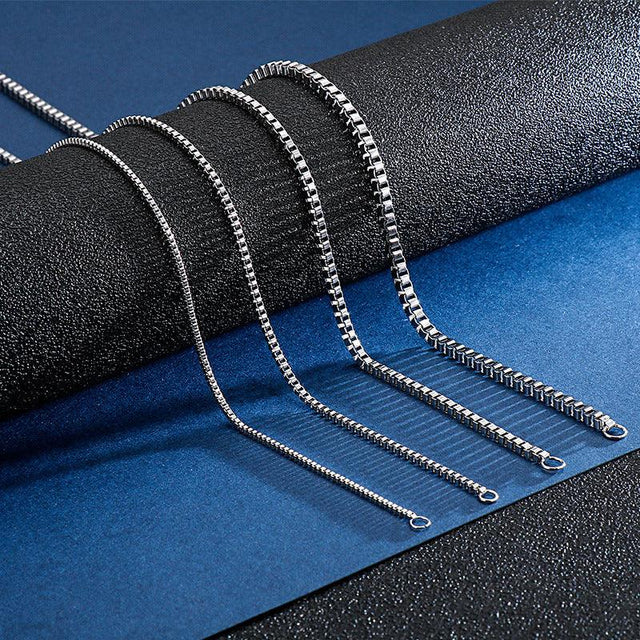
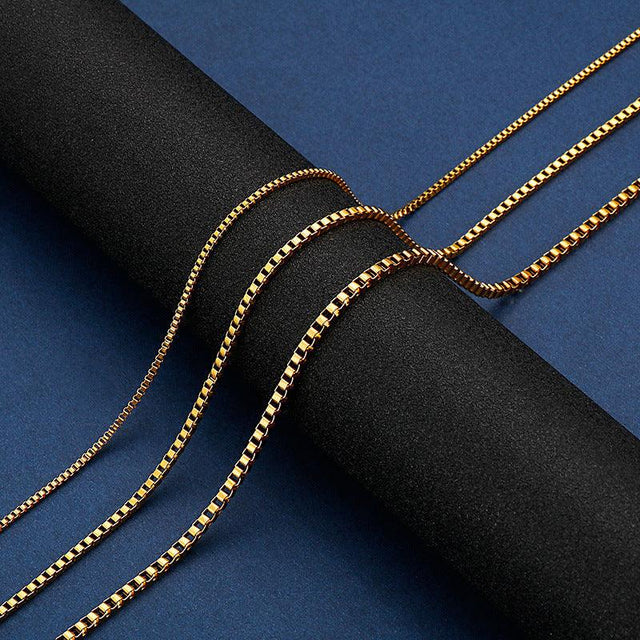
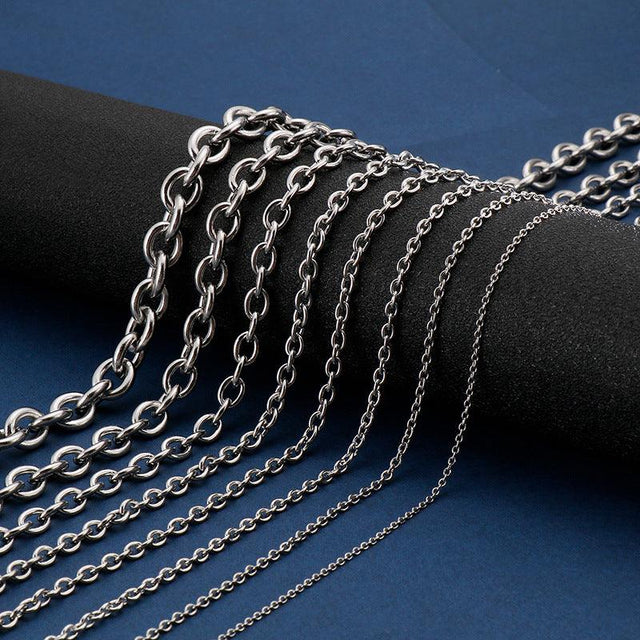
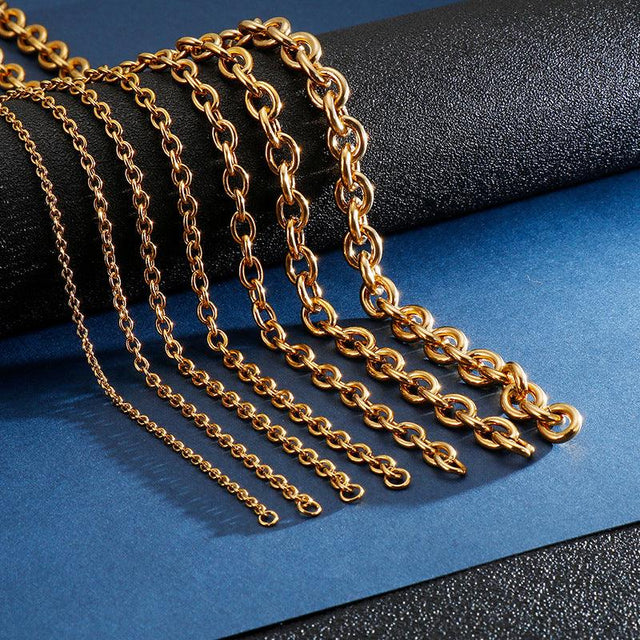
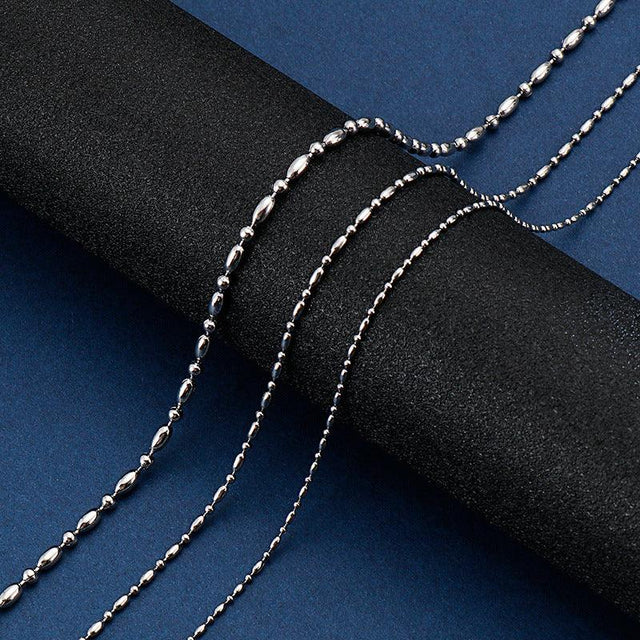
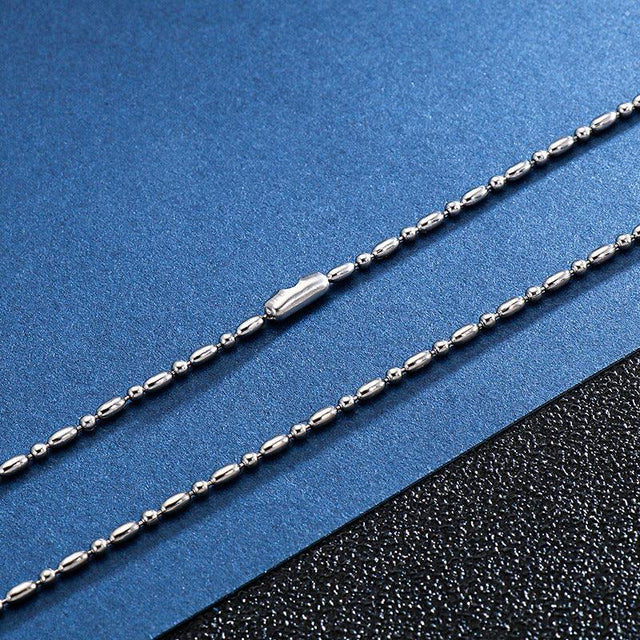
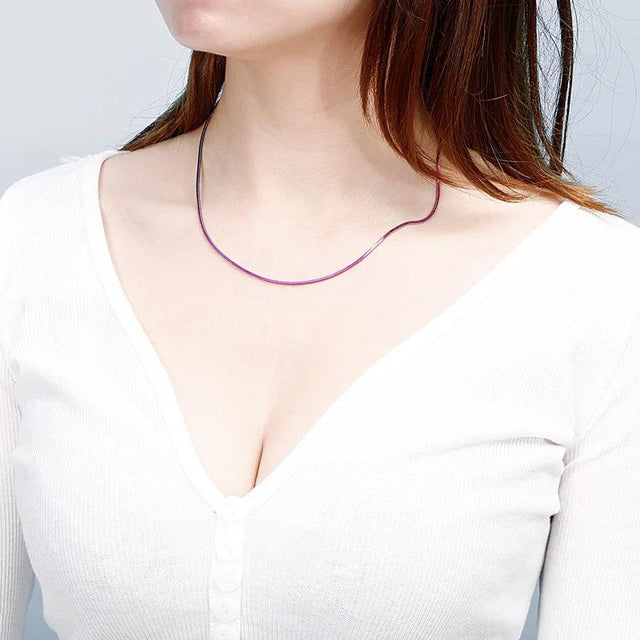
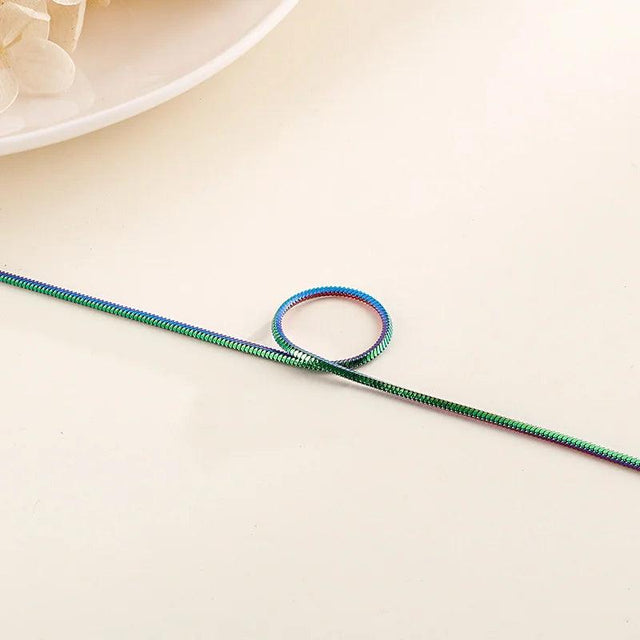
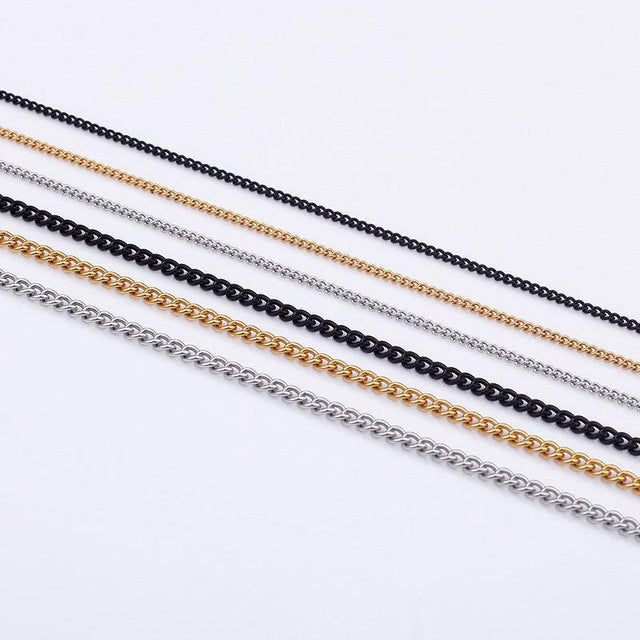
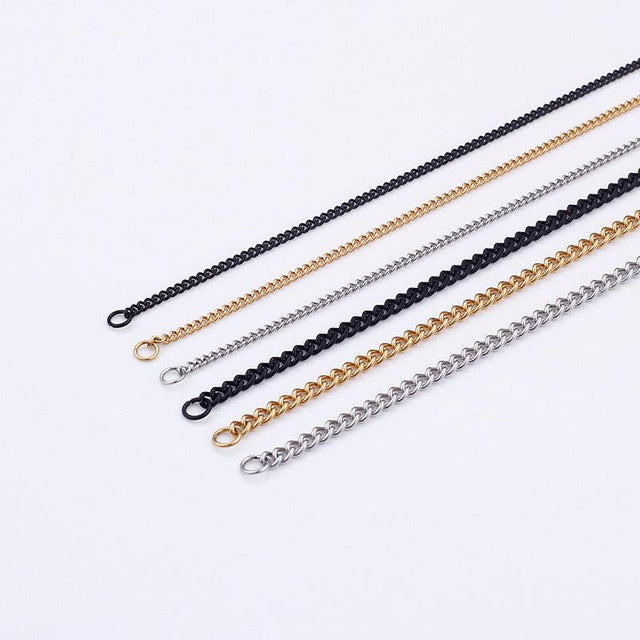
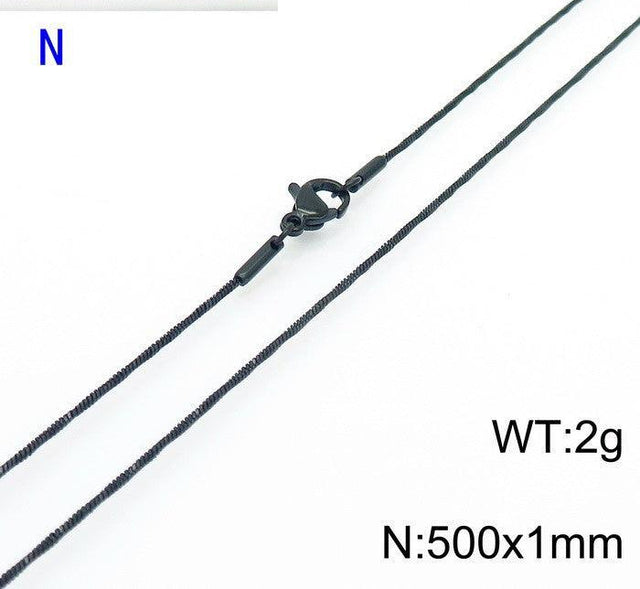
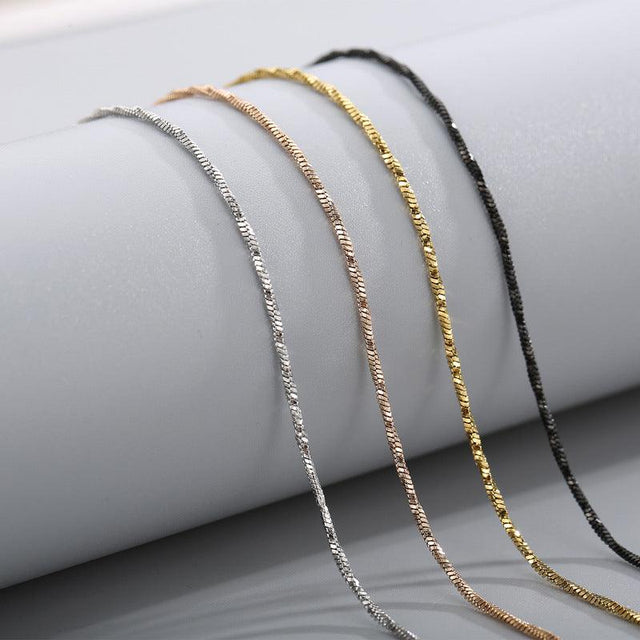
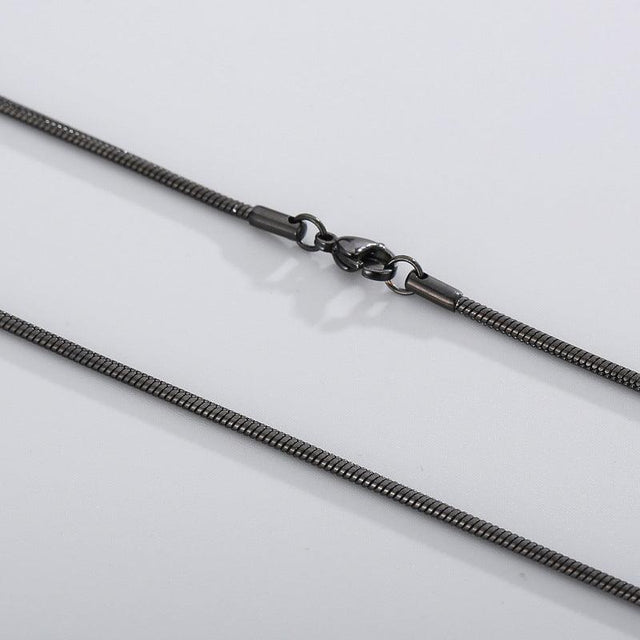
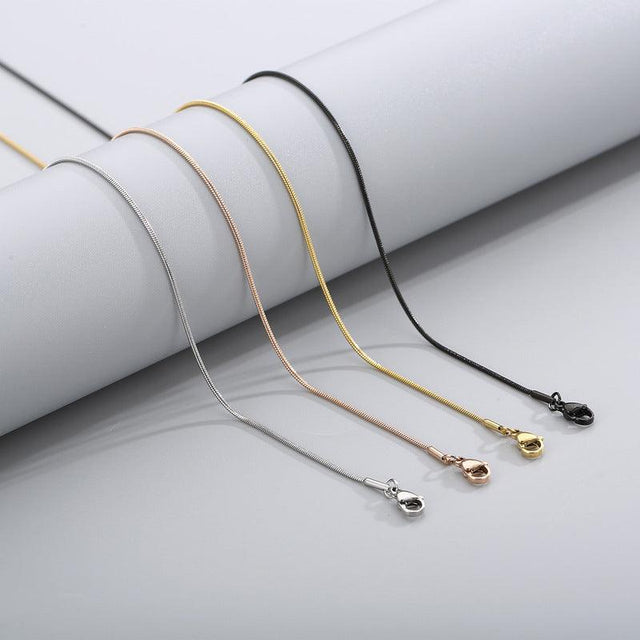
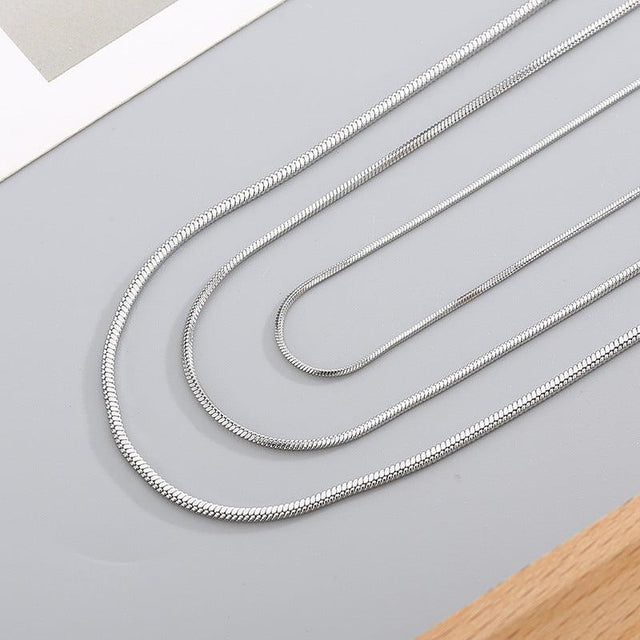
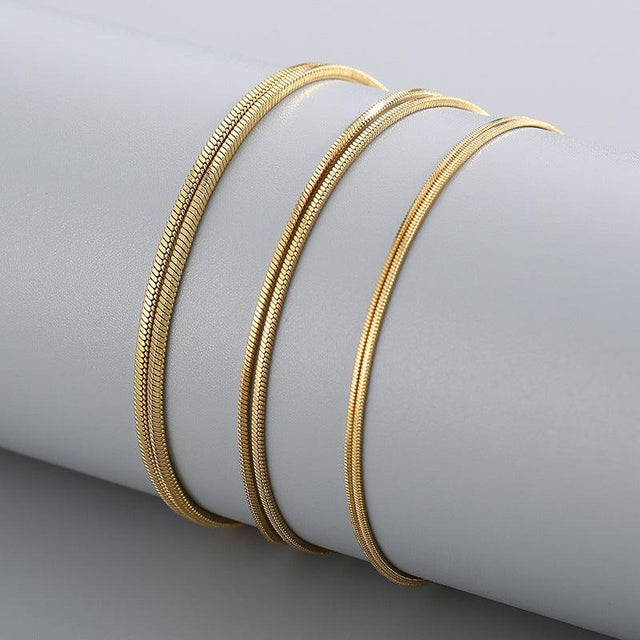
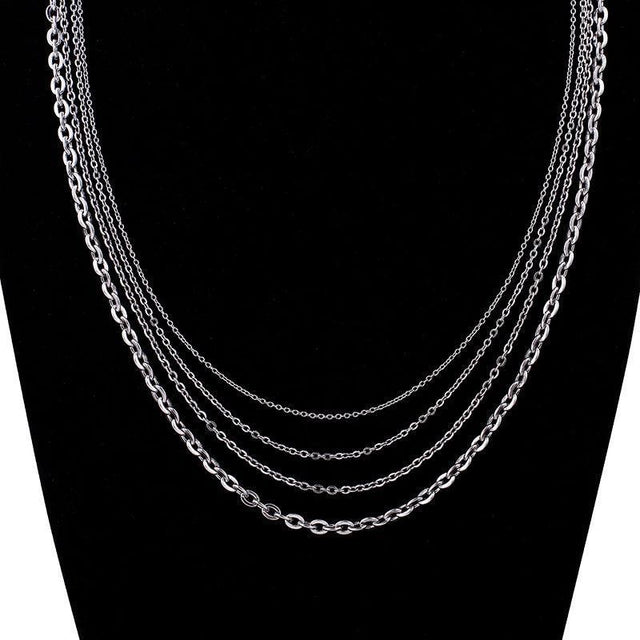
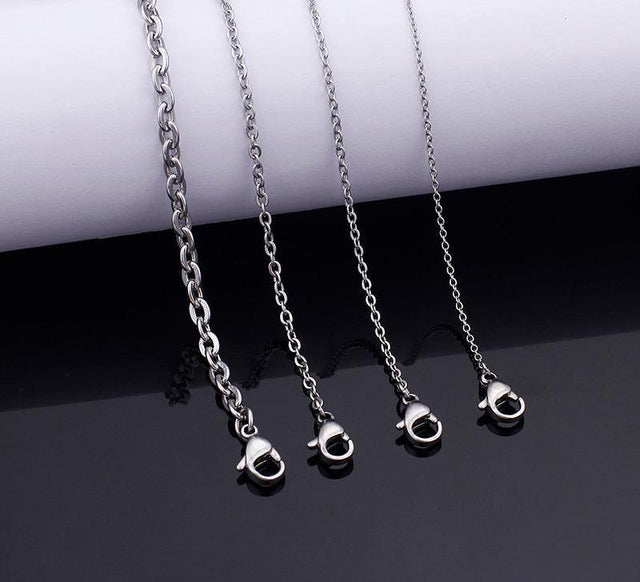
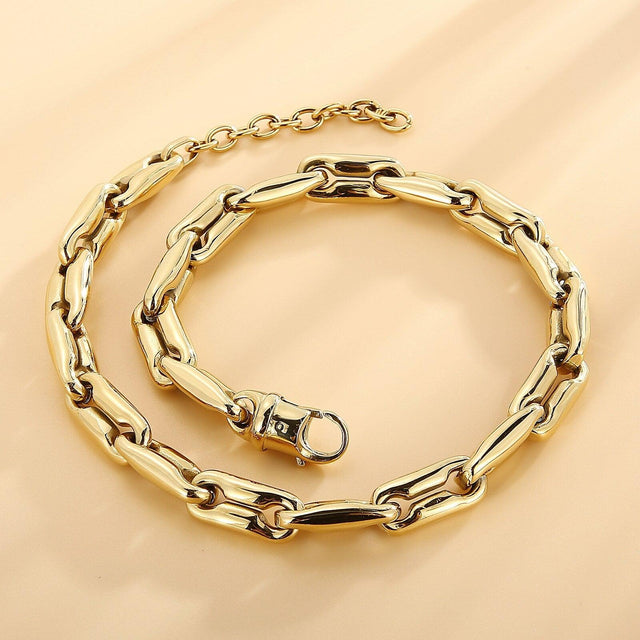
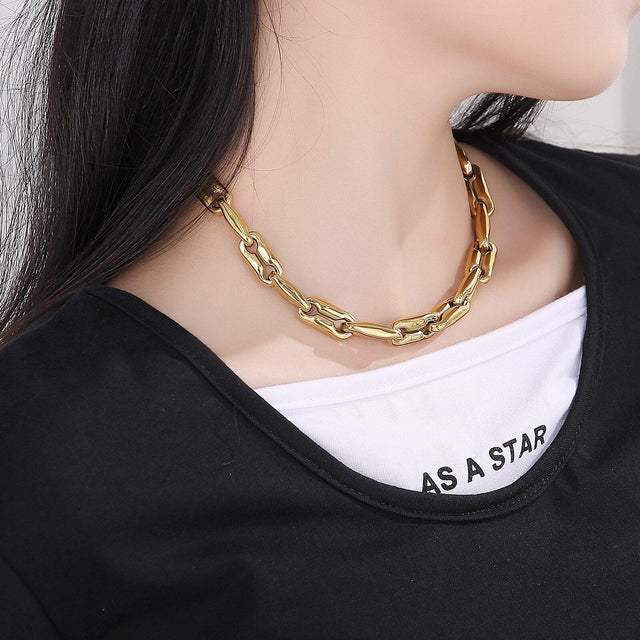
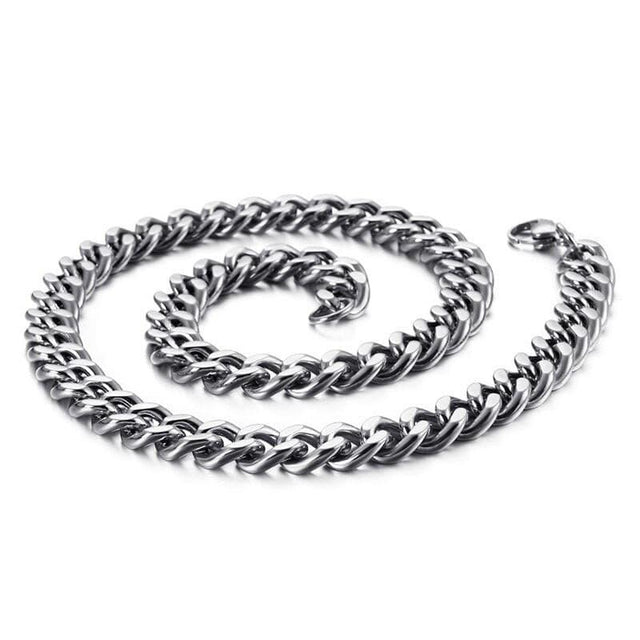

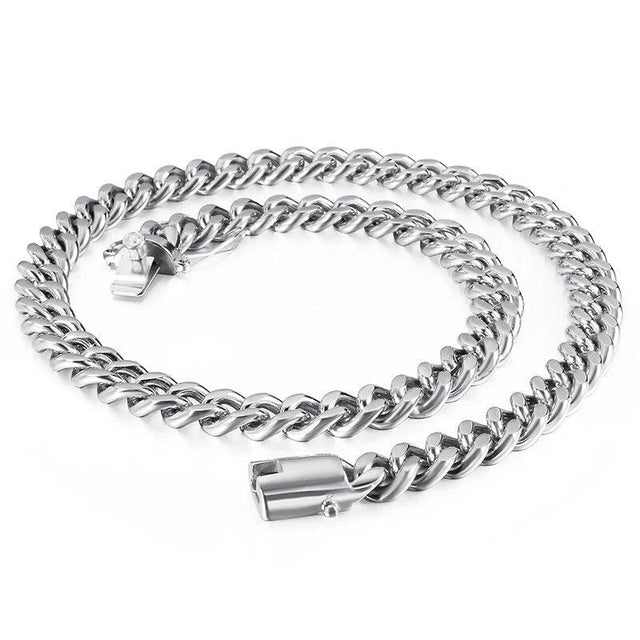
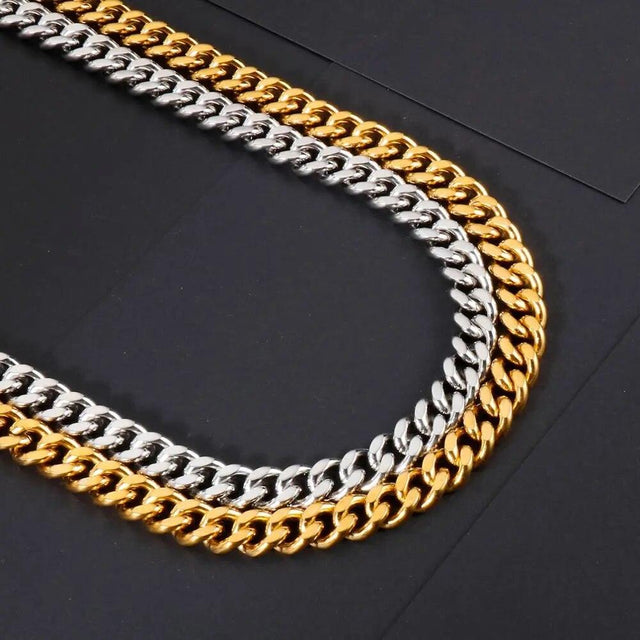
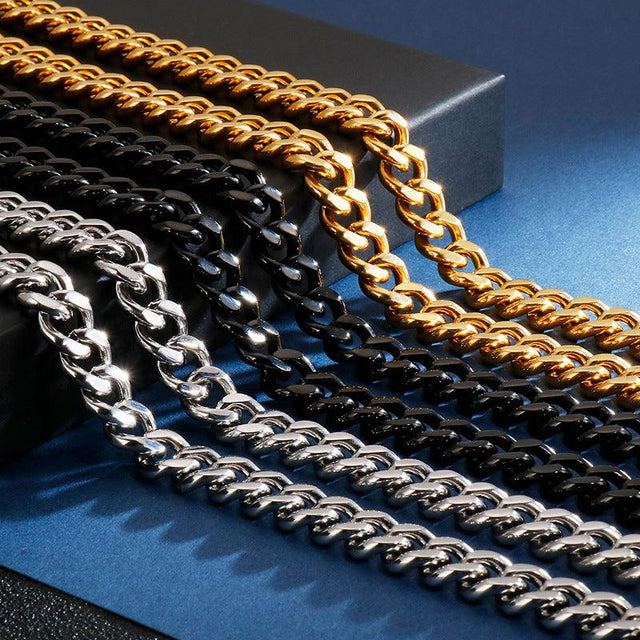
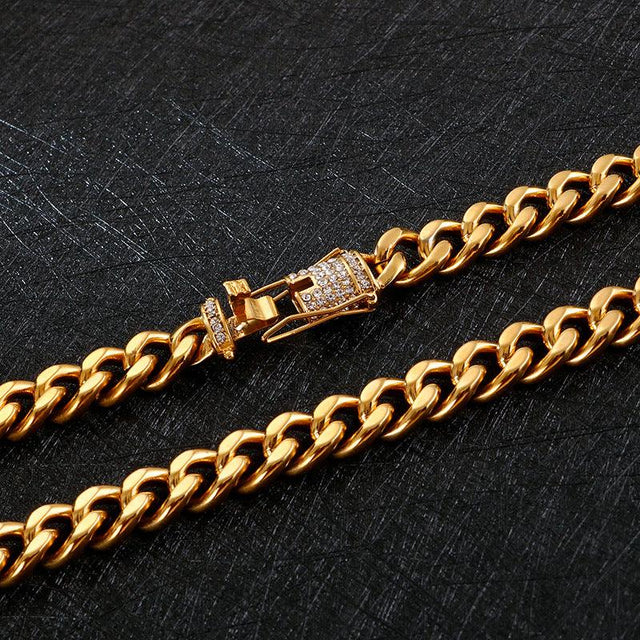
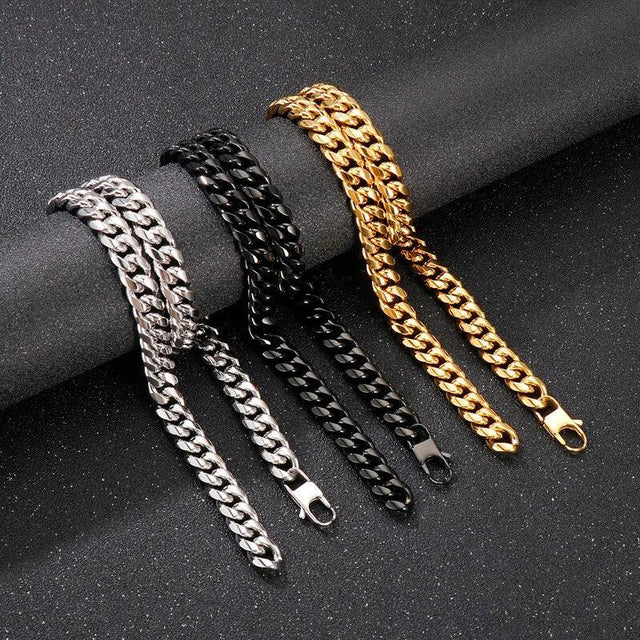
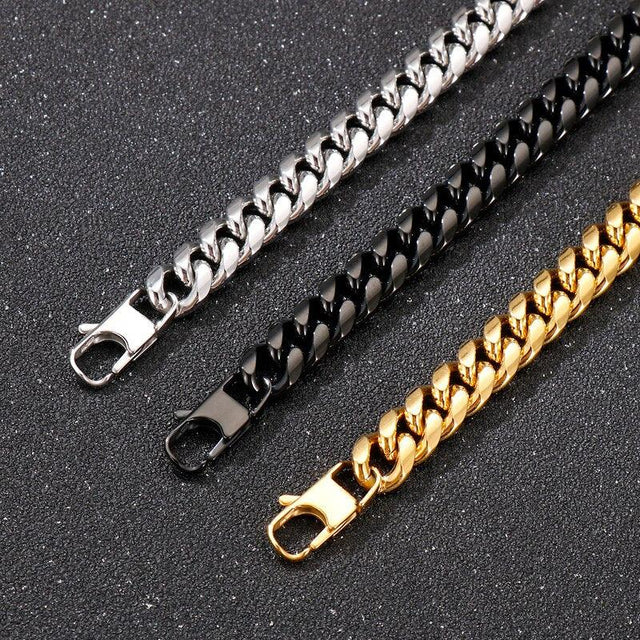
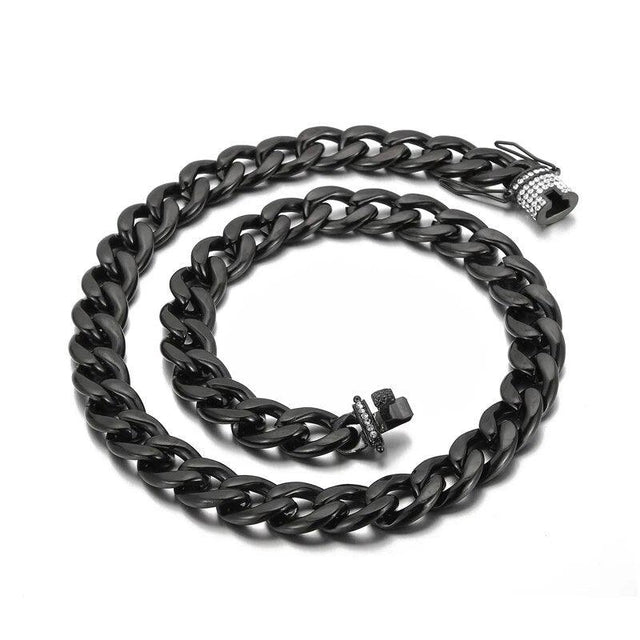
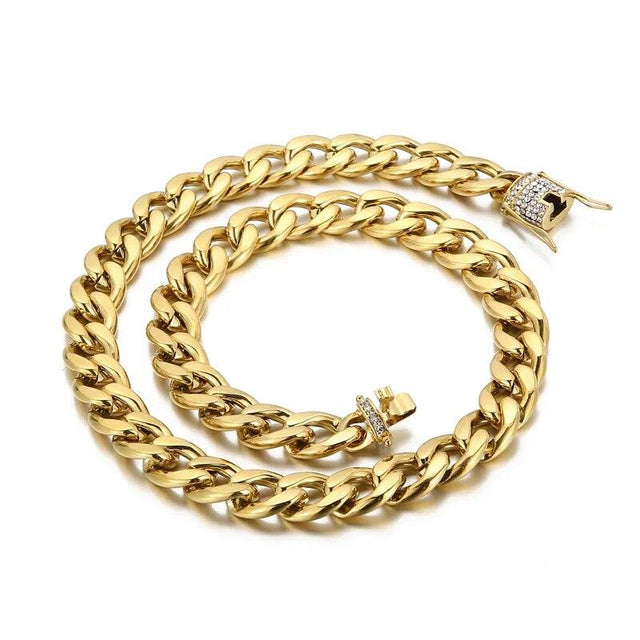
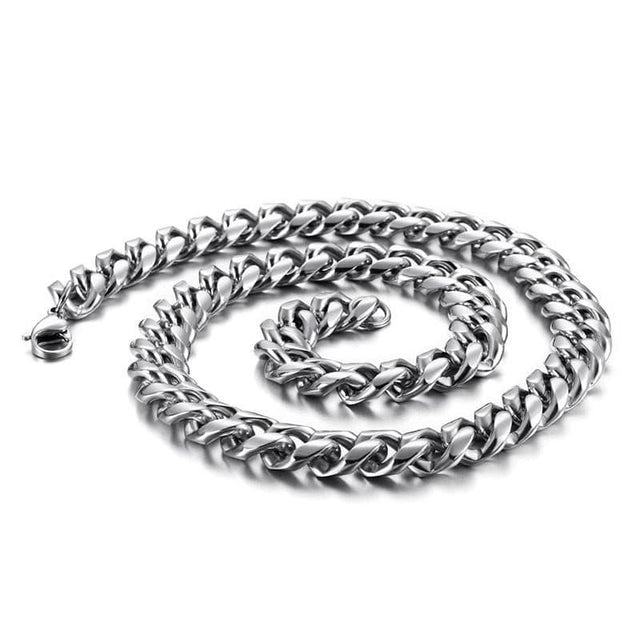
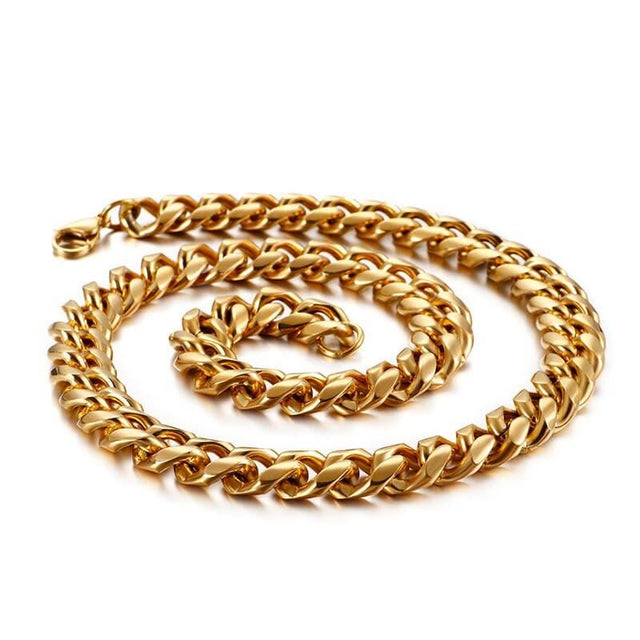
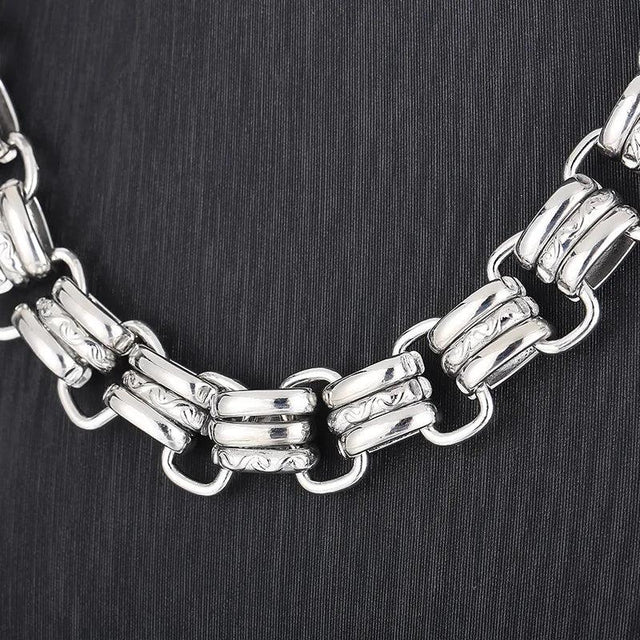
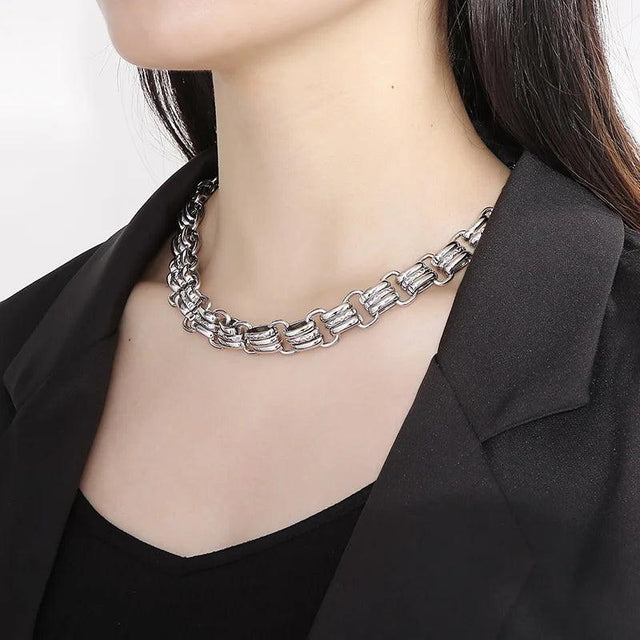
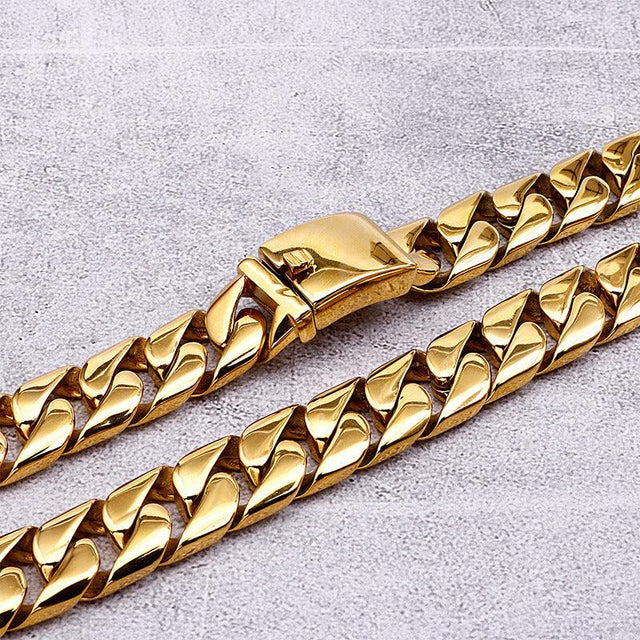
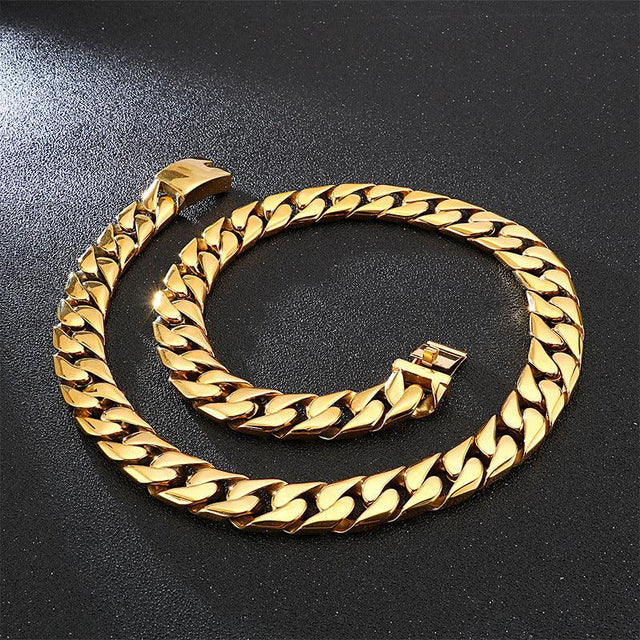
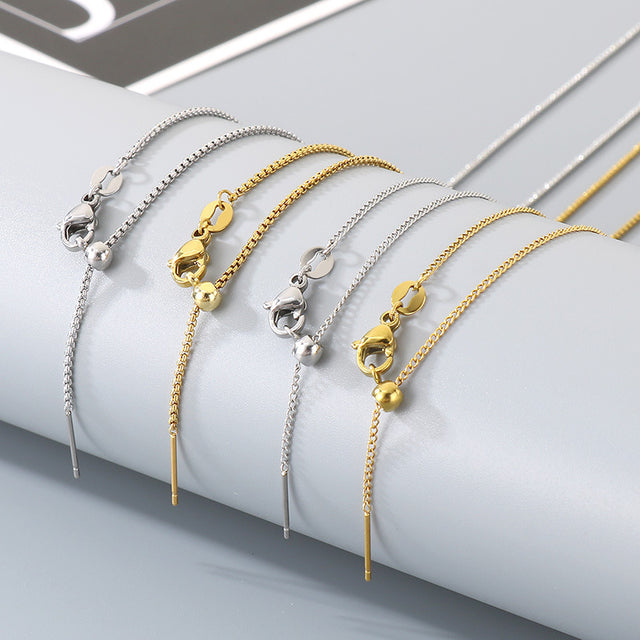
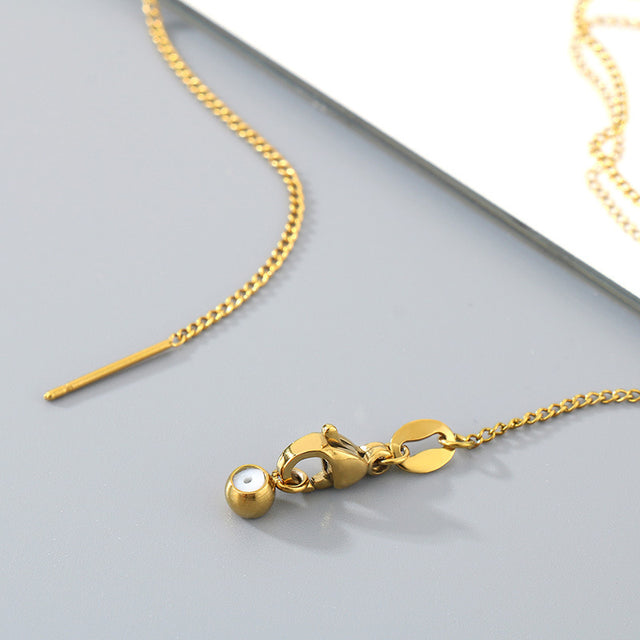
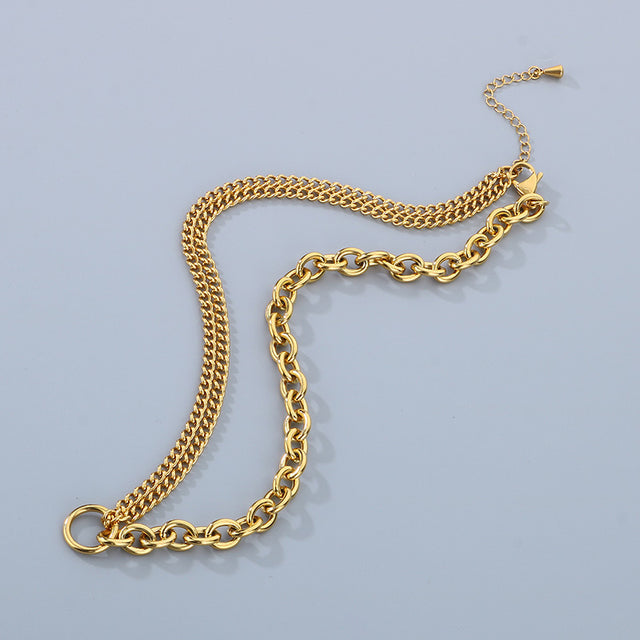

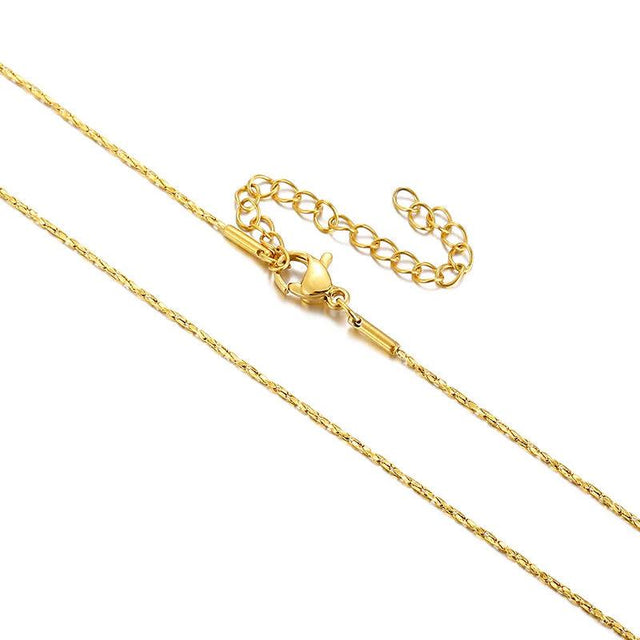
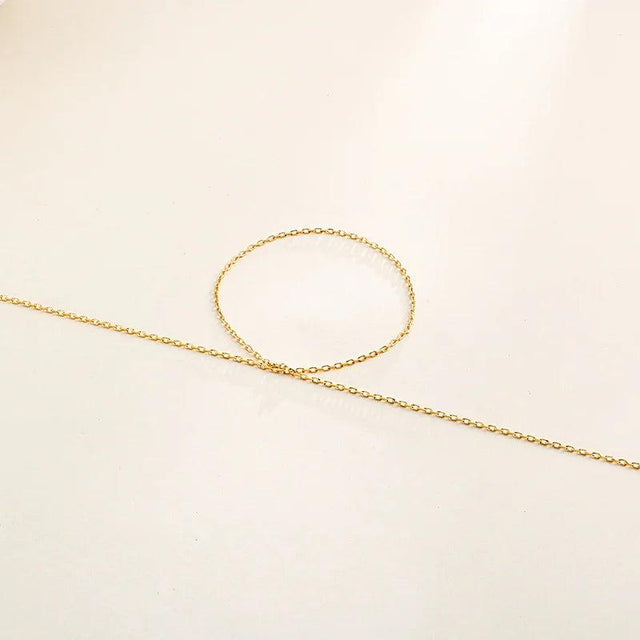
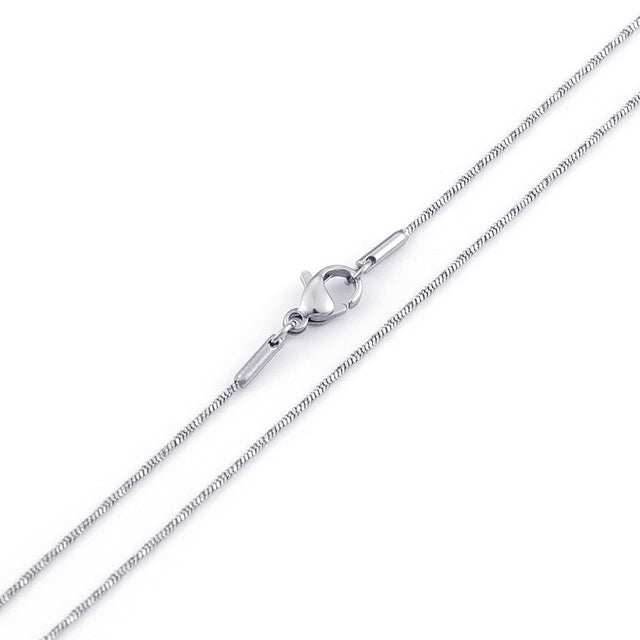
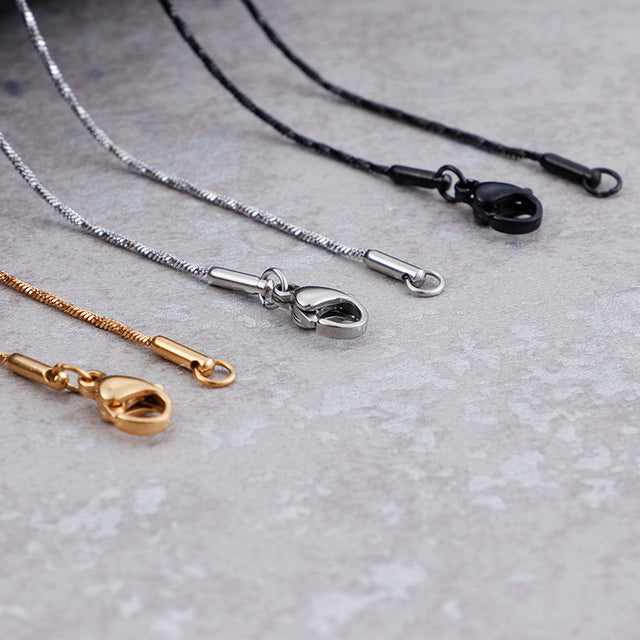
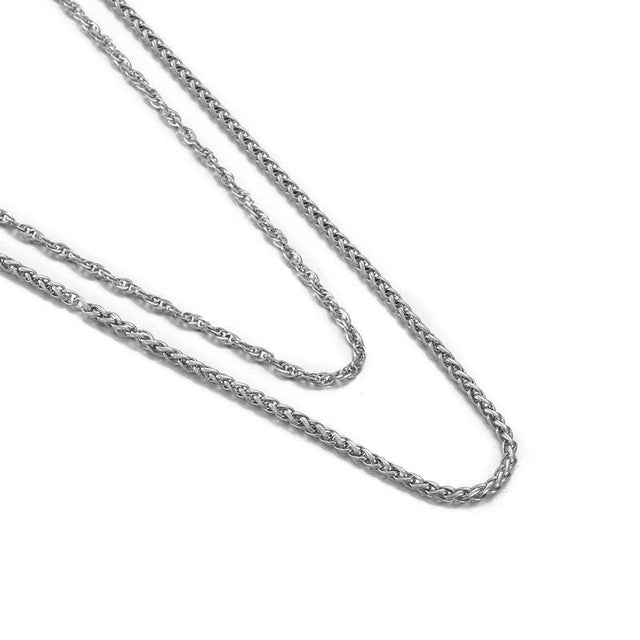
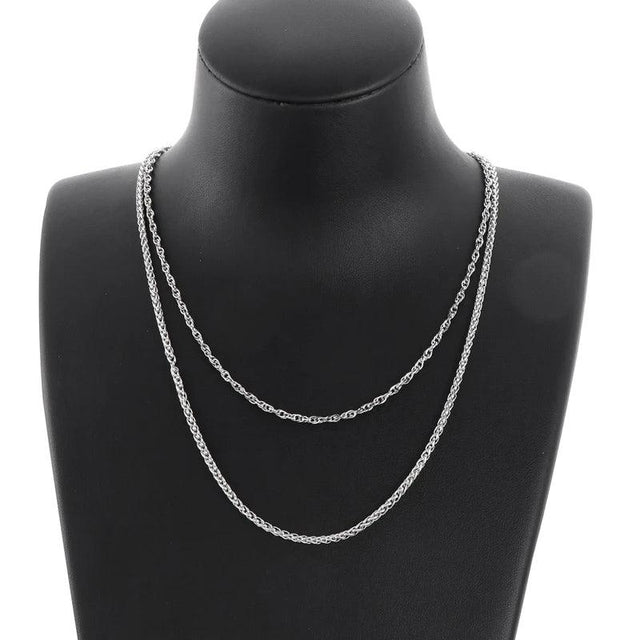
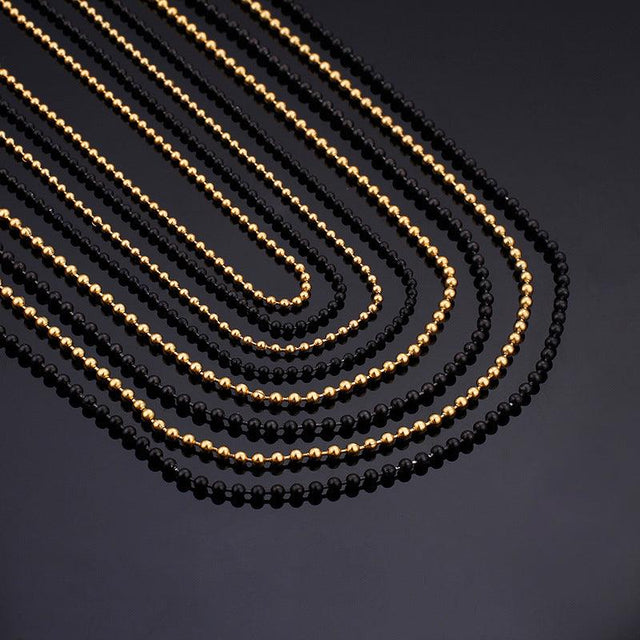
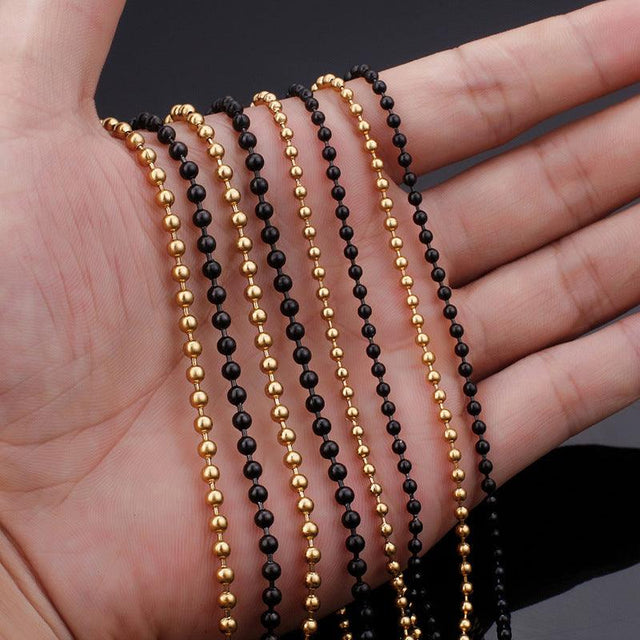
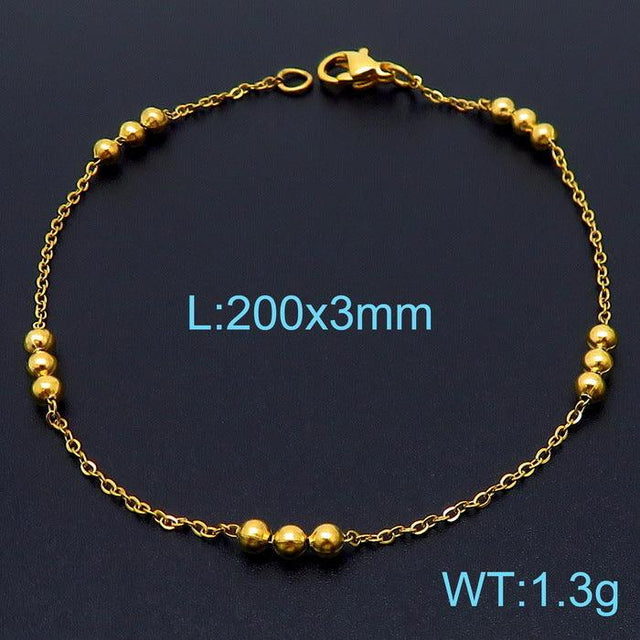
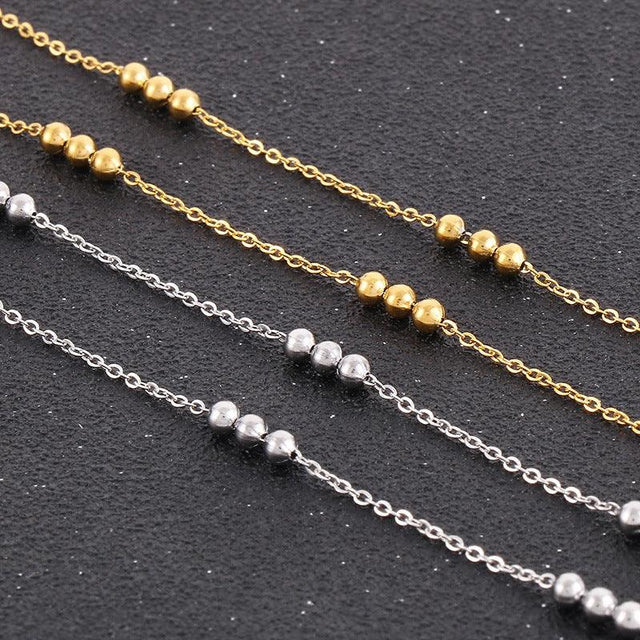
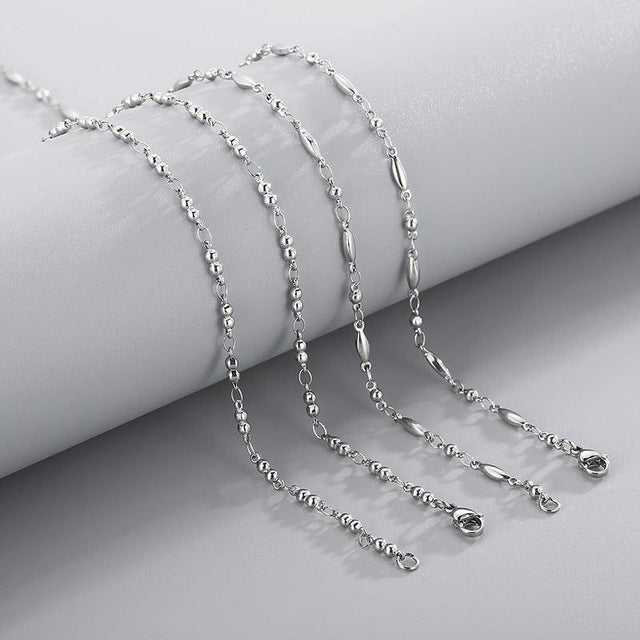
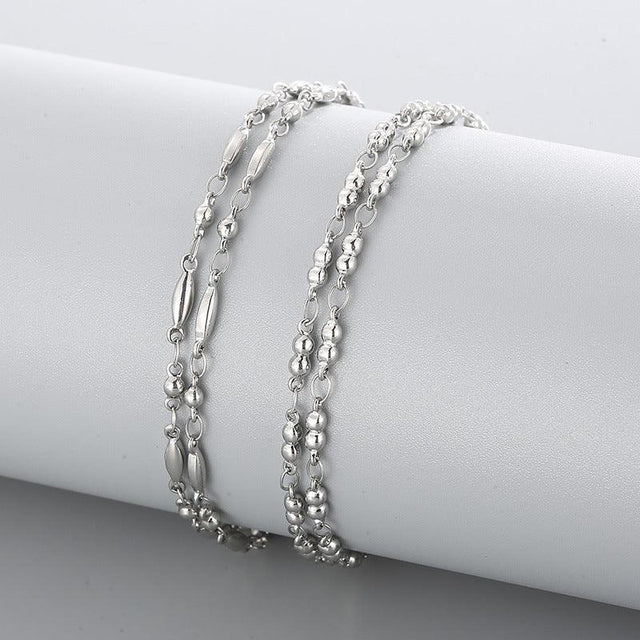
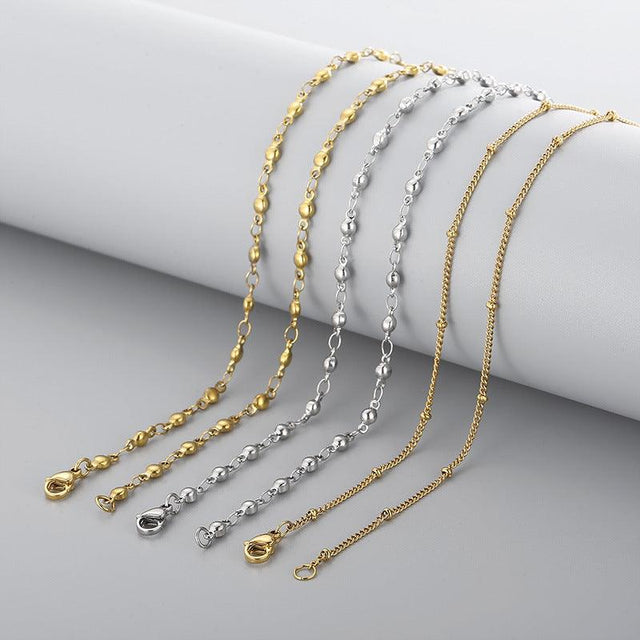
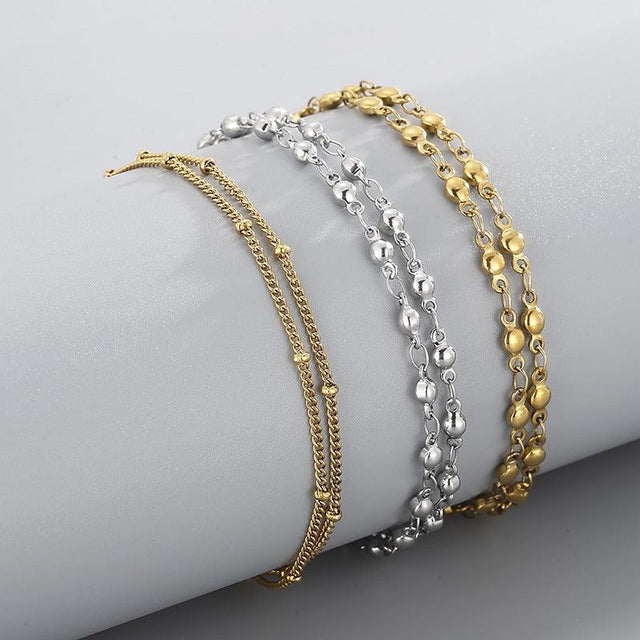
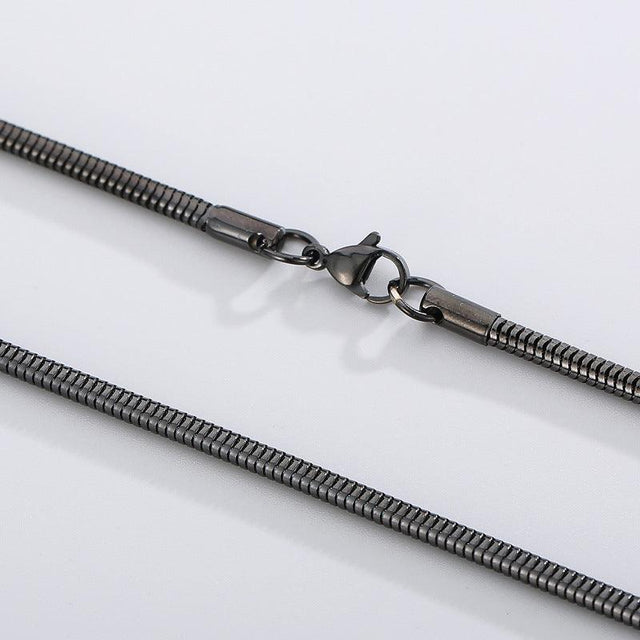
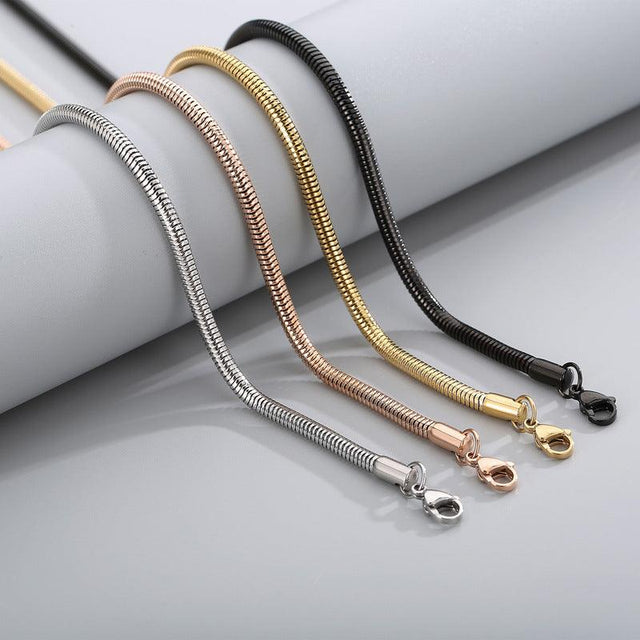
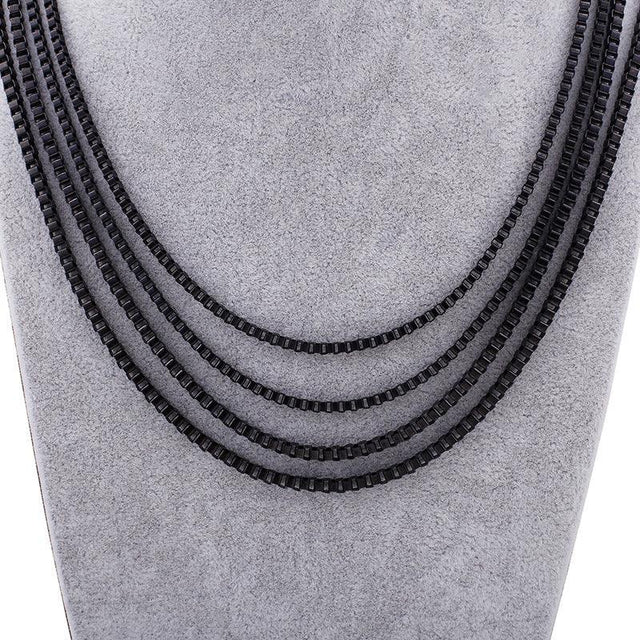
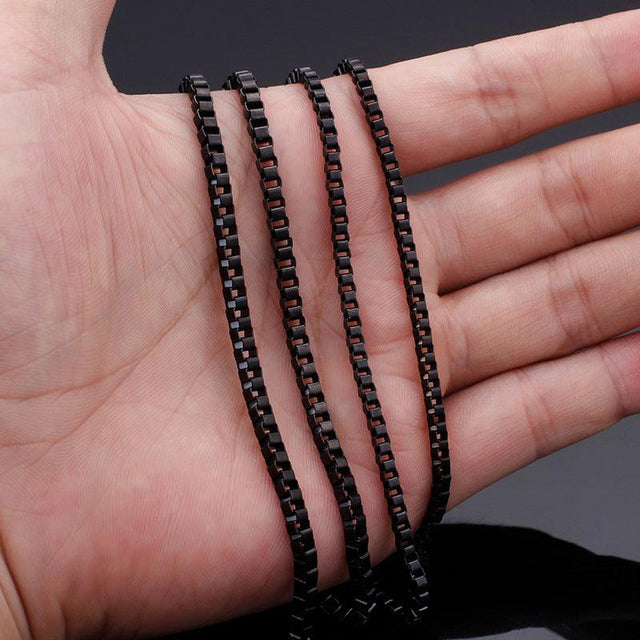
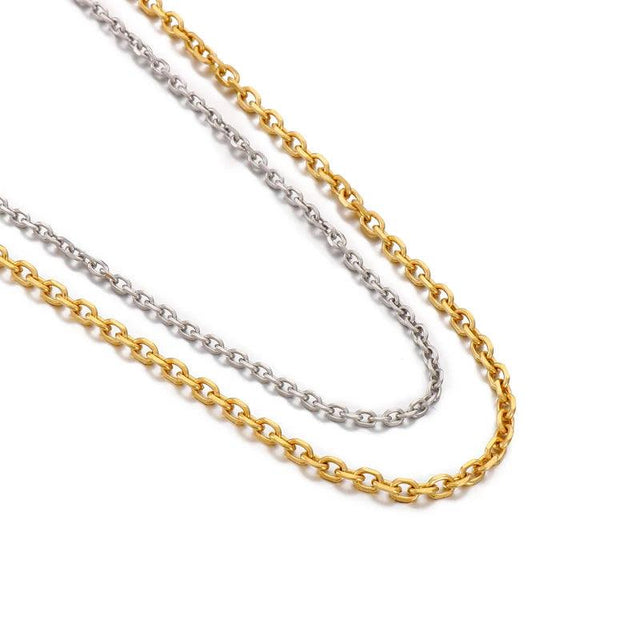
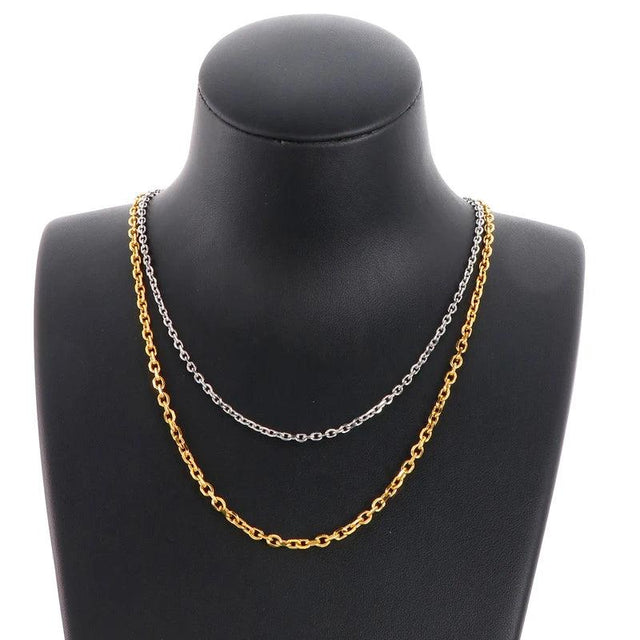
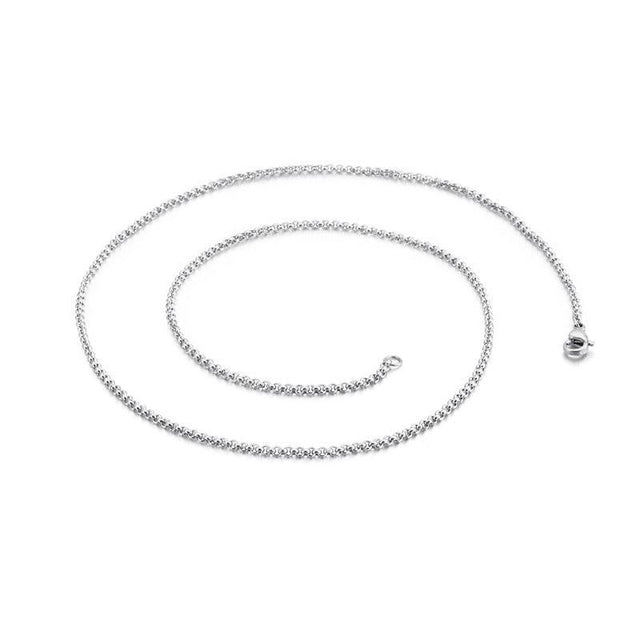
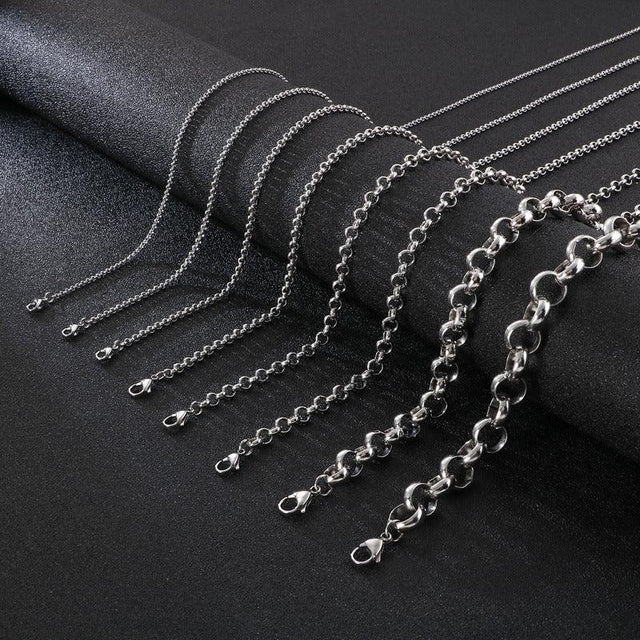
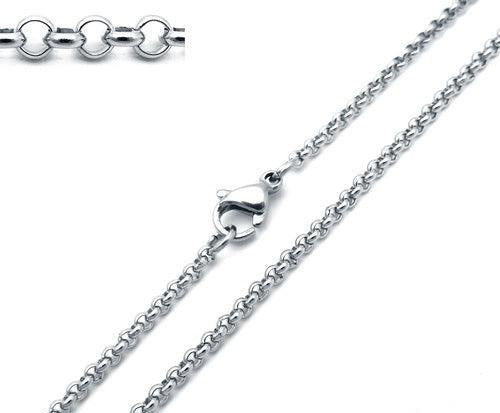
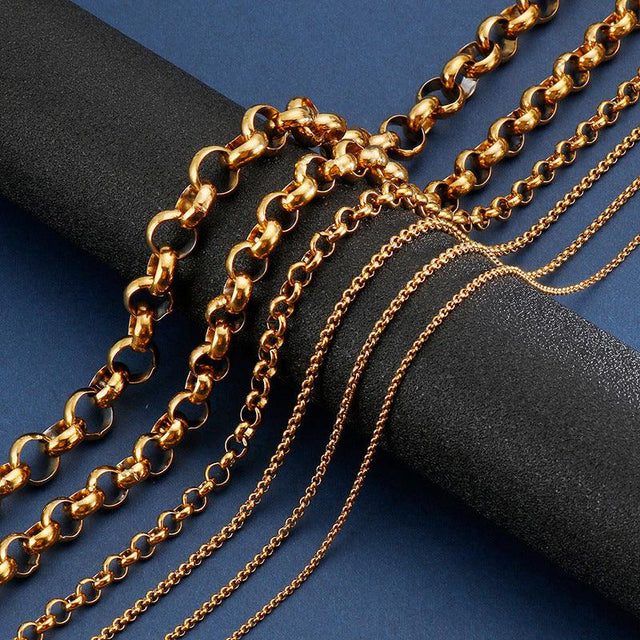
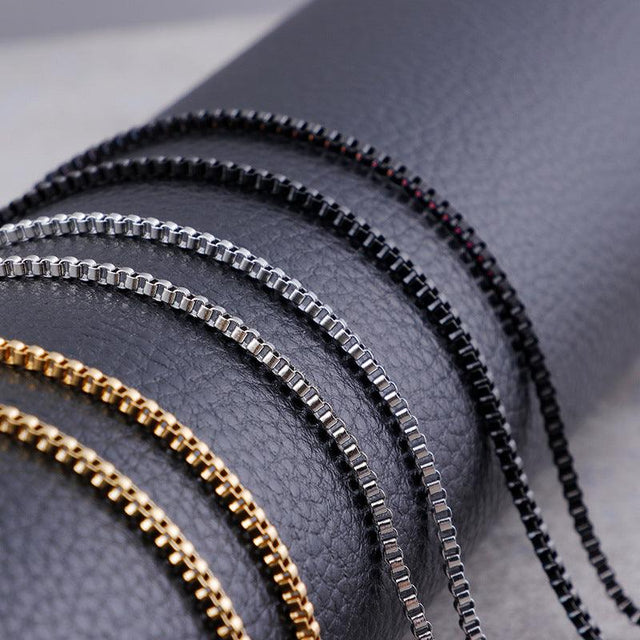
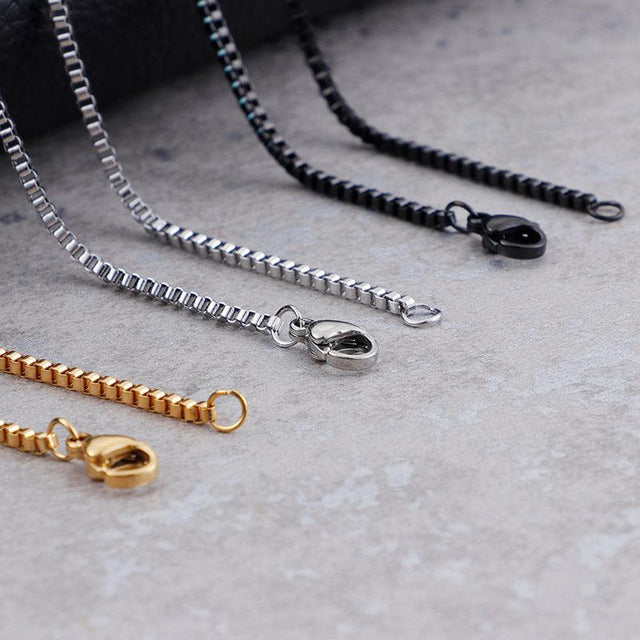
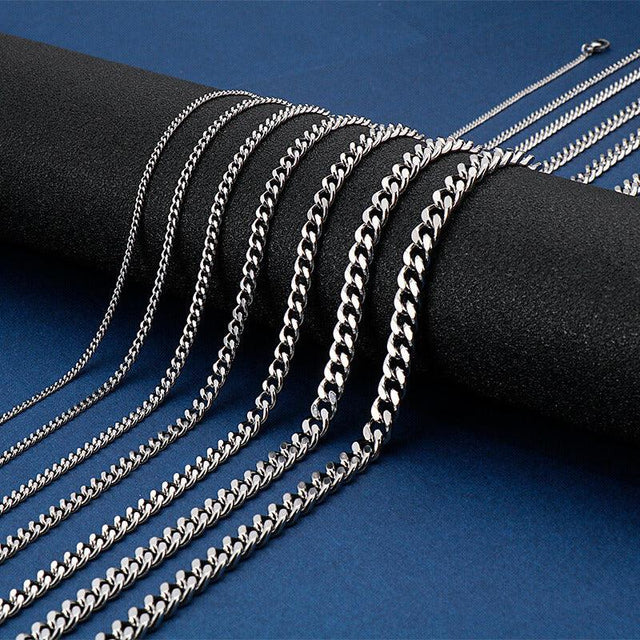
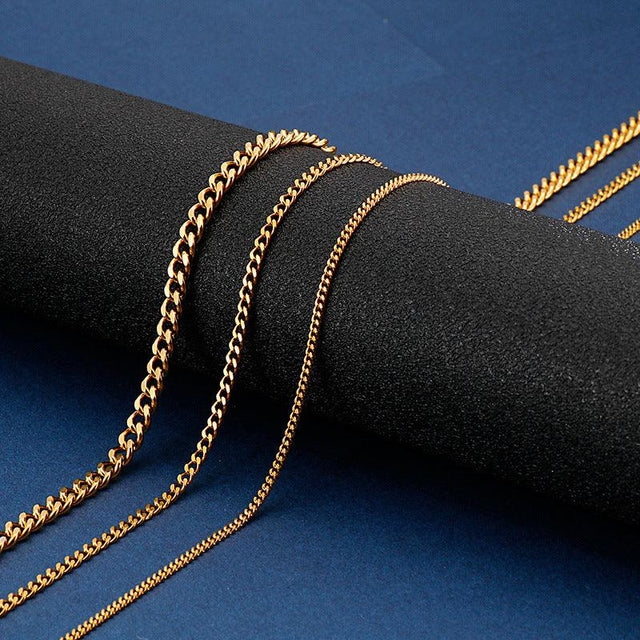
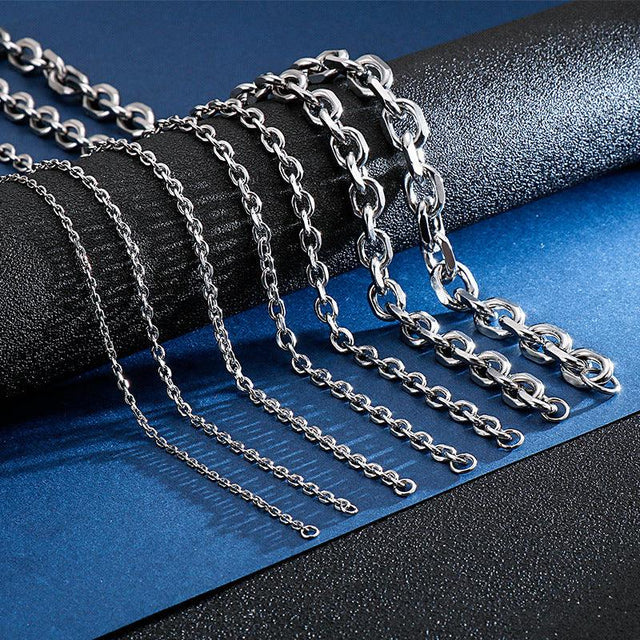
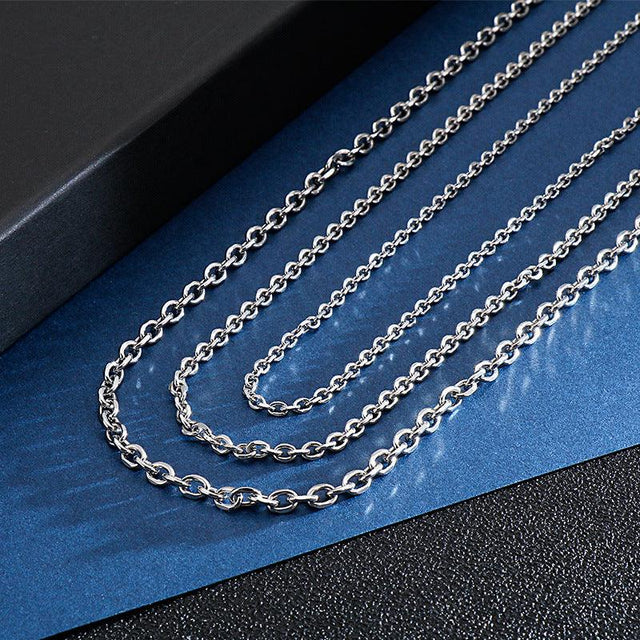
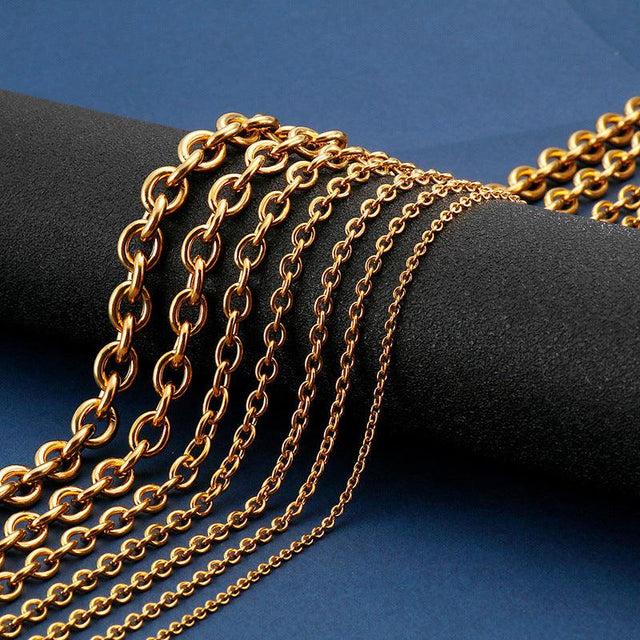
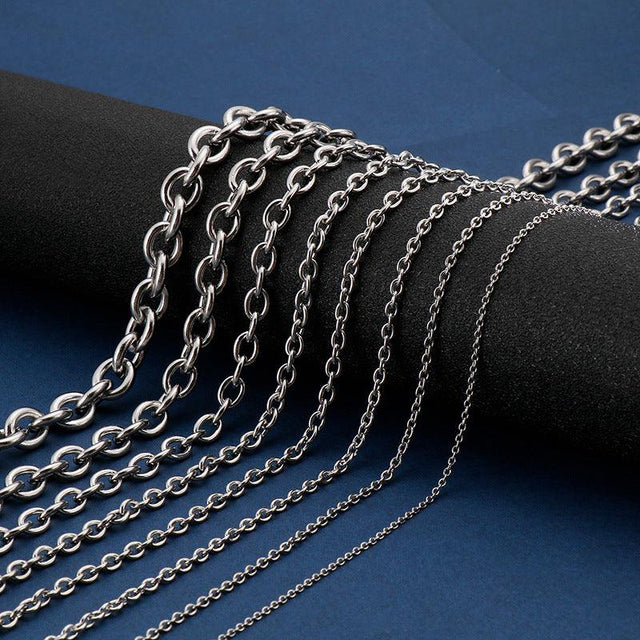
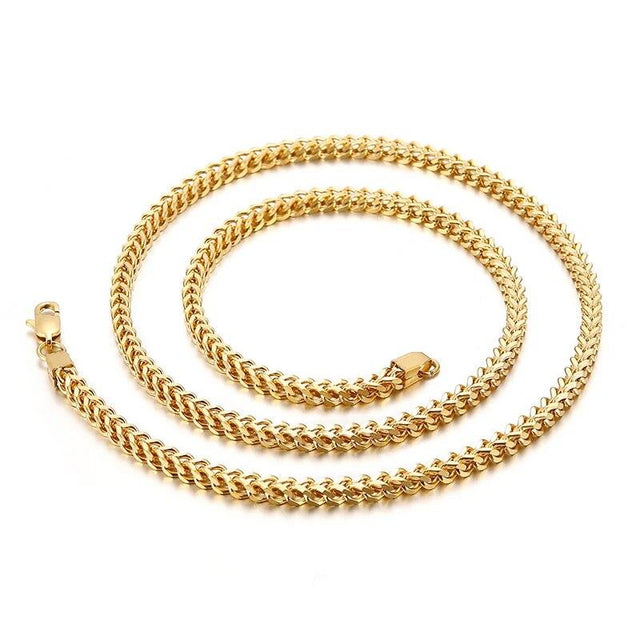
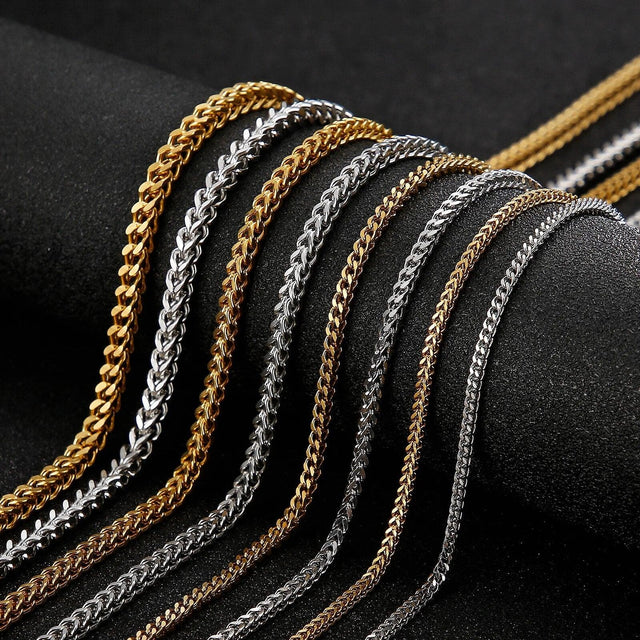
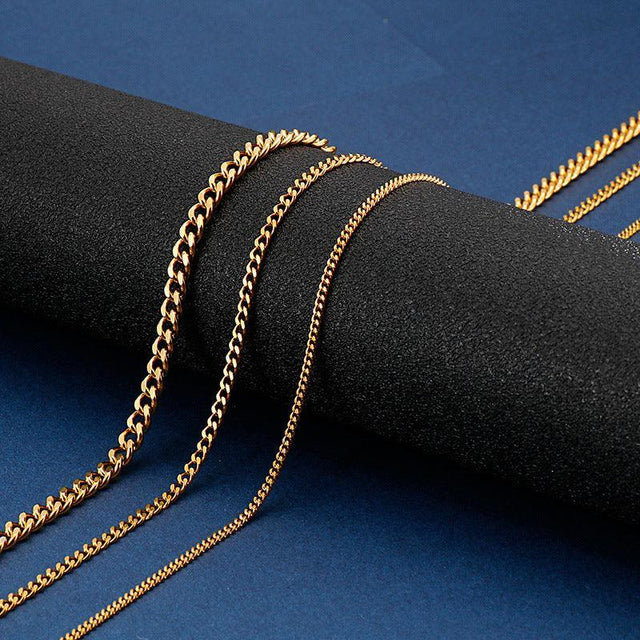
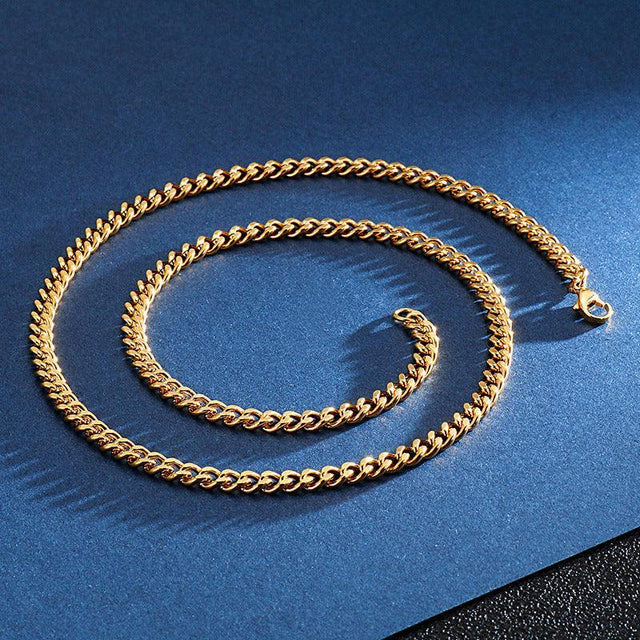
Construction decides what a chain can do
These three questions come before any drawing.
What will the chain have to carry?
A chain built from discrete links takes a point load; a chain built from interlocking plates concentrates it. That is a property of the construction rather than a quality level, so it is settled at specification and not at inspection.
Is the quote comparable?
Four values make two quotes mean the same thing: construction, wire gauge, finished width and length basis. Width alone is not enough. Two cable chains at one width can differ in gauge, and the lighter one breaks sooner.
Reel or cut to length?
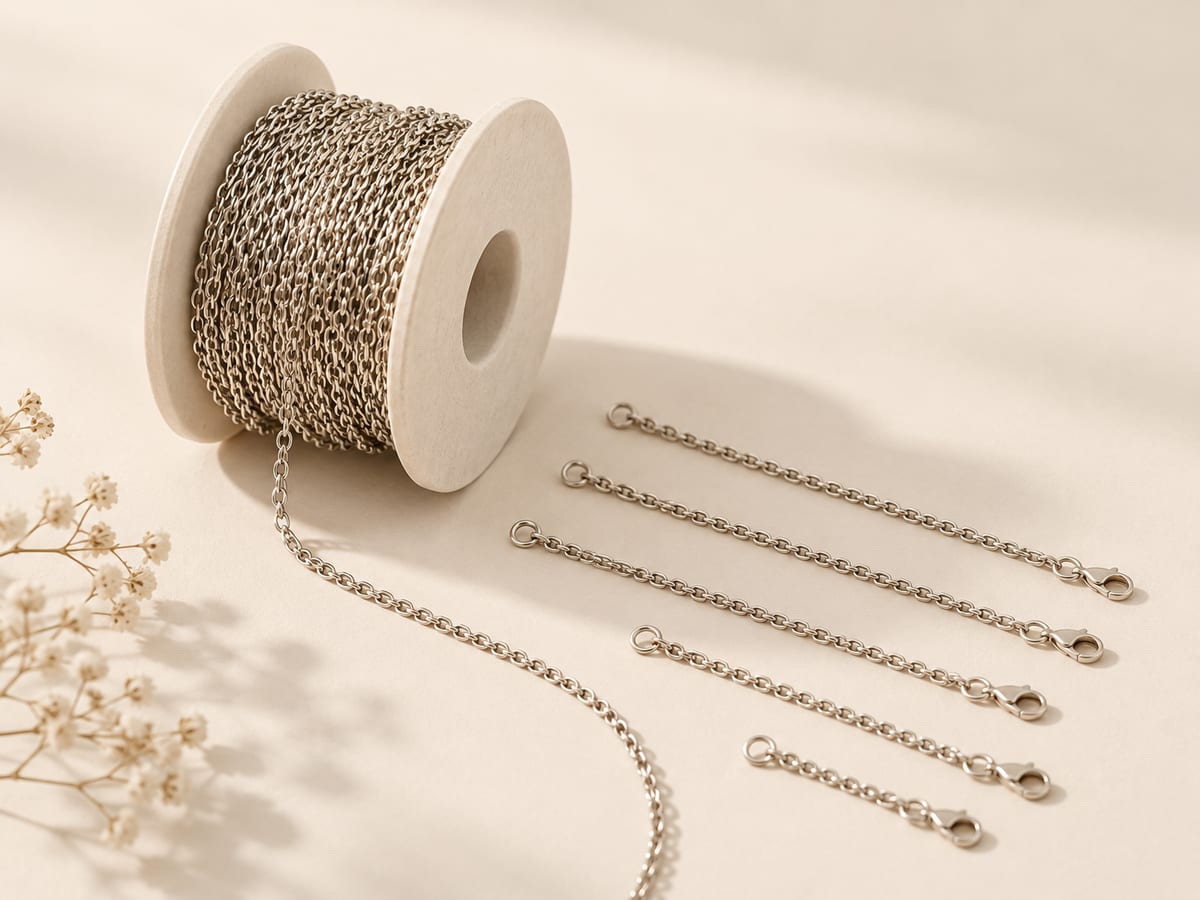
A component buyer assembling in-house usually wants bulk reel; a buyer who is not wants cut lengths with the ends finished. Same chain, different finishing operation, and the minimum is counted differently.
What can be changed, and what cannot
| Dimension | What you can change | What is fixed | Condition |
|---|---|---|---|
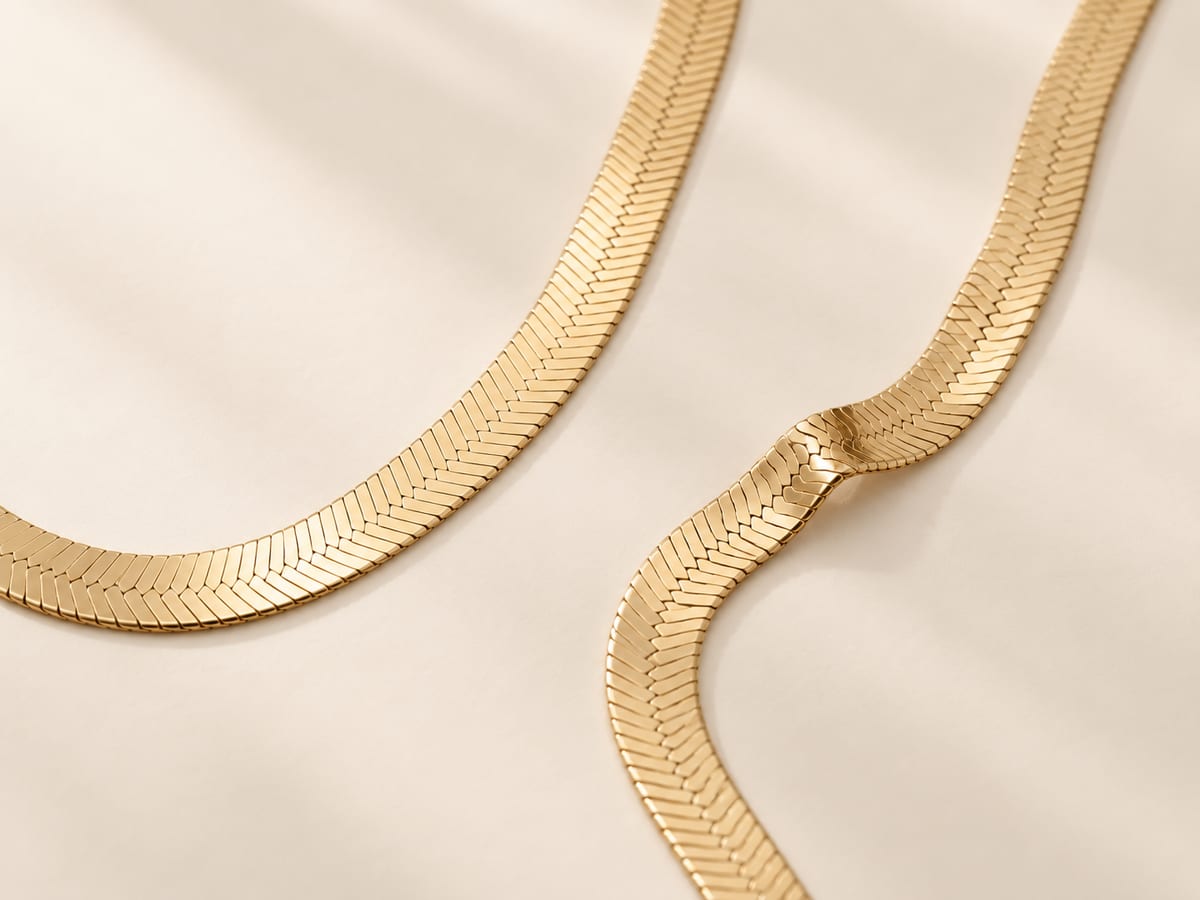
| Construction | Cable, rolo, curb, figaro, rope, snake, herringbone, ball | Point loading on a construction not built to take it | Snake, herringbone and ball are better supplied as standalone chain; they are not recommended as pendant carriers |
| Wire gauge | Gauge within the range the forming tooling holds | Gauges outside that range without new tooling | Gauge is quoted alongside width, because width on its own does not describe the chain |
| Finished width | Link proportion and finished width within the tooled range | Widths the tooling cannot hold repeatably | New widths are possible with tooling, confirmed at DFM |
| Supply form | Bulk reel, or cut to length with the ends finished | Cut lengths with unfinished ends | The same minimum per design as every piece. Ask our sales team for how it applies to a reel. |
| End finishing | Soldered, welded or open ends; clasp fitted or supplied loose | Ends left as the cut leaves them | Where a clasp is fitted the joint attaching it is specified as its own value |
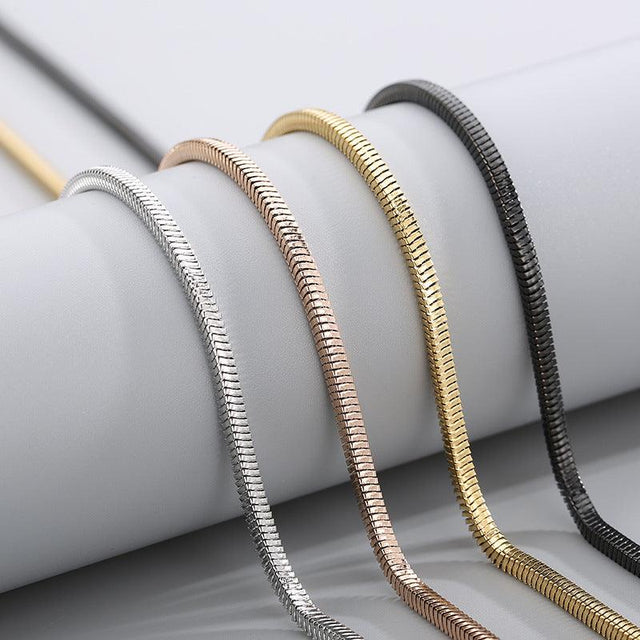
| Finish color | Gold-tone, rose gold-tone, black, gunmetal, natural steel | Colors outside the qualified PVD target range | Thickness is reported with the measurement position stated. See PVD & Gold-Tone Finishes |
Constructions, and what each one can carry
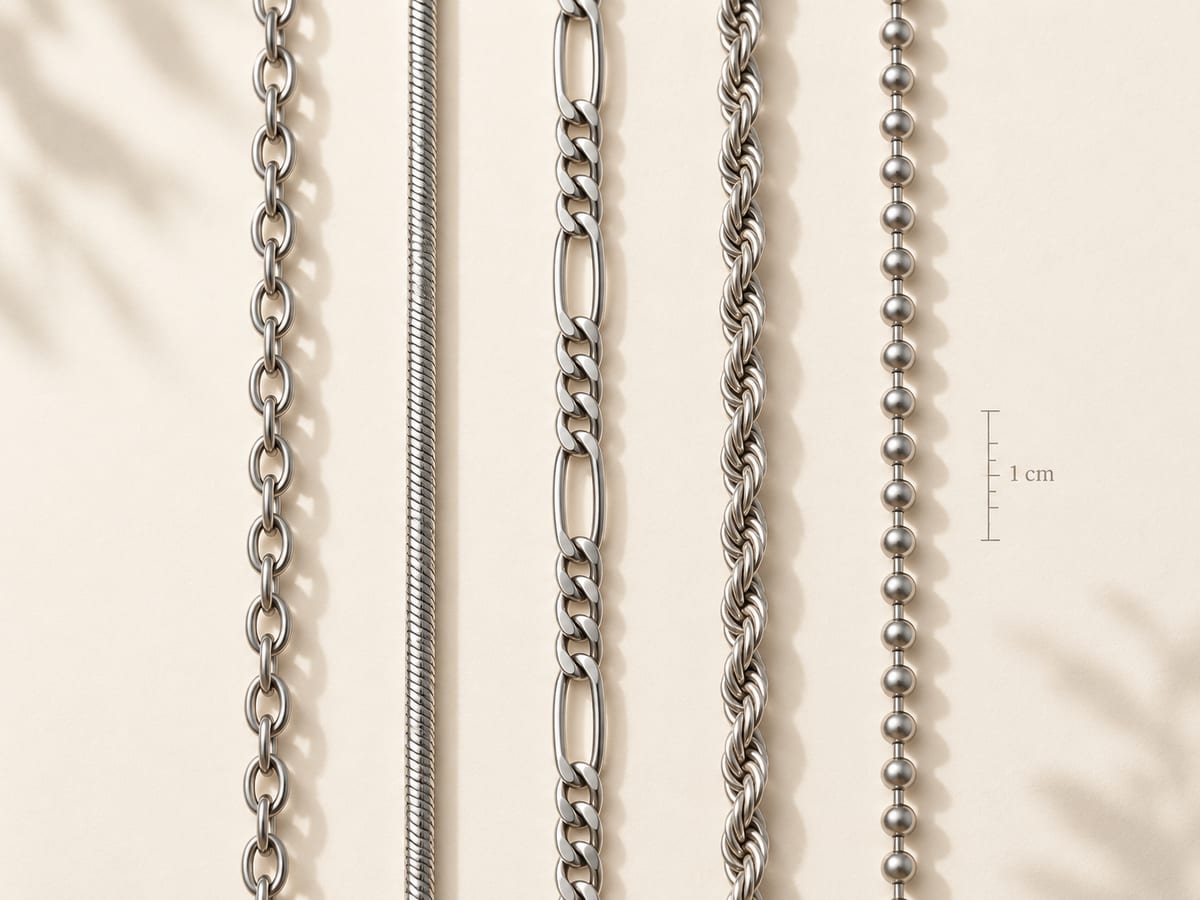
Organized by what the construction does under load rather than by how it photographs. Two of these are beautiful and carry a pendant badly, and that is the construction rather than a defect.
| Construction | How it is built | Behavior under a point load | Carries a pendant |
|---|---|---|---|
| Cable | Uniform round or oval links | Distributes across adjacent links | Yes |
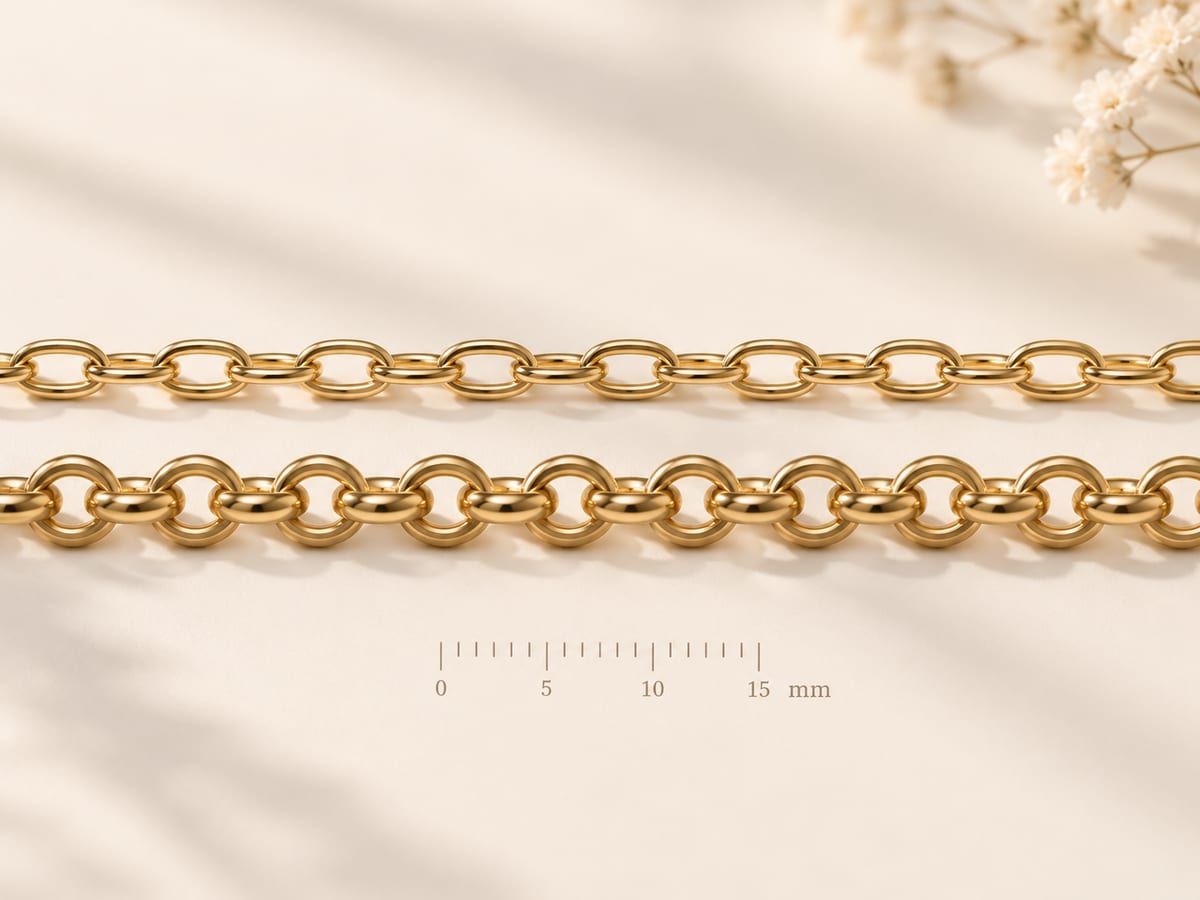
| Rolo | Round links, symmetrical face | Distributes evenly; sits square under a bail | Yes |
| Curb | Twisted and flattened links | Takes load well; heavier for the same width | Yes |
| Figaro | Alternating long and short links | Takes load, with the long link the weak point | Yes |
| Rope | Paired links twisted into a helix | Takes load; unwinds if a link opens | Yes |
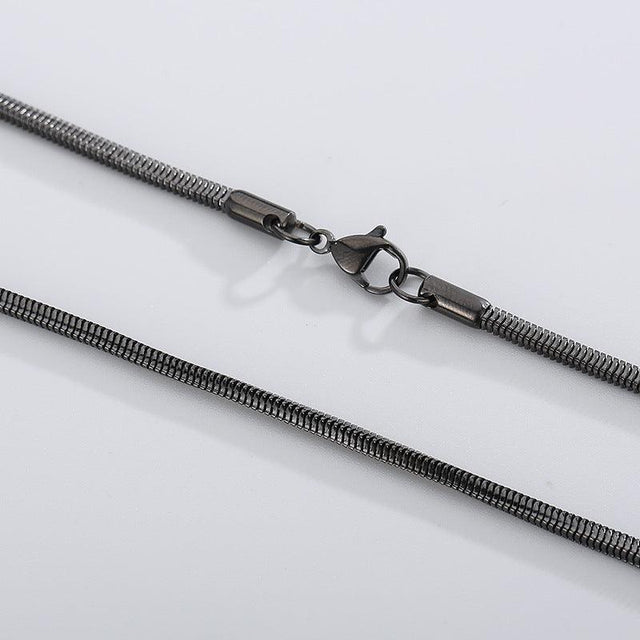
| Snake | Tight interlocking plates, smooth surface | Concentrates load at one point | Not recommended; better standalone |
| Herringbone | Flat parallel links, mirror surface | Kinks permanently once creased | Not recommended; better standalone |
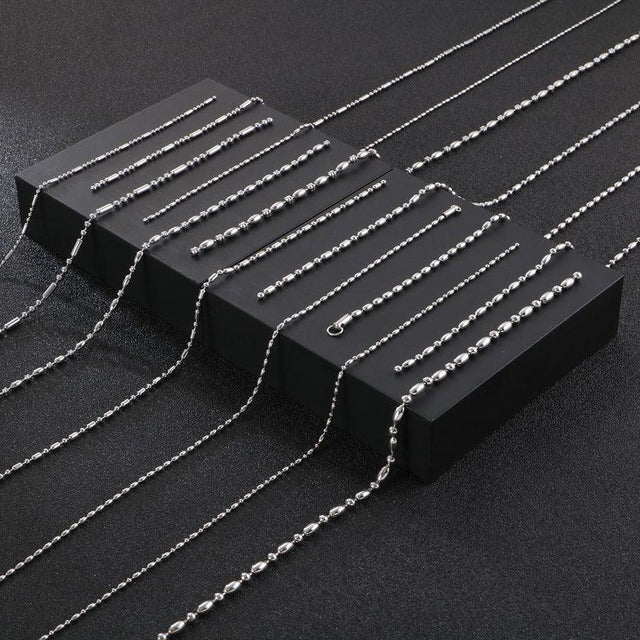
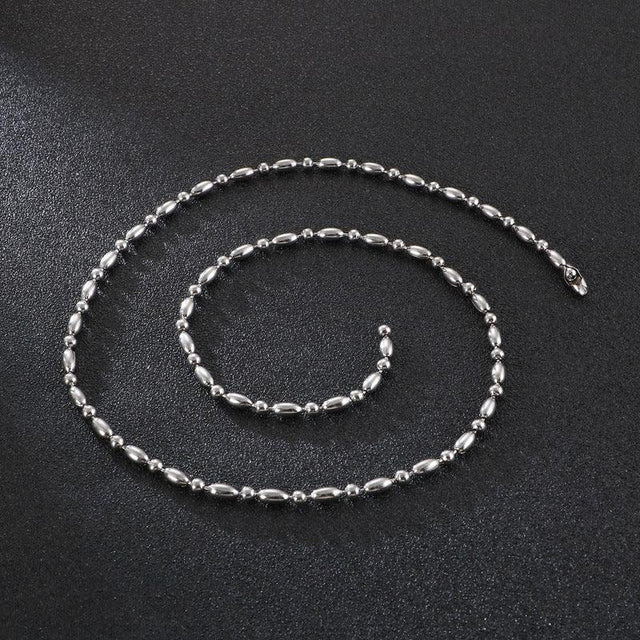
| Ball | Spheres on a connecting wire | Load falls on the connecting wire, not the spheres | Not recommended; better standalone |
Wire is drawn to the specified gauge
Gauge is the value the rest of the specification hangs on: it sets weight, cost and what the finished chain will hold. It is quoted, not inferred from width.
Links are formed and closed
Forming tooling fixes the range of widths available. Closure, whether soldered, welded or interlocked, is what decides whether a link opens under load, so it is specified per construction.
Record producedFirst-article record, per construction and gauge
The chain is finished, then plated
A chain presents far more surface area than a solid piece and a recess at every link, so coverage inside the link is the thing that has to be proven rather than assumed.
Record producedThickness report with the measurement position stated
It is cut and ended, or reeled
Cut lengths get their ends finished and, where specified, a clasp fitted with the attaching joint stated as its own value. Reel is supplied continuous.
The parameters a quote is built on
Gauge and length basis decide whether two quotations can be compared at all, so an inquiry should state both.
| Parameter | Specified | Unit | Verification |
|---|---|---|---|
| Construction | Named per the table above | — | Stated on the specification, checked at first article |
| Wire gauge | 0.3 – 1.0 | mm | Micrometer, first article |
| Finished width | 1.5 – 10 | mm | Micrometer, first article |
| Length basis | Reel length, or cut length measured over finished ends | m / mm | Stated on the quotation; the two are not interchangeable |
| Coating thickness | 0.3 – 0.4 total, ±20% (whole PVD stack, not gold content) | µm | Thickness report, per batch, measurement position stated |
Nickel release · prolonged skin contact
EN 1811:2023, compared against the REACH Annex XVII entry 27(b) limit of below 0.5 µg/cm²/week for items in prolonged contact with the skin, a list that names chains by that word. Uncoated steel is assessed under 27(b), which sets a release limit on the article as supplied. Where the chain carries a coating, entry 27(c) applies instead: the limit has to hold throughout at least two years of normal use, and EN 12472:2020 wear-and-corrosion pre-treatment is run first to simulate that. The two routes are not interchangeable and a report for one does not answer the other.
The test is run per material and finish combination, and chain supplied as a component is tested as supplied. The reports we hold are on Nickel Release Testing.
One chain, several categories
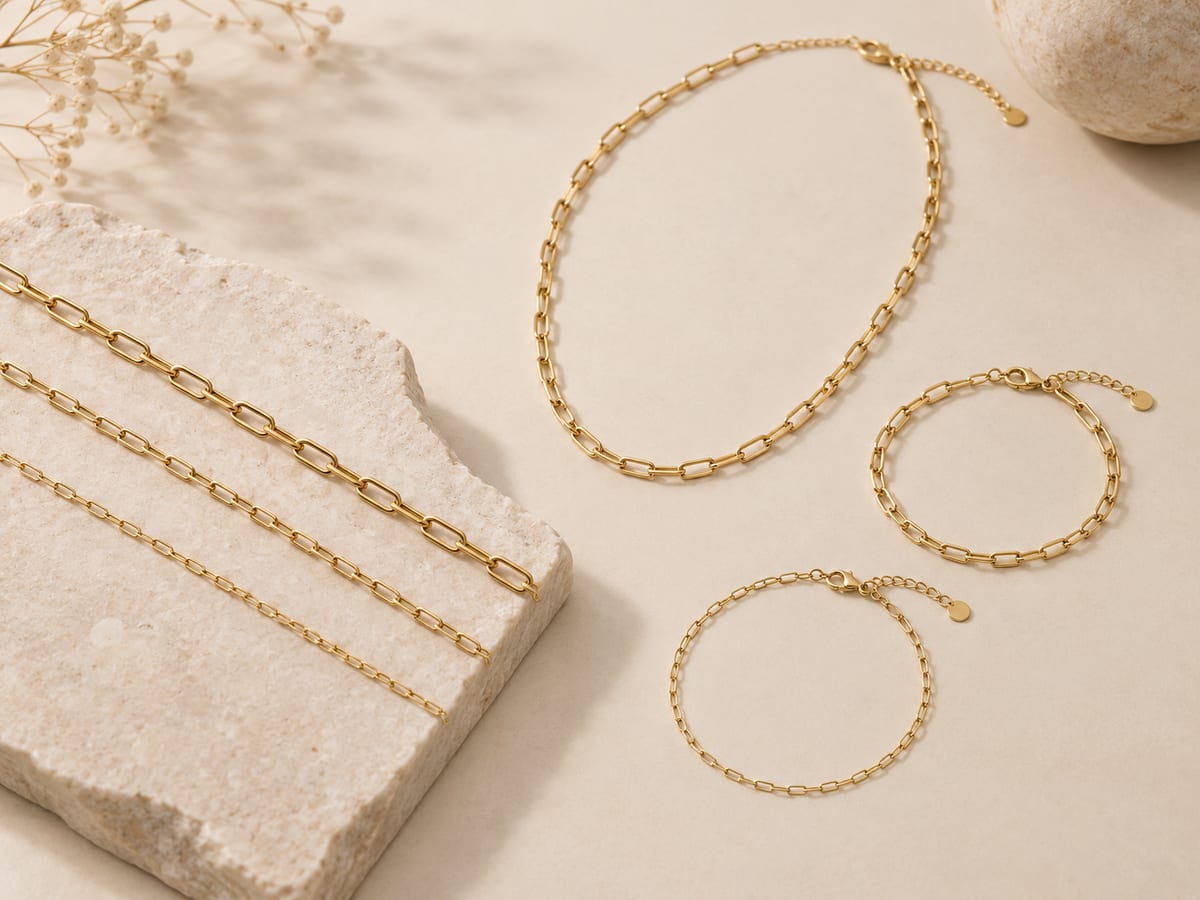
A range built on one construction at three gauges holds together in a way that three separately-chosen chains do not. It is also cheaper to run and easier to reorder, because the color standard and the tooling are shared. Where a program spans necklaces, bracelets and anklets, specifying the chain first and the pieces second is usually the shorter route.
Specify a chain programFrequently asked questions
Which chain constructions can carry a pendant?
Cable, rolo, figaro, curb and rope carry a pendant well because they are built from discrete links that can take a point load. Snake, herringbone and ball chains are better as standalone pieces than as pendant carriers: their construction concentrates the load at one point, and once a herringbone kinks the kink is permanent. That is a property of the construction, not a quality problem, which is why it is settled at specification rather than at inspection.
How should chain be specified so a quote is comparable?
Four values make two quotes comparable: construction, wire gauge, finished width and length basis. Width alone is not enough. Two cable chains at the same width can differ substantially in wire gauge, and the lighter one costs less, weighs less and breaks sooner. State the gauge and the comparison becomes honest.
Can chain be supplied on the reel rather than cut?
Yes. Bulk reel is the normal form for a buyer doing their own assembly, and cut-to-length with the ends finished is the normal form for a buyer who is not. Both are quoted from the same chain; what changes is the finishing operation. The minimum is the same 100 pieces per design as every other piece. Ask our sales team for how it applies to a reel order.
Is the plating on chain the same as on a solid piece?
The specification is the same and the geometry is not. A chain presents a far larger surface area with recesses at every link, so coverage inside the link is the thing that has to be proven rather than assumed. A chain that measures correctly on the outside of the link can be thin where two links meet, which is exactly where it wears. Thickness is therefore reported with the measurement position stated. See PVD and gold-tone finishes.
Last updated