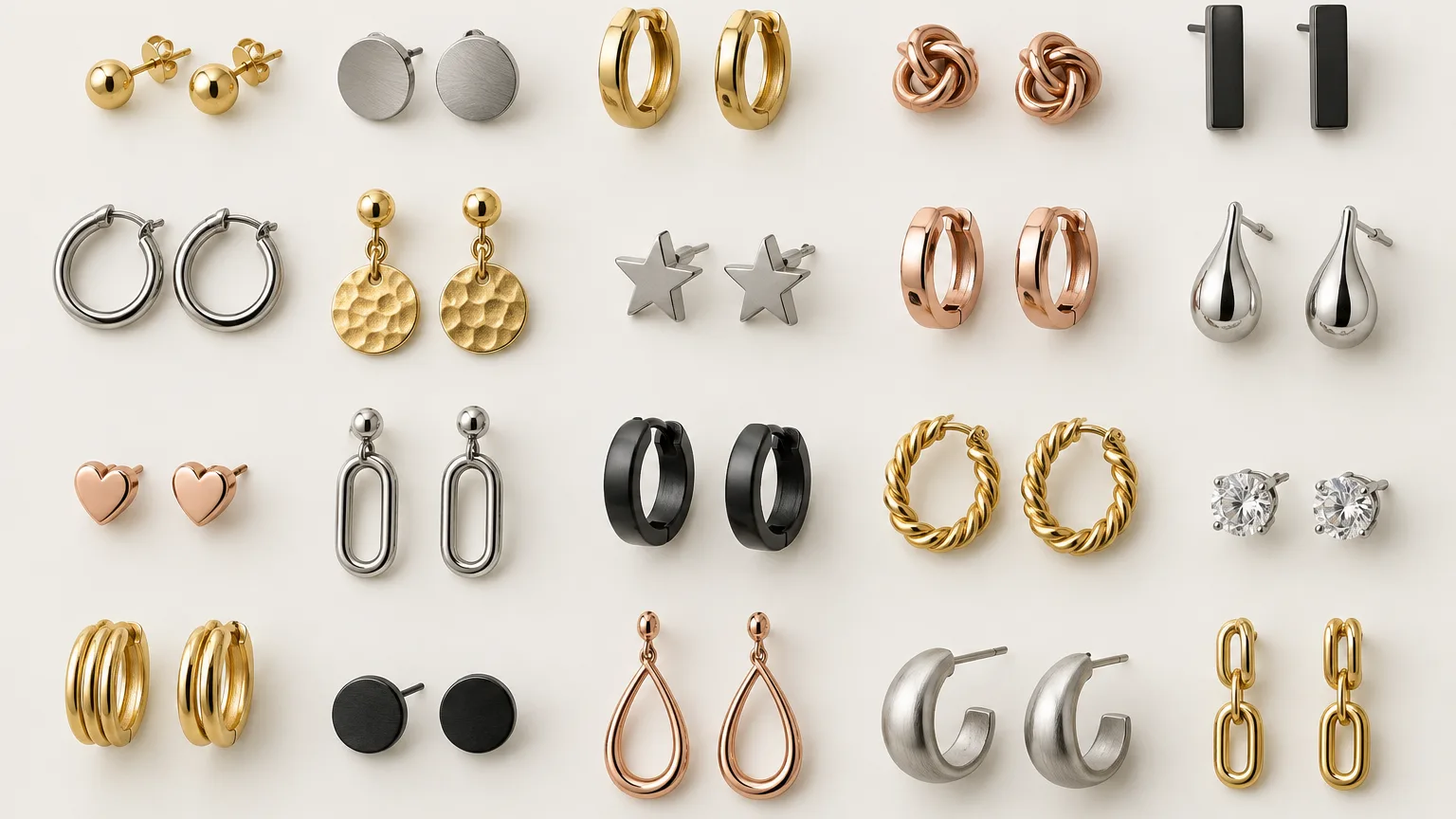
P0 category
Custom Earrings Manufacturer
Post material and gauge, hoop and huggie geometry, drops and ear cuffs. The strictest nickel release case in the range.
Custom 316L stainless steel jewelry manufacturing for US brands
Capability hub
We are a contract manufacturer: you bring the design, we build it to your specification in 316L stainless steel. Inputs can be a sketch, reference photos, a 2D drawing or a 3D CAD file. If you have none of those, a description and a reference image are enough to begin.
Four kinds of input, four different first steps. Nobody is turned away for arriving with the wrong file type.
We come back with a manufacturability read and the questions that have to be answered before anything can be quoted: dimensions, findings, finish.
You then get a written feasibility response and, after it, a quote for a development sample.
Useful and legitimate as a starting point for your own design. We will flag anything that looks like a protected third-party design rather than a general style.
We clarify dimensions and structure with you first, then quote a sample.
The fastest route to an accurate quote. Missing fields are listed back to you rather than assumed.
It goes to DFM review and then to quotation.
STEP and STL both work. We review wall thickness, minimum wire diameter, solder joints and achievable tolerance against the process that will make it.
After DFM review, the next stage is a pre-production sample.
The specific matrices live on each capability page. This is the overview, including the categories that do not have a page of their own.
| Dimension | What you can change | What is fixed | Condition |
|---|---|---|---|
| Dimensions | Lengths, diameters, gauges, wall thickness, weight target | Anything below the minimum the process can hold | Positive only. Undersize is not accepted on any stated dimension. The figure and its unit are per category and are on that category’s page; achievable tolerance for your design is confirmed at DFM and issued with the pre-production sample. |
| Findings and closures | Post type, clasp type, hinge, jump ring gauge, ear nut style | Structural assemblies inside a bought-in hinge component | Custom findings are possible where volume justifies tooling |
| Finish color | Gold-tone, rose gold-tone, black, gunmetal, natural steel | Colors outside the qualified PVD target range | Color matching to a physical reference is confirmed against a sealed standard. See PVD & Gold-Tone Finishes |
| Engraving and logo | Laser marking, stamping, engraved plates and discs | Marking areas smaller than the laser can resolve legibly | Minimum legible character height confirmed per design |
| Structure | New structures via casting, stamping or CNC, with tooling | Structures that cannot be assembled or cannot be inspected | Tooling cost and ownership set per project; see NDA, Tooling & IP |
| Stones and components | Simulated and lab-grown stone setting, enamel, resin, acrylic | Claims about stone origin we cannot document | Simulated and lab-grown stones must be described with that qualifier in front of the stone name |
| Packaging | Polybag, branded box, card, hang tag | Artwork that misstates country of origin | Where artwork carries a US address or place name, the origin marking must appear on the same panel at comparable type size |
| Base material | 316L as standard | Grade substitution without written instruction | 201 and 304 are supplied only on written specification, with the grade disclosed. See 316L verification |
Body jewelry has no capability page of its own and is quoted through this one. Body-piercing jewelry carries an extra material requirement for the California channel and is assessed case by case: see the note on 316L verification.
Four nodes between a drawing and a production run. Node definitions and the records each one produces are on the inspection process page.
Minimum wire diameter, solder joints, achievable tolerance, coating adhesion and structural risk, reviewed against the process that will make the piece. You get the constraints before you commit, not after the first bad sample.
Record producedOne-page DFM review
The first physical piece. Included revisions and what a revision costs beyond that are set out in the sample program.
Record producedSample plus specification sheet
The piece you sign. Once signed it is sealed and becomes the acceptance standard for the production run, together with the tolerance sheet.
Record producedSigned and sealed pre-production sample
First-article approval, in-process checks, outgoing AQL inspection.
Record producedFirst-article sheet, in-process log, outgoing inspection report
Three design pairs showing a step every project goes through: a sketch or CAD view on one side, the finished piece it becomes on the other. None of them is a customer design. We do not display customer designs, whether or not a project has shipped.
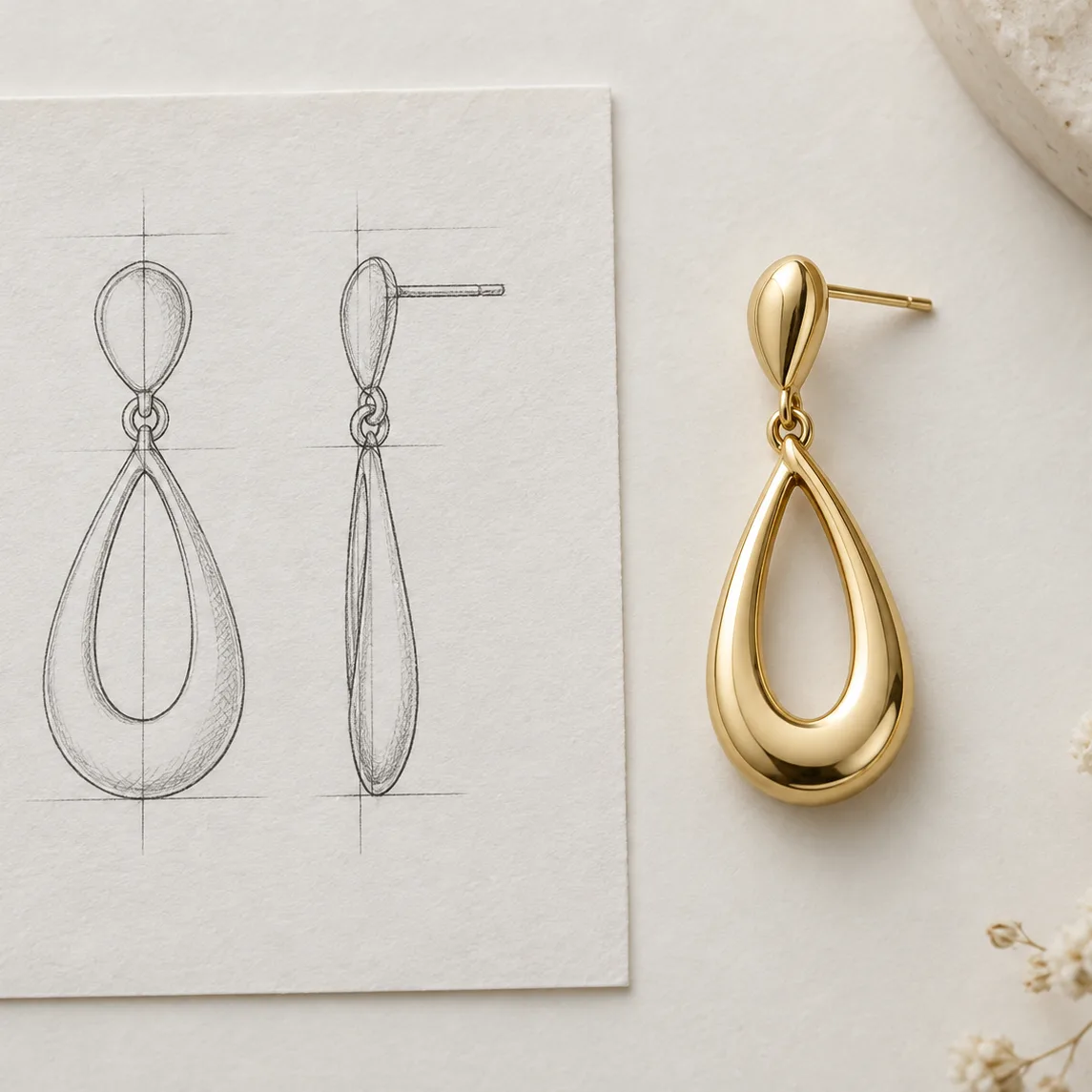
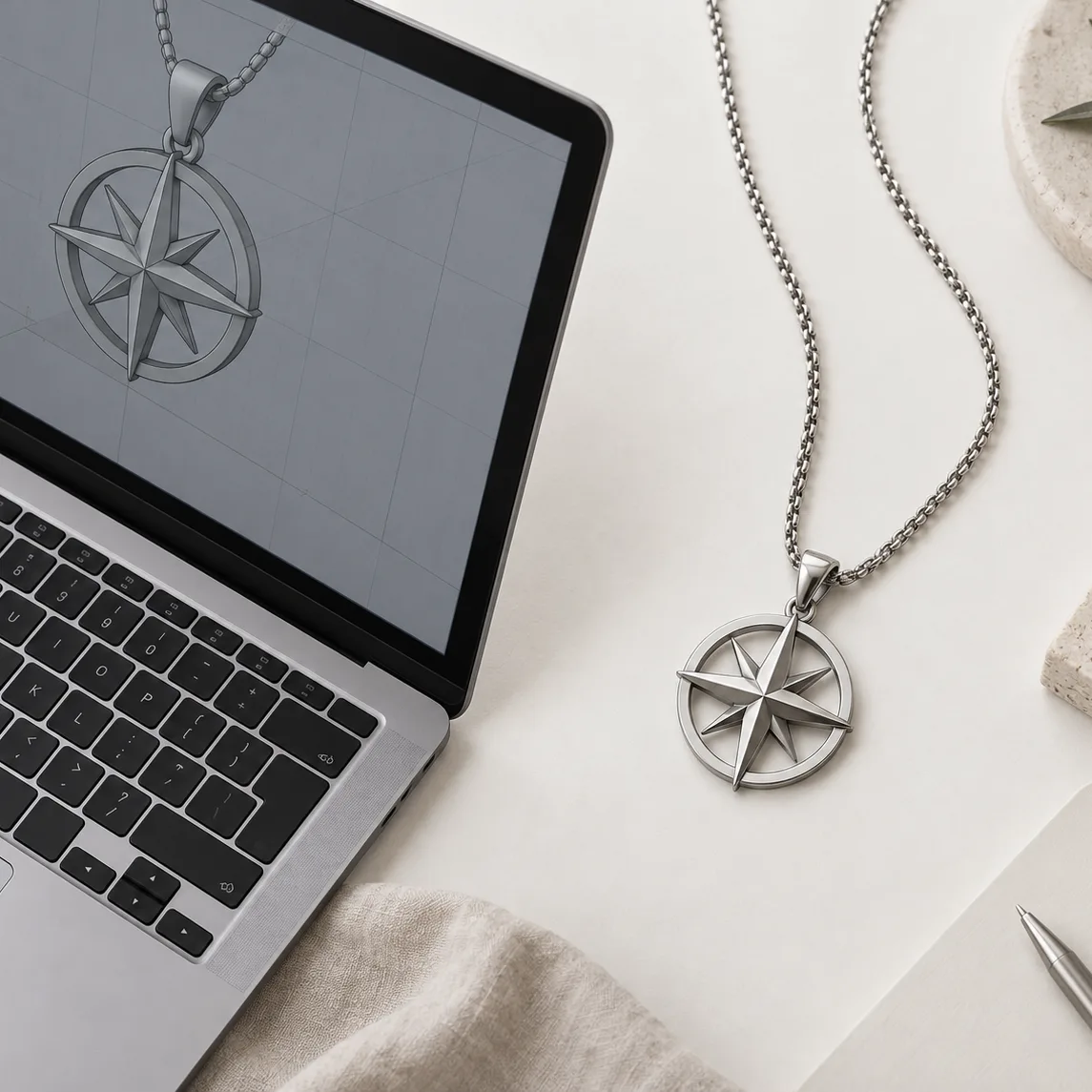
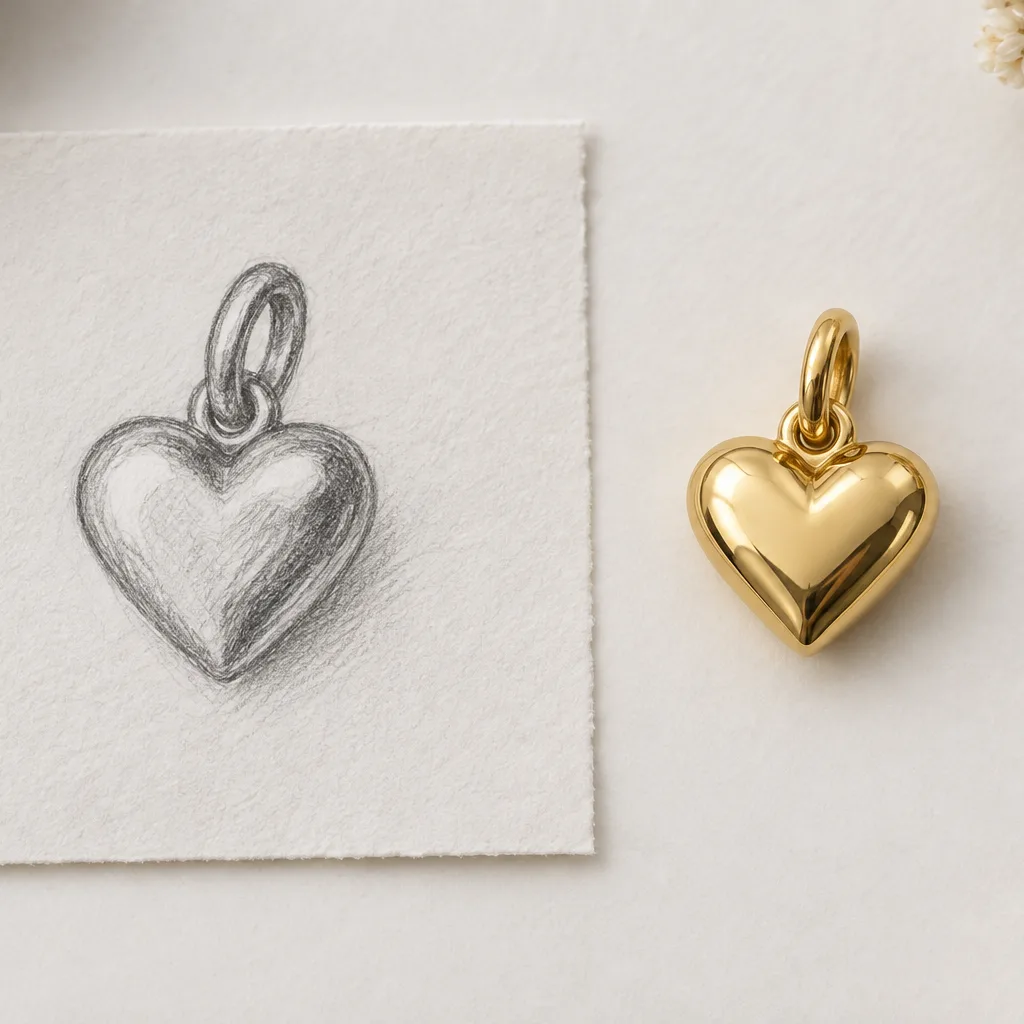
Each page carries its own change matrix, its own failure modes and its own evidence.
P0 category
Post material and gauge, hoop and huggie geometry, drops and ear cuffs. The strictest nickel release case in the range.
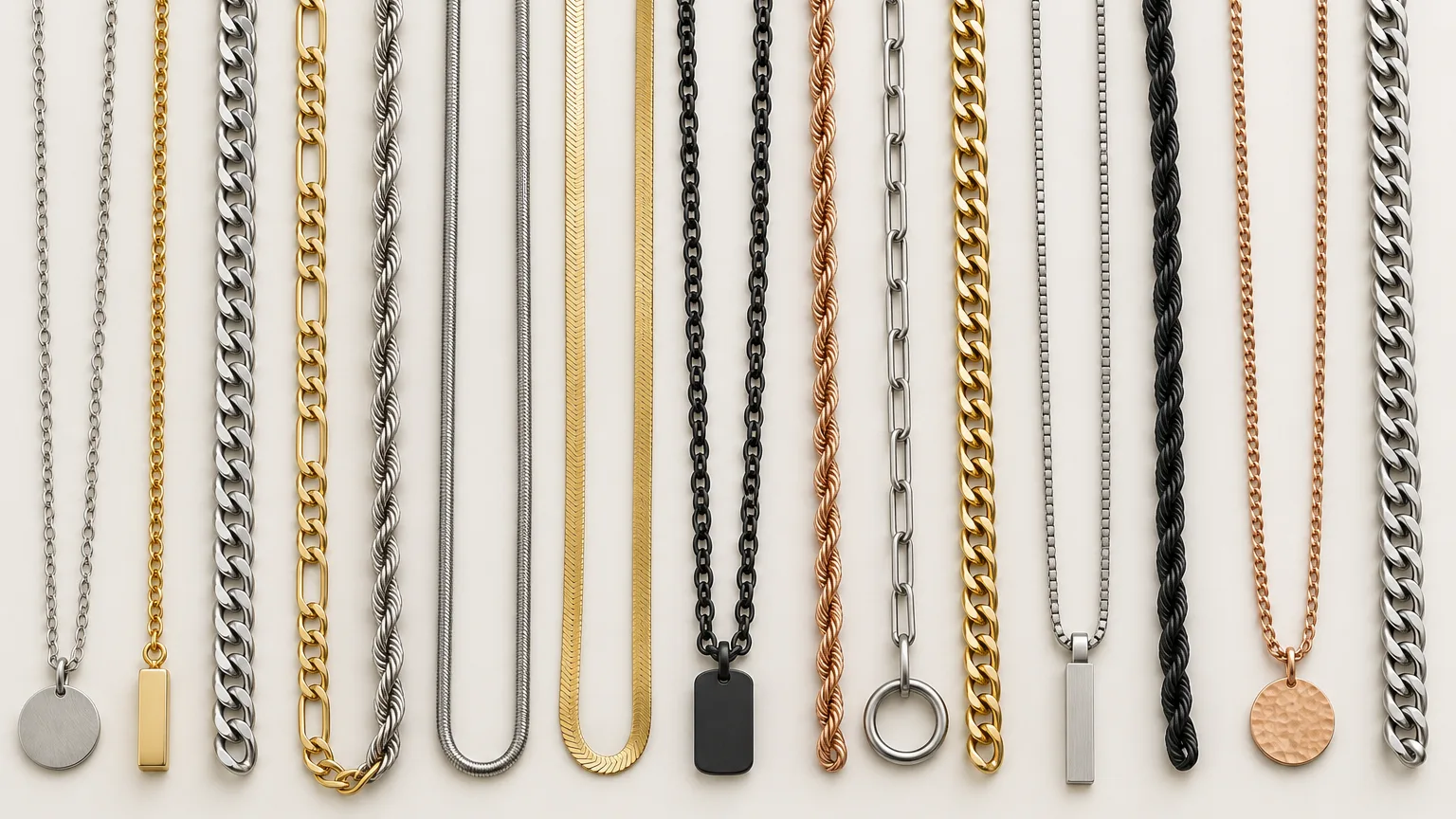
Chain type selection, length steps for layering, clasp strength, pendant bail sizing.
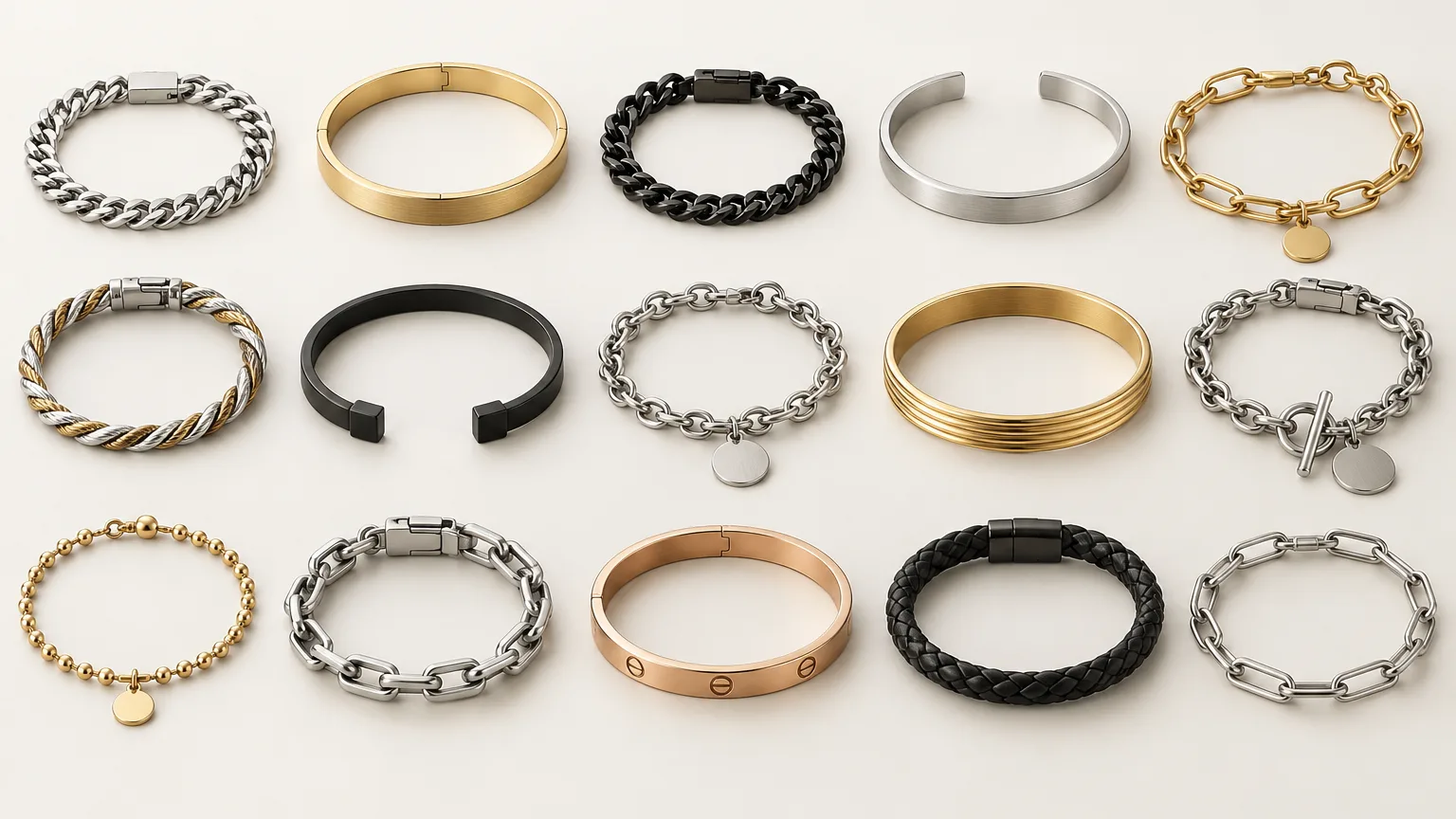
Link and chain bracelets, bangles and cuffs, charm carrying capacity, wrist sizing steps.
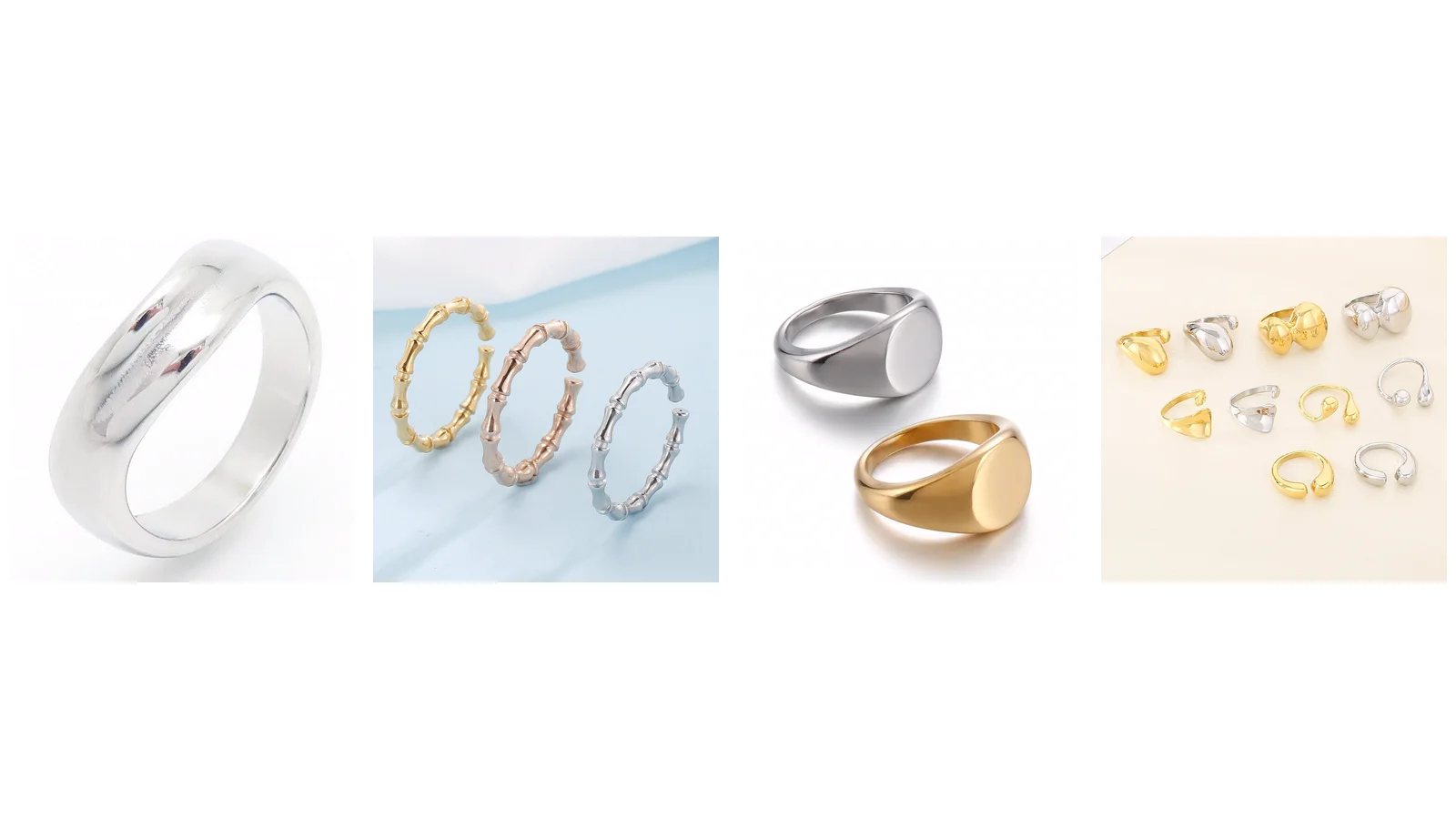
Bands, stackables, signets and spinners, sized in all three systems with engraving depth specified against wall thickness.
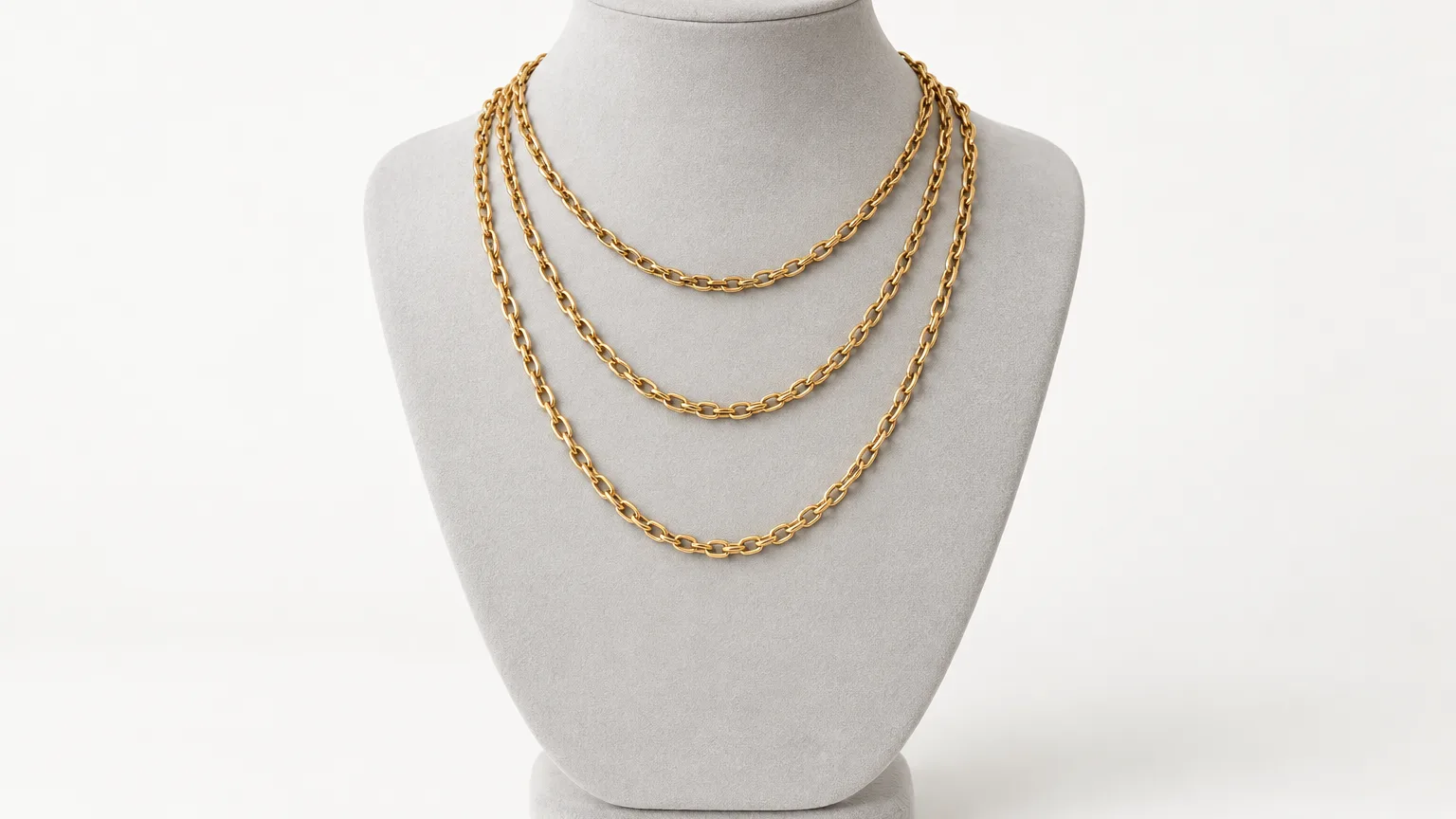
Sets specified as sets: stated length steps, one sealed color standard, one delivery date.
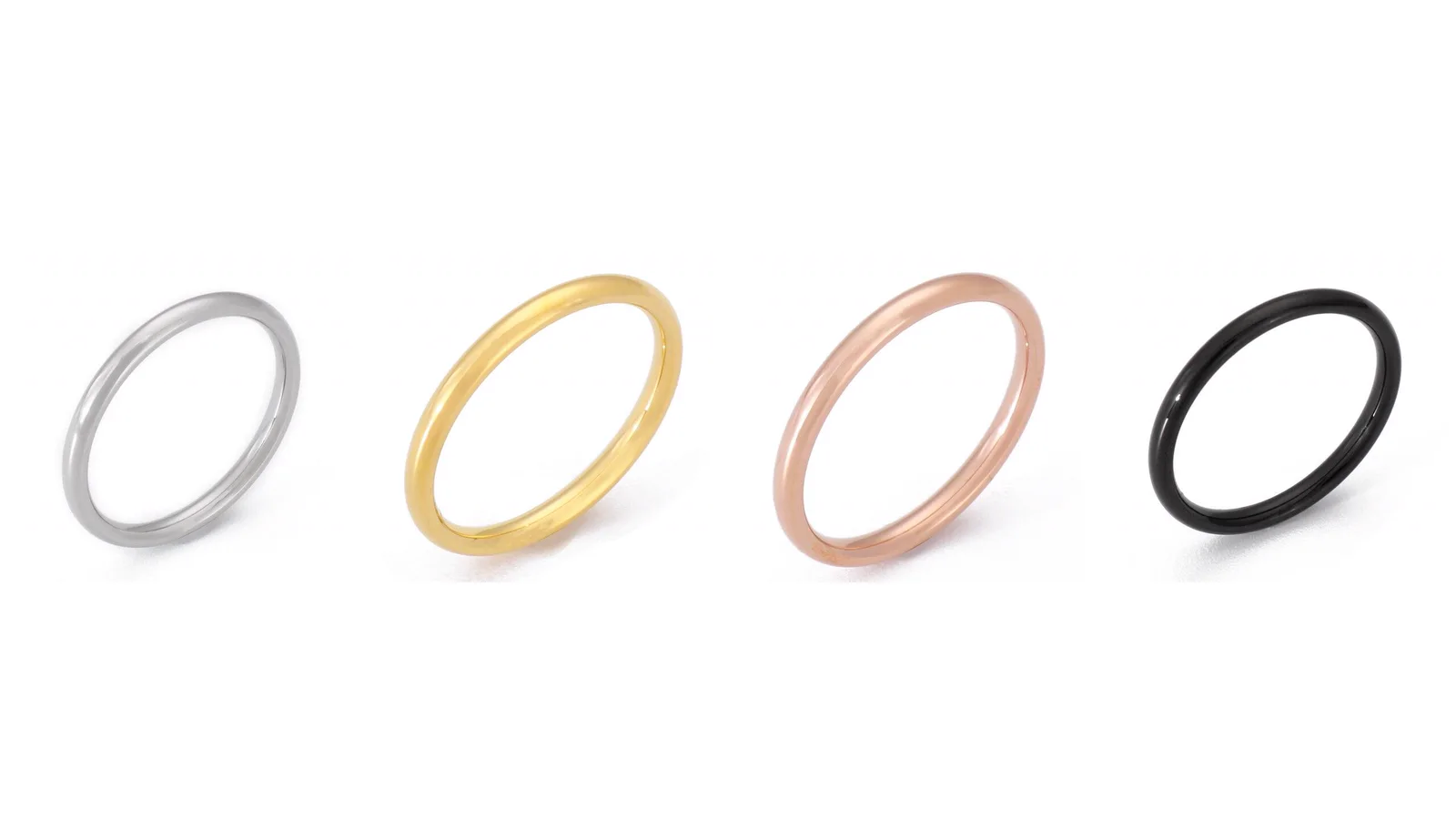
Finish
The process, the correct terminology, the thickness and durability data to demand from any supplier.
A separate supply model rather than a category: themed assortments and mixed reorders, for charm bars, boutiques and pop-up operators.
Charm bar supplyEach capability on this page should be backed by a photograph of the equipment or the process. Polishing is below and the CNC floor is on the factory page. The stamping line and the PVD coating chamber have not been photographed yet.
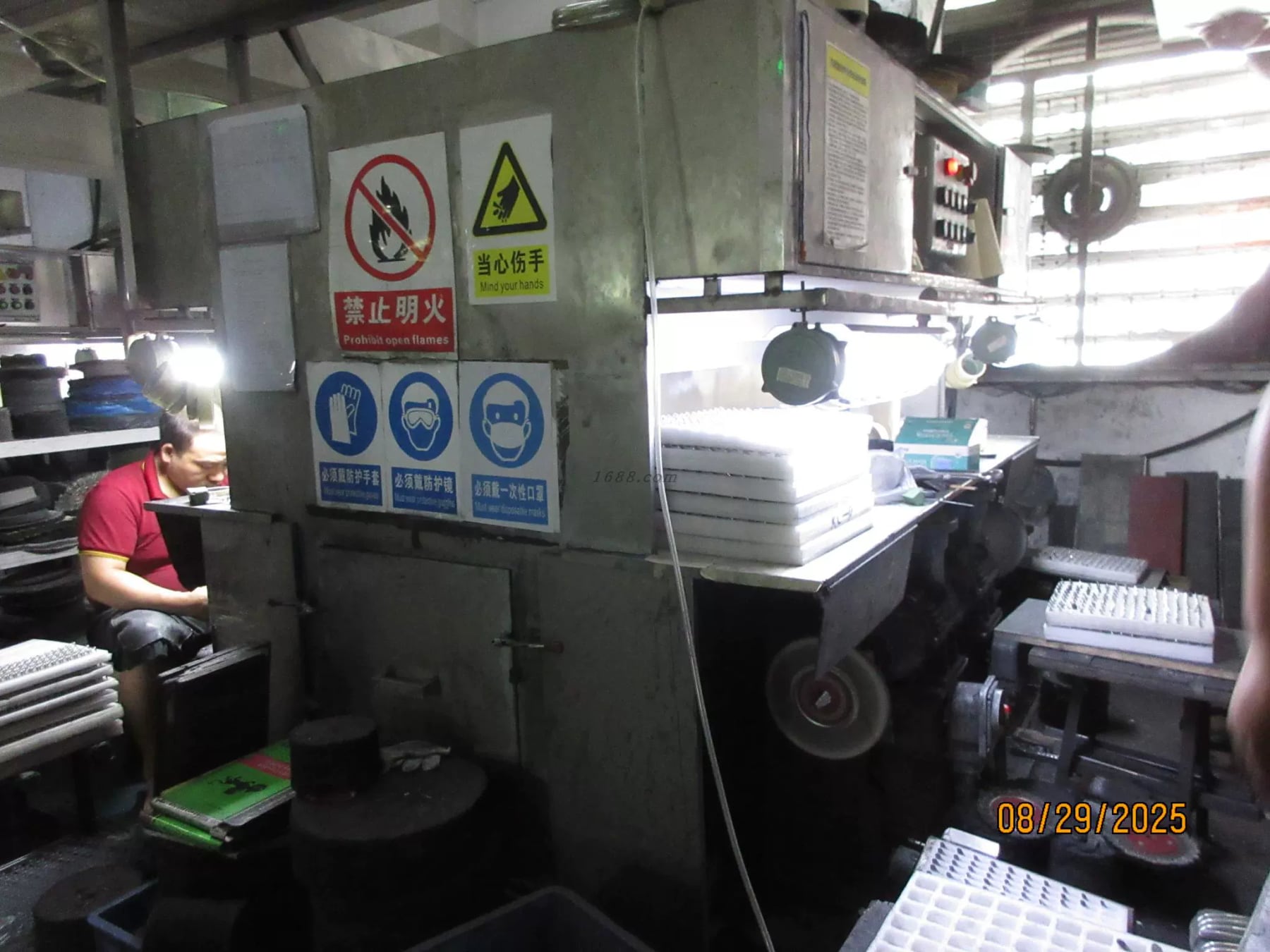
Ask our sales team for the equipment list. The process route for each step is on the Factory page.
Less than most people assume. A reference photo or a sketch, a rough quantity per design, and a date is enough to get a feasibility answer. A full tech pack makes the first quote more accurate, but its absence does not stop the project. See the tech pack guide for what can be filled in later.
To your design. We are a contract manufacturer: you bring the design, we make it to your specification. There is also a catalog of existing models that can be lightly modified, which is a faster and cheaper route when the design is close enough.
All of them: casting, stamping, CNC machining, laser marking, PVD coating, electroplating and precision polishing, as well as assembly and inspection. Details are on the factory page.
It depends on whether tooling is involved and how many sample rounds the design needs. The node sequence is fixed: DFM, sample, pre-production sample, production and each node is reported within 24 hours of being reached. A development sample is no more than 40 days from the order, barring a production exception; production after sign-off runs 10–20 days for cut or turned work, 30–35 stamped or cast, and 25–35 for brass and silver casting, or 45–60 at high volume. Your date is confirmed in writing within three days of the order. See MOQ & Lead Time.
Last updated