Finish capability
PVD and Gold-Tone Finishes, Explained by the Factory
PVD is a vacuum coating process that deposits a thin, hard ceramic or metallic layer onto stainless steel. This page covers which finishes we run, which term is legally correct for each, and how the coating is specified.
Nickel release
0.13 µg/cm²/week
Tested to EN 12472:2020 & EN 1811:2023, the wear-and-corrosion pre-treatment first, then a week in artificial sweat and measurement of what released. REACH Annex XVII entry 27 sets below 0.5 µg/cm²/week for items in prolonged contact with the skin. Coated items fall under entry 27(c), which requires the limit to hold throughout at least two years of normal use. That is what the pre-treatment step simulates, and why a report without it tells you very little about a coated item.
Three different things get called gold
Before thickness, before karat, before anything else: does the coating contain gold at all? Suppliers who skip this question are the reason buyers get surprised by an XRF result.
| Process | Contains gold | Correct terminology | Terminology that would be wrong |
|---|---|---|---|
| PVD nitride (TiN, ZrN) | No | gold-tone; "PVD coating, gold tone"; "titanium nitride coating in gold tone" | Anything containing gold plated, gold electroplate, 18K gold. Each states a composition the product does not have |
| Real gold PVD | Yes | Judged on the 16 CFR §23.3 thickness table, with karat fineness stated immediately before the term | Any gold term without the karat marking, or with the karat marking in smaller type than the word gold |
| Real gold electroplating | Yes | Judged on the same thickness table; ≥ 2.5 µm permits heavy gold electroplate | Gold flashed, gold washed. The safe harbour for both was deleted in 2018 |
What a complete finish disclosure contains
Six fields. A supplier who can fill in all six is describing a specification; a supplier who cannot is describing an impression.
1 · Base alloy grade
316L as standard here. The grade governs corrosion behavior and, in California, whether the piece is admissible at all for certain uses.
2 · Coloring process
PVD nitride, real gold PVD, or electroplating. This is the field that decides which vocabulary is legally available.
3 · Coating thickness in µm
Specified, then measured per batch, including the thin spots at edges, bails and reverse faces, not only the flat front.
4 · Karat fineness, or gold-tone
Where gold is present, its karat fineness. Where it is not, the honest description is gold-tone.
5 · Interlayer
Whether there is an intermediate layer and what it is. Where a base metal sits over gold and is then thinly re-coated, that must be disclosed.
6 · Test conditions
The method and duration behind any durability figure. A number without its conditions is not a result.
Finishes we run
Every swatch above carries a text label. Screen color is a rough indication only. Color is confirmed against a physical sealed standard, never against a screen.
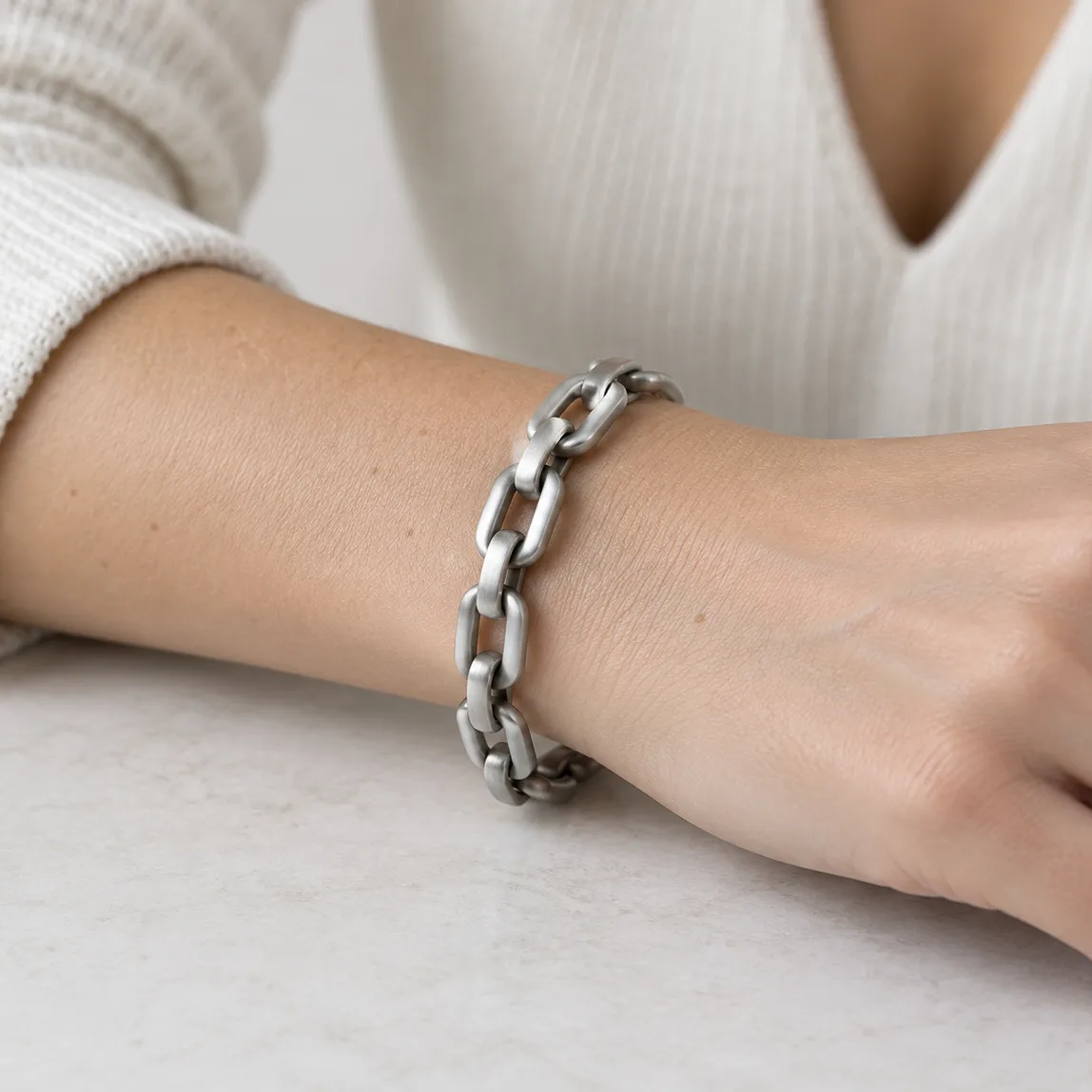
Silver is not on that list, and cannot be. Vacuum deposition produces the gold, rose, black and gunmetal tones from nitride chemistry; a true silver tone is not available from it. Where a piece needs to read as silver it ships as natural steel, the substrate itself and uncoated, which is why "steel" appears above beside four coatings rather than among them.
Holding one color across repeat orders
This is the failure that costs a brand most: two batches that are each acceptable on their own and visibly different beside each other on a shelf.
| Parameter | Specified | Unit | Test method |
|---|---|---|---|
| Color difference toleranceAgreed before production, not negotiated after a complaint | Ask our sales team for details. | ΔE | Spectrophotometer, D65 illuminant |
| Visual comparisonUsed where no instrument is available at the receiving end | Against sealed standard | — | Standard light box |
| Sealed standard retention | Ask our sales team for details. | — | Sample room, labeled by project and batch |
| Batch color record | Per coating run | — | Coating batch record |
Durability, specified rather than promised
The coating is specified by its total thickness. How long a piece looks new depends on how it is worn, so this page publishes no wear-life figure.
| Parameter | Specified | Unit | Test method |
|---|---|---|---|
| Coating thicknessWhole PVD stack, not a gold-content figure. Measurement points include edges, bails and reverse faces | 0.3 – 0.4 total, ±20% | µm | Thickness report, per batch |
The everyday line
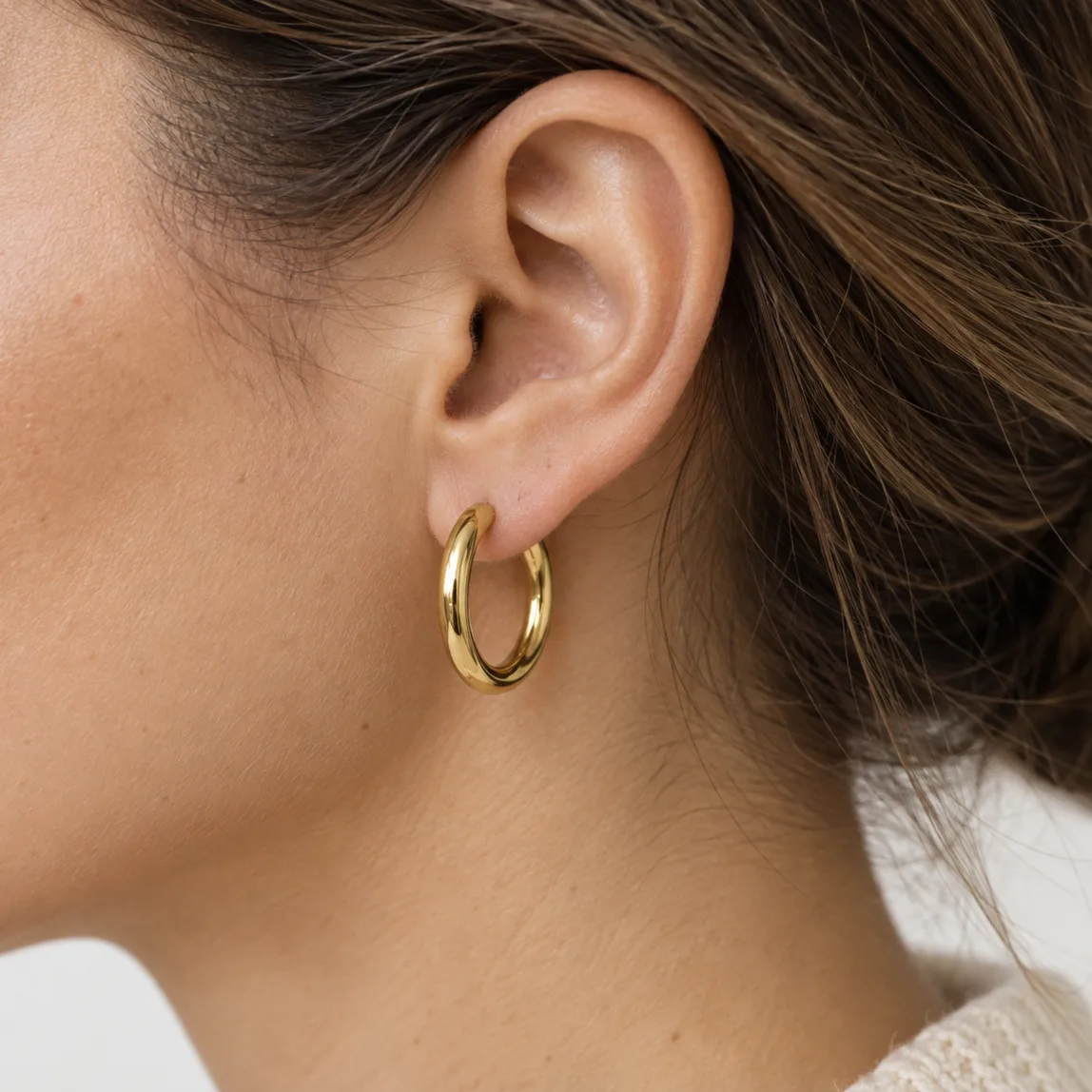
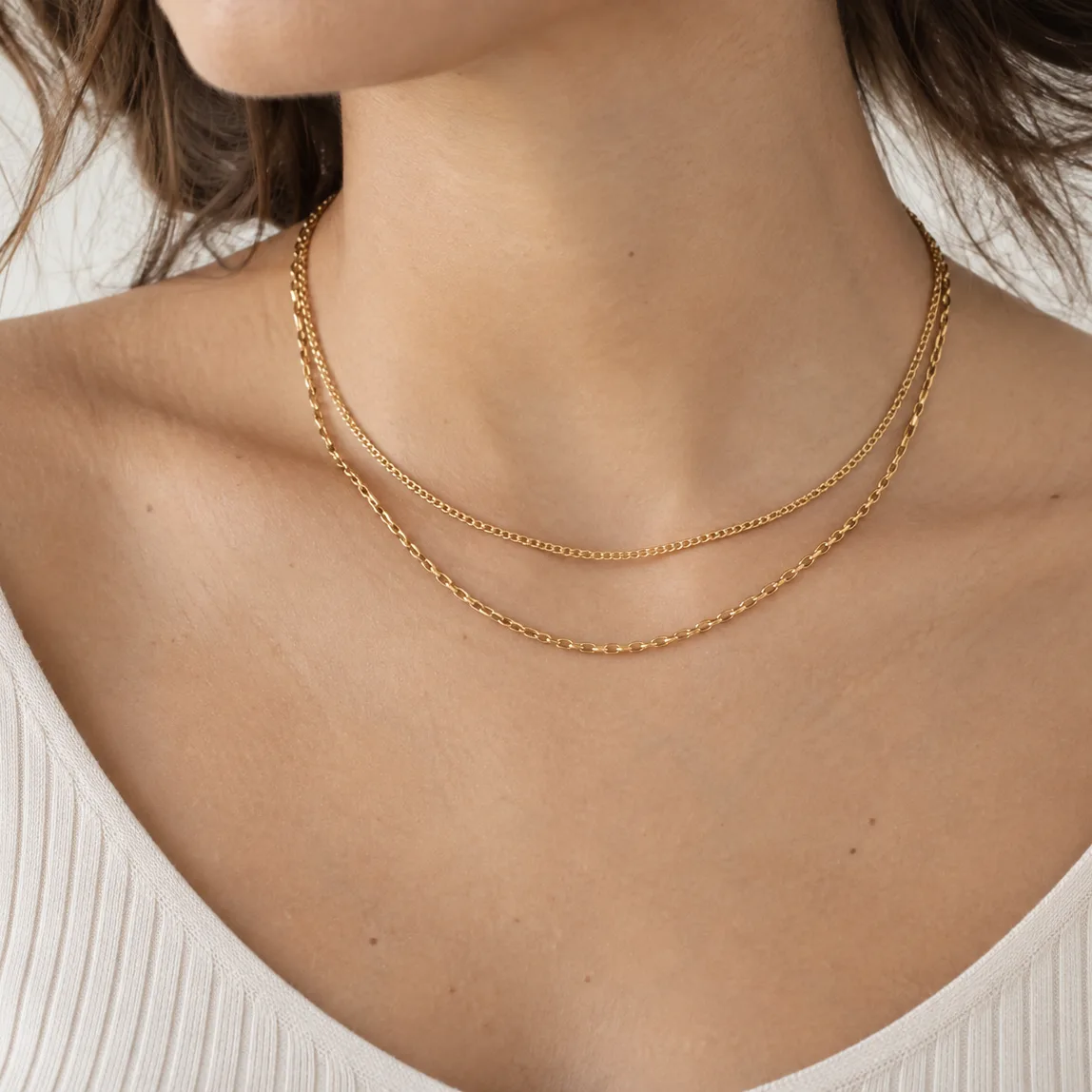
Pieces specified for daily wear rather than occasion wear: what changes in the specification when something is expected to be worn every day.
Coating specified for abrasion
Daily-wear pieces are specified at the thicker end of the range, with extra attention to the findings, where the coating is thinnest and wear is heaviest.
Findings that survive daily handling
Closures get opened and closed once or twice a day on an everyday piece. Closure force and hinge life matter more here than on an occasion piece.
Honest wear guidance
Suited to everyday wear including hand washing and perspiration. Not rated for chlorinated pools, salt water or contact with cleaning chemicals. The exclusions are stated rather than left for the customer to discover.
What can be changed about a finish
| Dimension | What you can change | What is fixed | Condition |
|---|---|---|---|
| Color | Gold-tone, rose gold-tone, black, gunmetal, natural steel | Targets outside the qualified process range | New targets need process qualification before they can be quoted |
| Coating thickness | Specified per design within the process range | Thicknesses the process cannot hold evenly across the geometry | Thicker coatings change both cycle time and cost |
| Surface texture under the coating | High polish, brushed, satin, matte, hammered | Textures that trap the coating unevenly | Mirror polishing costs materially more than other finishes, which is a legitimate line in a quote, not a surcharge |
| Partial or two-tone finishing | Masked areas, two-tone effects | Masking below the resolution the fixture can hold | Adds a fixture step and a cost line |
| Coating on findings | Coated or supplied natural | Uncoated areas hidden inside a closure | Findings are the thin spot in any coating run and are verified separately |
Frequently asked questions
Is your gold-tone PVD actually gold?
Not necessarily, and that is the first question worth asking any supplier. A large share of gold-colored PVD on stainless steel is titanium nitride or zirconium nitride, a ceramic coating that produces a gold color and contains no gold at all.
Where a coating contains no gold, "gold-tone" is the accurate term. It describes a color, not a material. Calling a nitride coating "gold plated" is a false statement about what the product is made of.
This page uses gold-tone throughout and makes no karat or gold-content claim about any piece.
What thickness makes something legally gold plated in the US?
Under 16 CFR §23.3, "gold plate" or "gold electroplate" requires an alloy of at least 10 karat and a minimum thickness of 0.175 µm in fine gold equivalent, covering all significant surfaces with reasonable durability, and the karat fineness must appear immediately before the term with equal conspicuousness. "Heavy gold electroplate" requires at least 2.5 µm.
What do you call a coating that is under 0.175 µm?
Nothing. There is no substitute term. "Gold flashed" and "gold washed" used to be safe-harbour wording for exactly that situation, and the FTC removed that safe harbour in its 2018 revision. The correct response is factual disclosure instead of a label: coating process, measured thickness in µm, karat fineness of the alloy, and whether there is an interlayer.
Can you guarantee the color will match across reorders?
We control it rather than guarantee it, and the difference is the point. Color is held against a sealed physical standard from the approved first order, compared under a standard light source, with the acceptable difference agreed in advance rather than argued about afterwards. Ask our sales team for the tolerance for your finish.
Is a PVD-coated piece corrosion-resistant?
The 316L base material is. 16 CFR §23.11(b) names austenitic stainless steels as materials that support that claim. The coating on top of it is a different question: Part 23 is written around electrolytic processes and does not address PVD, so the claim does not automatically carry over. A coated piece needs measurements, coating thickness and salt-spray duration under stated conditions, rather than a term borrowed from the substrate, so this site does not call a coated piece corrosion-resistant.
A plating sample is the fastest way to settle a color question. See the sample program for what each sample route covers.
Last updated