
Capability · sized to the body
Custom Waist Chains, Sized to the Body
Waist chains are made in 316L stainless steel and sized to a dimension the wearer has usually not measured, so each is specified across a range, with the slider or extender doing the work and the range stated in the quotation. It is also worn against skin for hours at a time, which puts nickel release on the finished piece at the center of the specification.
The range
Waist chains Kalen has already made
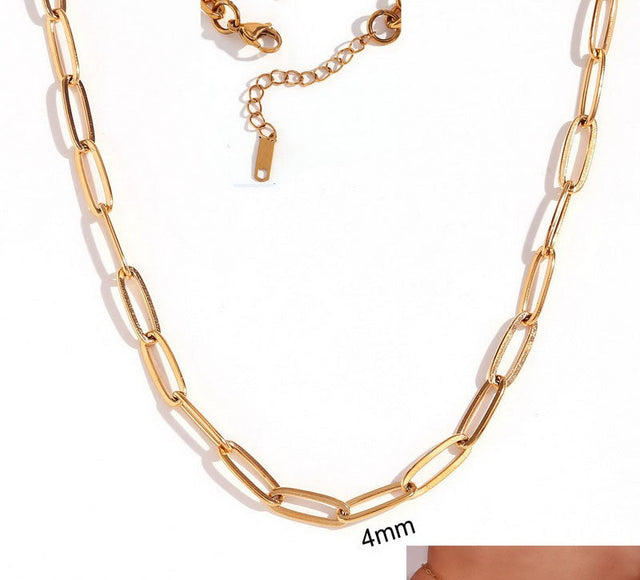
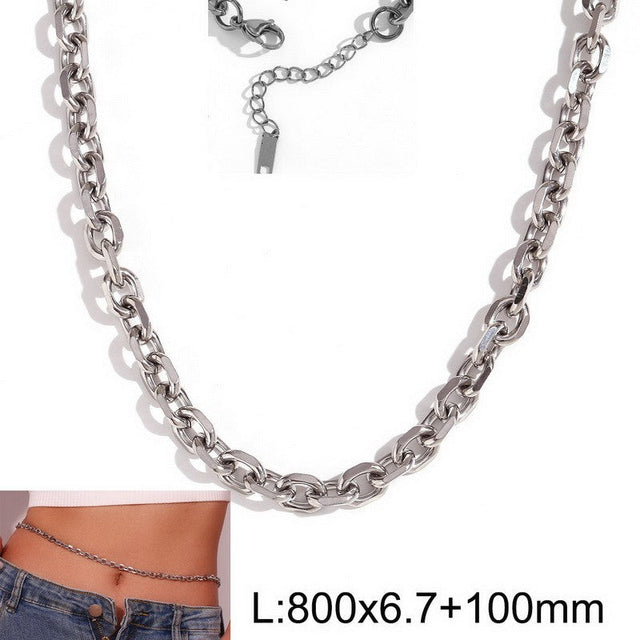
2 designs from Kalen’s own published catalog. They are listed so you can see the house’s vocabulary before you brief against it. Each is described in the words of the listing it came from, with two deliberate substitutions: where a listing named no steel grade none is stated here, and where it said a karat gold plating it is written gold-tone, because this site makes no karat claim about any piece. Custom work is specified separately, to 316L and to the finish you ask for.
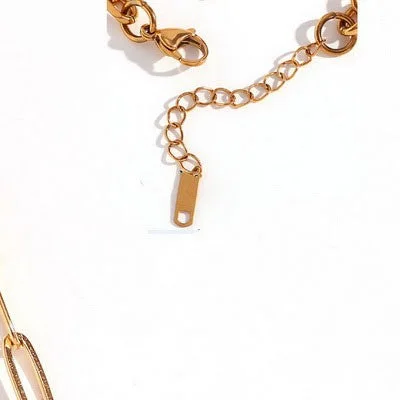
4mm Stainless Steel Paperclip Loop Waist Chain
Gold-tone · Steel
Stainless steel · Length: 80+10cm · 2 variants
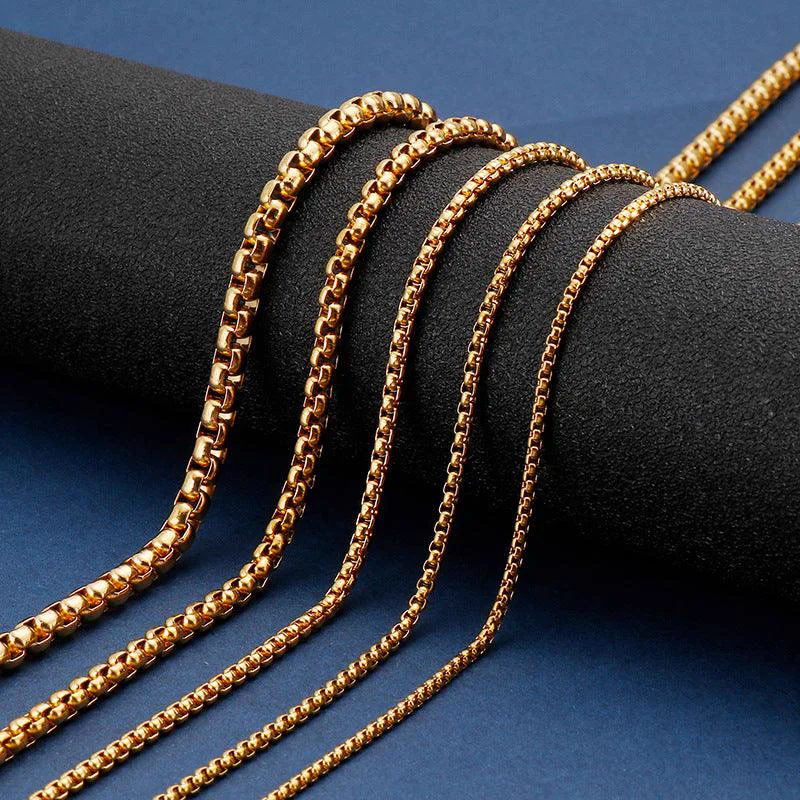
7mm Stainless Steel Loop Waist Chain
Steel
Stainless steel
Sizing without the wearer's measurement
A waist chain is sized to a dimension the wearer has usually not measured and will not be asked for.
How much range must one piece cover?
This is the first decision: it determines whether the program ships one size or two, and the two answers cost differently. It is taken before the chain is chosen, because the construction has to be able to deliver the range.
Slider or extender?
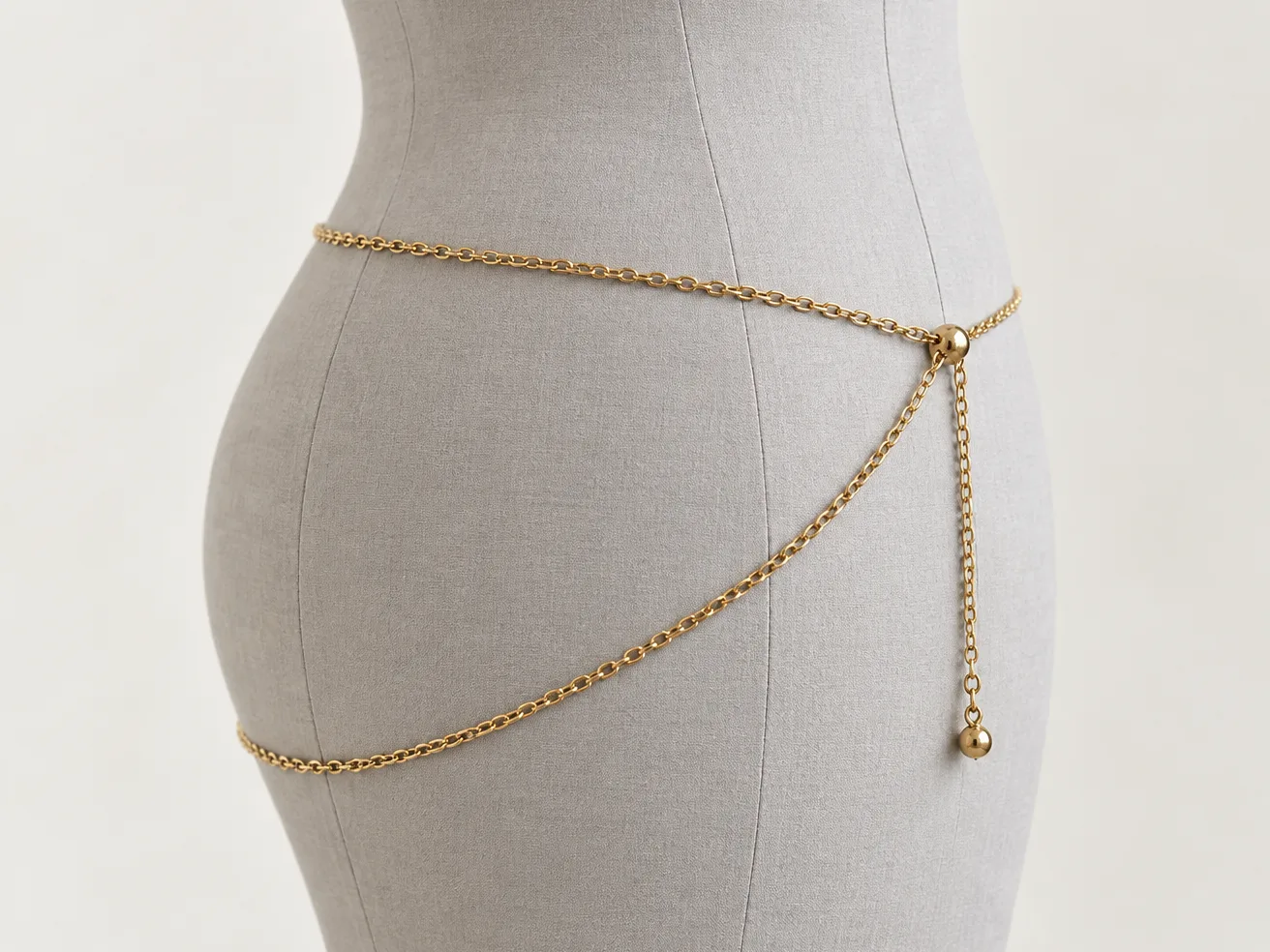
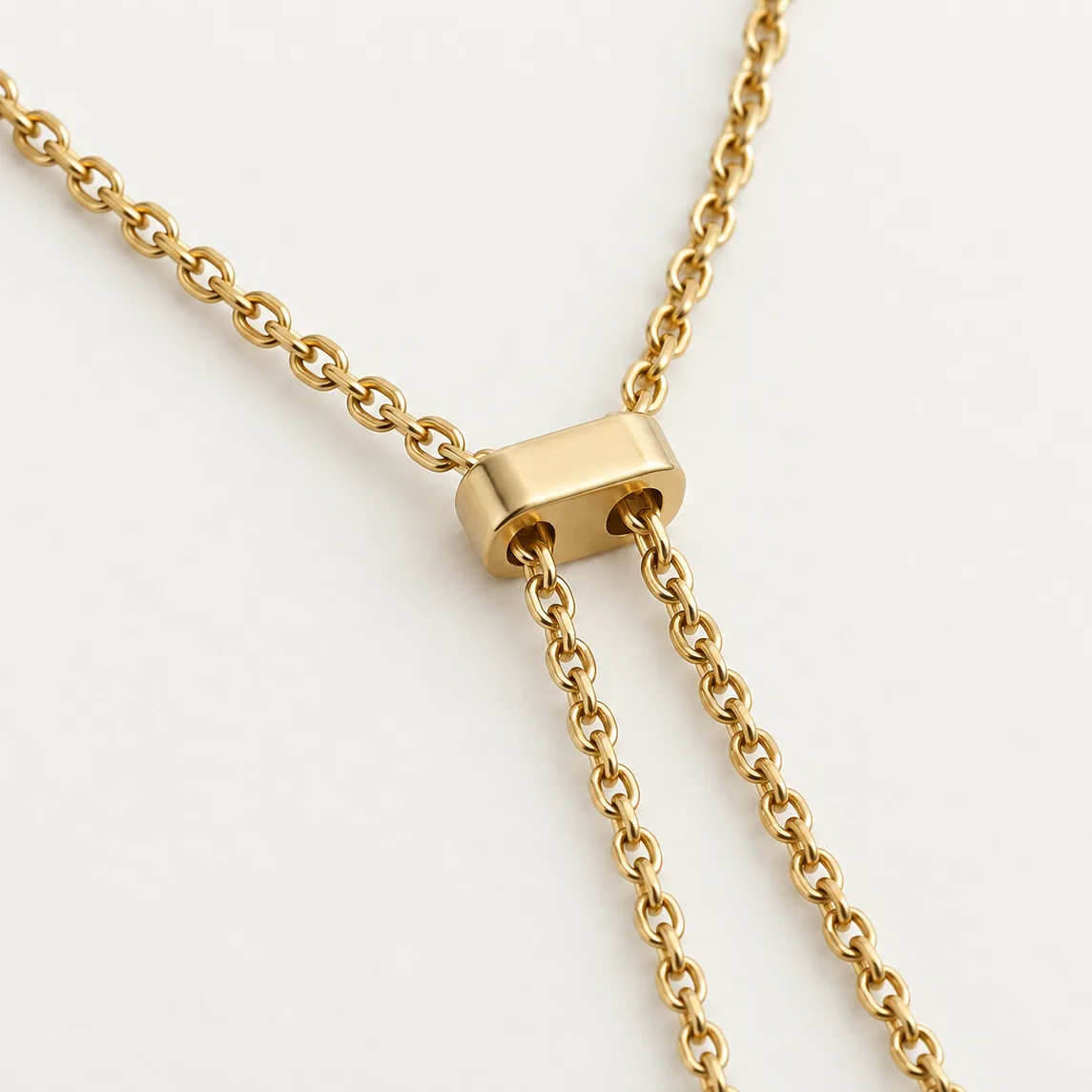
Both adjust, and they fail differently. A slider has to hold under the weight of the chain plus movement; an extender cannot slip but leaves a tail. Whichever is specified, the range it delivers is stated in the quotation.
What is against the skin all day?
Worn under clothing for hours at a time, this sits squarely inside REACH Annex XVII entry 27 rather than at its edge. Nickel release is measured on the finished piece with its coating on, not on the bare substrate.
What can be changed, and what cannot
| Dimension | What you can change | What is fixed | Condition |
|---|---|---|---|
| Adjustment method | Slider, extender chain, or both on one piece | A single fixed length with no adjustment | The range delivered is stated in the quotation; the method on its own does not state it |
| Adjustment range | The span one piece covers, set per program | A span wider than one construction can hold under load | Where the range exceeds what one piece holds, the program is quoted as two sizes rather than stretched |
| Chain construction | Cable, rolo, ball and beaded runs at a gauge chosen for this position | Flat constructions that hold a shape instead of draping | Drawn from the same chain stock at a lighter gauge, because the piece sits under clothing where a stiff construction reads as a ridge |
| Clasp | Lobster, spring ring, toggle | Clasps rated below the load the piece sees | Specified against the load and stated in the quotation |
| Drops, charms and stations | Carrying stations, pendants and beaded sections | Carrying points left as open jump rings | A carrying point on a piece worn out of sight is soldered closed rather than left open |
| Finish color | Gold-tone, rose gold-tone, black, gunmetal, natural steel | Colors outside the qualified PVD target range | See PVD & Gold-Tone Finishes |
How the adjustable range is arrived at
The range comes from what the chosen construction holds, and it is verified before it is printed in a quotation.
The program states the span it wants covered
One span for the whole program, decided with the buyer. This is the input everything else is sized from, so it is settled first.
A construction is chosen that can deliver it
Gauge and link form are picked for drape at this position and for the load the adjustment has to carry. A construction that looks right on a neck is not automatically right here.
The adjustment is loaded and checked
A slider is tested under the weight of the chain plus movement rather than assumed to hold. An extender is checked at each station. Whichever is used, the check is against the piece as it will ship, with its coating on.
Record producedFirst-article record, per construction and finish
The delivered range is written into the quotation
The span, the method and the clasp rating are stated together, because a range quoted without the method behind it is not a specification.
| Method | How it adjusts | What it trades away | Suits |
|---|---|---|---|
| Slider | Continuously, holding at any point | Has to be proved to hold under chain weight plus movement | A piece that must sit at a chosen height |
| Extender chain | In steps, at fixed stations | Leaves a tail behind the clasp | A program that wants the widest span for the least cost |
| Slider and extender together | Continuously, across a wider span | More hardware on the piece, and more to inspect | One piece covering a span two sizes would otherwise cover |
The parameters a quote is built on
Length is quoted as the range the piece covers, measured over the clasp. A single number cannot cover the range of wearers the piece is sold to.
| Parameter | Specified | Unit | Verification |
|---|---|---|---|
| Adjustment range | 800 – 900 on the catalog design (80 cm chain, 10 cm extender) | mm | Measured over the clasp at both extremes |
| Chain width | 1.5 – 10 | mm | Micrometer, first article |
| Piece weight | Per design, stated on the quotation | g | 0.01 g balance, sampled |
| Coating thickness | 0.3 – 0.4 total, ±20% (whole PVD stack, not gold content) | µm | Thickness report, per batch |
Nickel release · prolonged skin contact
EN 1811:2023, compared against the REACH Annex XVII entry 27(b) limit of below 0.5 µg/cm²/week for items in prolonged contact with the skin. Uncoated steel is assessed under 27(b), a release limit on the article as supplied. Where the piece carries a coating, entry 27(c) applies instead and adds EN 12472:2020 wear-and-corrosion pre-treatment first, because 27(c) requires the limit to hold throughout at least two years of normal use.
The test is run per material and finish combination, with the clasp and slider assessed separately. The reports we hold are on Nickel Release Testing.
Specified with the rest of the program
Waist chains are usually specified alongside anklets, and both are usually drawn from a chain construction the program has already chosen for its necklaces. Building all three from one construction at three gauges means one sealed color standard, one set of tooling, and pieces that match when a customer wears them together.
Specify a body jewelry programFrequently asked questions
How is a waist chain sized when the wearer does not know their measurement?
Across a range, using a slider or an extender, rather than to a number. The wearer is unlikely to have measured their waist, or to want to, so a piece quoted at a single length is a return waiting to happen. The design question is how much range one piece has to cover, because that decides whether the program needs one size or two, and the two answers price very differently.
Slider or extender?
A slider adjusts continuously and holds at any point, which suits a piece that has to sit at a chosen height on the body; the engineering question is whether it holds under the weight of the chain plus movement, and that is tested rather than assumed. An extender adjusts in steps, costs less and cannot slip, but it leaves a tail. Which is right depends on the piece; both are specified with the range they deliver stated. On the waist chain in our published catalog, a 10 cm extender takes an 80 cm chain to 90 cm.
What does prolonged skin contact mean for the testing?
It puts the piece squarely inside REACH Annex XVII entry 27: worn against bare skin, under clothing, for hours at a time. So nickel release is measured on the finished piece and reported per material and finish combination. An uncoated piece is assessed as supplied, under entry 27(b). A coated piece is measured with its coating on, after EN 12472:2020 wear pre-treatment, because entry 27(c) requires the limit to hold for at least two years; testing the bare substrate would not describe what touches the wearer. See Nickel Release Testing.
Does a waist chain need a different chain construction from a necklace?
Usually a lighter gauge, and always a construction that drapes rather than one that holds a shape, because the piece has to follow the body as it moves and sits under clothing, where a stiff construction reads as a ridge. Fine cable and rolo drape well; the flat reflective constructions that look best on a neck can behave badly here. It is drawn from the same chain stock at a gauge chosen for this position.
Last updated